The Future of Jobs: Economic Trends You Can't Ignore,

Introduction
The employment landscape of 2025 bears only partial resemblance to what existed just a decade ago. Seismic shifts in technology, globalization patterns, demographic changes, and evolving work preferences have fundamentally transformed how, where, and why we work. These changes, accelerated by the pandemic's forced experiments in remote work and digital transformation, have created both unprecedented opportunities and significant challenges for workers, employers, and policymakers alike. This article examines the critical economic trends reshaping employment and provides guidance for navigating what may be the most dynamic labor market in generations.
The AI and Automation Revolution
Beyond Simple Task Replacement
The narrative around artificial intelligence and automation has evolved substantially from early fears of wholesale job elimination. What is emerging instead is a more nuanced reality of job transformation, where AI serves primarily as a powerful complement to human capabilities rather than a universal replacement.
Advanced machine learning models, including large language models and specialized AI systems, now handle increasingly complex cognitive tasks that once seemed exclusively human—analyzing legal documents, generating creative content, diagnosing medical conditions, and coding software. However, these capabilities are proving most effective when deployed alongside human workers rather than in their place.
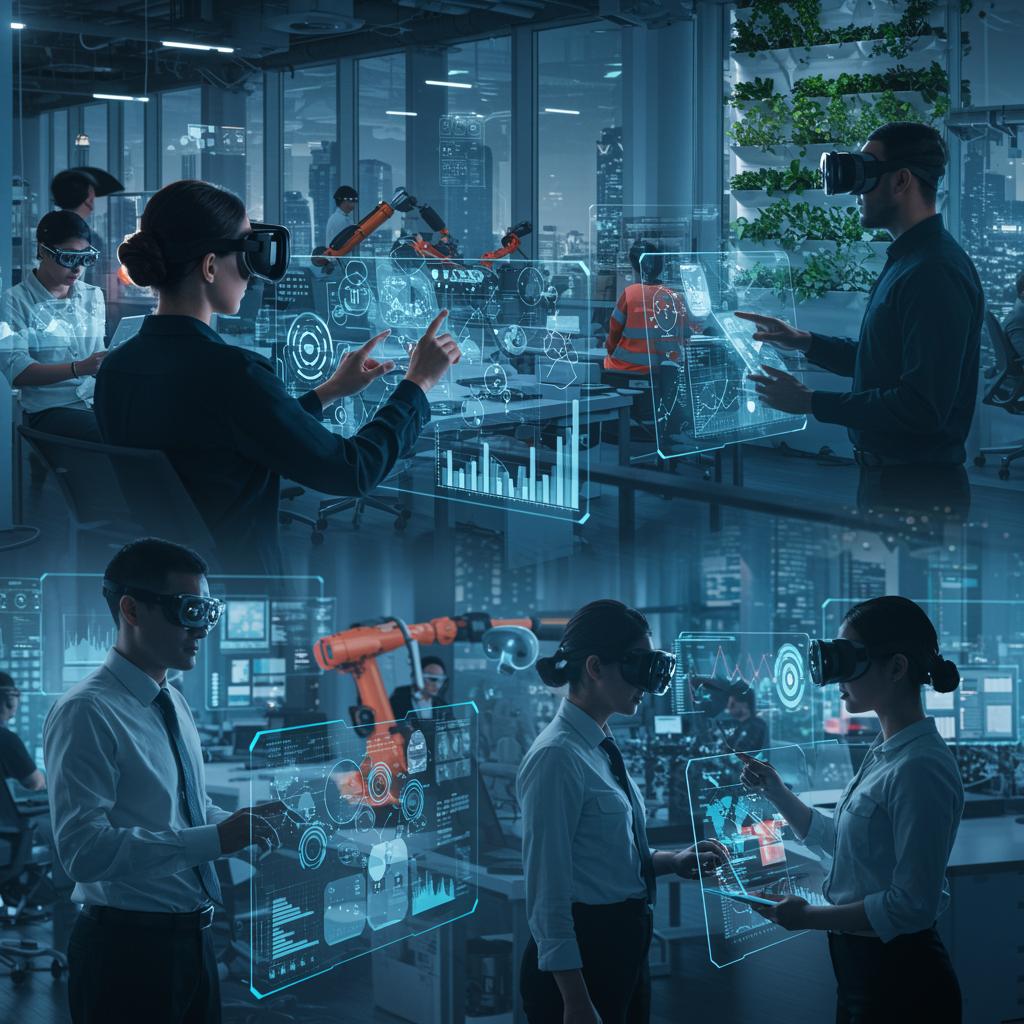
The most successful organizations have implemented "human-in-the-loop" systems where AI handles routine aspects of knowledge work—data processing, initial drafts, pattern recognition—while humans provide crucial oversight, refinement, creative direction, and interpersonal elements. This collaborative approach appears to be creating more value than either humans or AI systems operating independently.
Skill Polarization and the Missing Middle
The labor market continues to display a pronounced pattern of skill polarization. Demand remains robust for both high-skill roles requiring significant expertise and judgment, such as data scientists, cybersecurity specialists, and healthcare practitioners, as well as for certain service-oriented roles requiring physical presence and interpersonal skills, including healthcare support, skilled trades, and specialized hospitality.
The "missing middle" phenomenon—the relative decline of routine cognitive and manual jobs that historically provided stable middle-class employment—persists and may be accelerating. Traditional middle-skill occupations in administration, customer service, retail management, and similar fields face the greatest automation pressure, with many being redesigned into either higher-skill roles or consolidated into fewer positions.
The New Essential Skills
The skills commanding premium compensation have evolved significantly. Beyond technical capabilities in high-demand fields, several meta-skills have emerged as crucial differentiators. These include AI literacy and workflow integration, meaning the ability to effectively collaborate with AI tools while understanding their capabilities and limitations. Complex problem solving, tackling challenges that resist algorithmic solutions especially those involving unclear parameters or competing objectives, is increasingly valued. Systems thinking, the ability to understand interconnections between technological, human, and organizational elements, has become essential. Human-centered design, creating products and processes that anticipate and address human needs, rounds out the list along with data interpretation, deriving meaningful insights from increasingly abundant data while avoiding analytical pitfalls.
Organizations report persistent difficulties finding candidates who combine technical expertise with these broader capabilities, creating significant opportunity for workers who develop this integrated skill set.
The Distributed Workforce
Remote Work Equilibrium
After several years of experimentation, most organizations have found a sustainable equilibrium in their remote work policies. Approximately thirty percent of knowledge workers now operate in fully remote arrangements, fifty percent in hybrid models with structured in-office components, and twenty percent in primarily on-site roles. This distribution varies substantially by industry, organization size, and geographic region.
The initial productivity gains observed during forced remote work have proven largely sustainable when supported by appropriate technology, management practices, and organizational culture. However, concerns about innovation, collaboration, and cultural cohesion have prompted most organizations to maintain some degree of in-person interaction rather than moving to fully distributed models.
The Geography of Opportunity
Remote work has fundamentally altered the geography of economic opportunity. While major metropolitan areas remain centers of innovation and economic activity, their monopoly on high-compensation knowledge work has diminished. Secondary cities and even rural areas with attractive amenities and lower costs of living have seen significant influxes of remote workers, creating both economic opportunities and challenges for these communities.
This geographic redistribution has significant implications for regional economic development, housing markets, and infrastructure needs. Areas successfully attracting remote workers are experiencing housing pressure and increased demand for amenities, while some traditional employment centers are adapting to reduced daily commuter populations.
Global Talent Access
The normalization of remote work has accelerated the globalization of knowledge work. Organizations increasingly access specialized talent regardless of geographic location, either through direct employment or various contingent arrangements. While regulatory complexities and time zone challenges create friction, the trend toward globally distributed teams appears durable, particularly for organizations requiring specialized technical capabilities.
This development creates both opportunity and competitive pressure for workers. Those with in-demand skills can access opportunities previously limited by geography, while others face increased competition from global talent pools. The result is an increasingly global market for specialized skills that transcends national boundaries.
The Rise of Alternative Work Arrangements
Beyond Traditional Employment
Traditional full-time employment remains the predominant work arrangement, but alternative models continue gaining market share. Approximately thirty-five to forty percent of the U.S. workforce now engages in some form of independent, contingent, or non-traditional work arrangement, up from roughly thirty percent a decade ago.
This shift reflects both worker preferences and organizational strategies. Many professionals actively choose independent consulting, freelancing, or portfolio careers for the autonomy, flexibility, and potential earning power they provide. Simultaneously, organizations are strategically leveraging contingent talent to access specialized capabilities, manage workload fluctuations, and control fixed costs.
The Platform Economy Evolution
Digital labor platforms have evolved beyond simple gig work to encompass highly specialized professional services. While transportation, delivery, and household services platforms remain significant employers, the fastest growth has occurred in platforms connecting organizations with specialized knowledge workers in fields like software development, design, marketing, and financial services.
These platforms increasingly provide value beyond simple matching, offering quality assurance, contract standardization, payment protection, and even benefits portability. The most sophisticated have developed specialized expertise in particular domains, functioning more as curated talent networks than as commodity marketplaces.
The Benefits Challenge
The decoupling of benefits from traditional employment remains a significant challenge for workers in alternative arrangements. While some progress has been made through portable benefits programs, professional associations, and platform-provided options, comprehensive solutions remain elusive.
Policy innovations in this area continue to evolve, with some jurisdictions experimenting with portable benefits requirements for platform companies, expanded access to public healthcare options, and tax incentives for independent worker benefits. However, a comprehensive national approach remains under development, creating significant variation in worker experiences based on location, platform, and professional field.
Industry Transformation Patterns
Healthcare's Technological Integration
Healthcare employment continues expanding but with significant role transformation. Artificial intelligence increasingly handles diagnostic support, treatment planning, and administrative functions, allowing clinicians to focus on complex cases, interpersonal care, and decision-making. Meanwhile, home-based care models supported by remote monitoring technology are creating new roles at the intersection of healthcare and technology.
The field's chronic staffing challenges persist, particularly in nursing and specialized care roles, driving rapid adoption of technology-enabled care models and skill extension approaches. These developments create both opportunities and adaptation challenges for healthcare workers at all levels.
Manufacturing's Advanced Renaissance
Advanced manufacturing has experienced a modest renaissance in developed economies, driven by automation, reshoring initiatives, and the strategic importance of supply chain resilience. However, the sector's employment profile has transformed dramatically, with routine assembly roles largely automated while positions in engineering, programming, maintenance, and quality assurance expand.
The most successful manufacturing workers combine technical expertise with process improvement capabilities and digital literacy. Those able to manage the interface between automated systems and human operations are particularly valued, as are those skilled in adaptive problem-solving when automated systems encounter limitations.
The Expanding Care Economy
Demographic trends, particularly aging populations in developed economies, continue driving expansion in the "care economy" encompassing healthcare, elder care, childhood education, and related services. These inherently human-centered roles have proven relatively resistant to automation, though they are increasingly augmented by technological support.
The care economy presents significant employment opportunities but faces persistent challenges in compensation, working conditions, and career advancement. Organizations and policymakers are exploring various approaches to elevate these roles, including enhanced training pathways, credential recognition, and revised compensation models that better reflect their economic and social value.
Education and Skill Development Transformation
Continuous Learning Imperative
The accelerating pace of technological change has solidified continuous learning as a career necessity rather than an optional advantage. Workers across industries and role types report spending significantly more time on skill development than in previous generations, with an average of five to seven hours weekly devoted to formal and informal learning activities.
Organizations have responded by expanding learning benefits, creating internal skill development platforms, and integrating learning more explicitly into work processes. The most progressive have implemented "learning budgets" giving employees substantial discretion over their development paths while aligning with organizational needs.
Credential Diversification
The landscape of recognized credentials continues diversifying beyond traditional degrees. Industry certifications, specialized bootcamps, platform-specific credentials, and skills-based assessments have gained significant traction with employers seeking to verify capabilities rather than rely on proxy signals.
This trend creates both opportunity and complexity for workers navigating skill development decisions. The most valuable credentials typically combine specificity, demonstrating concrete skills, with transportability, recognition across multiple employers. However, identifying these amid proliferating options requires careful research and strategic thinking.
Education-Employment Partnership Models
The traditional sequential model of education followed by employment has given way to more integrated approaches. Apprenticeship programs have expanded beyond traditional trades into technology, healthcare, and financial services. Employer-education partnerships delivering customized training with direct employment pathways have multiplied, particularly in fields with persistent skill shortages.
These developments blur the boundaries between education and employment while potentially creating more accessible pathways to high-demand roles. However, they also place greater responsibility on individuals to navigate an increasingly complex ecosystem of opportunities without clear standardization.
Strategic Adaptation for Individuals
Career Resilience Through Skill Portfolios
In this dynamic environment, career resilience increasingly depends on developing strategic skill portfolios rather than focusing narrowly on current role requirements. The most adaptable workers cultivate a combination of deep expertise in a core domain with enduring value, complementary technical skills that enhance effectiveness within that domain, transferable capabilities applicable across multiple fields and roles, and emerging skills aligned with clearly developing trends.
This portfolio approach provides both immediate value to employers and protection against specific skill obsolescence, creating multiple potential career paths as the employment landscape evolves.
Strategic Role Selection
The dramatic variation in automation impact across different roles, even within the same field or organization, makes strategic role selection increasingly important. Roles centered on uniquely human capabilities—complex judgment, creativity, interpersonal intelligence, and strategic thinking—generally offer greater durability than those focused primarily on information processing or routine operations.
Workers can enhance their market position by deliberately seeking roles that combine technical requirements with these durable human elements, creating positions less susceptible to wholesale automation. This often means evolving toward roles involving exception handling, complex decision making, innovation, or high-stakes human interaction.
Network Cultivation as Career Insurance
Professional networks have taken on renewed importance as career stabilizers in a dynamic environment. Beyond traditional job-seeking benefits, robust networks provide crucial intelligence about emerging opportunities, skills gaining traction, and organizational cultures that support professional growth.
The most effective networking approaches focus on reciprocal value creation rather than transactional advantage, building relationships through knowledge sharing, problem-solving assistance, and genuine professional support. These authentic connections prove particularly valuable during career transitions or when navigating uncertain employment conditions.
Organizational Response Patterns
Skills-Based Talent Acquisition
Progressive organizations have shifted significantly toward skills-based hiring models that focus on demonstrated capabilities rather than proxies like degrees or years of experience. Structured assessments, work simulations, portfolio evaluations, and capability-focused interviews increasingly complement or replace traditional screening methods.
This approach potentially expands opportunity for non-traditional candidates while helping organizations access overlooked talent pools. Companies implementing these practices report higher performance and retention among those hired through skills-based processes compared to traditional methods.
Internal Talent Marketplace Development
Facing persistent external hiring challenges, many organizations have developed sophisticated internal talent marketplaces to better leverage existing employee capabilities. These systems match internal candidates to project opportunities, temporary assignments, and new roles based on demonstrated skills rather than current positions.
The most advanced implementations integrate continuous skill assessment, personalized development recommendations, and predictive analytics suggesting high-potential career transitions. Organizations report these approaches significantly improve talent retention while accelerating response to changing business needs.
Workforce Ecosystem Management
Leading organizations increasingly conceptualize their workforce as an ecosystem encompassing traditional employees, contingent workers, strategic partners, and even automated systems. This holistic approach requires sophisticated management capabilities to effectively coordinate these diverse elements while maintaining organizational culture and knowledge continuity.
Developing these capabilities represents a significant competitive advantage, allowing organizations to access specialized talent, scale operations flexibly, and adapt to changing requirements more rapidly than competitors relying primarily on traditional employment models.
Policy Implications and Developments
Skills Infrastructure Investment
Recognizing the critical importance of workforce adaptation, many jurisdictions have substantially increased investment in skills infrastructure. These initiatives typically combine expanded educational capacity, targeted training incentives, career navigation support, and coordination mechanisms connecting education providers with employer needs.
The most effective approaches maintain flexibility to address rapidly evolving skill requirements while providing sufficient structure to guide individual decisions and institutional investments. Programs that enable continuous skill development throughout working lives appear particularly valuable given the pace of technological change.
Social Protection Modernization
Traditional social protection systems designed around stable, long-term employment relationships are gradually adapting to contemporary work patterns. Experiments with portable benefits models, universal basic services, and reimagined unemployment support mechanisms aim to provide essential protections without reinforcing dependence on traditional employment structures.
While comprehensive solutions remain elusive, incremental progress continues through sectoral initiatives, state-level programs, and public-private partnerships addressing specific aspects of the challenge. These developments suggest the eventual emergence of more flexible protection systems, though the transition creates significant variation in worker experiences.
Inclusive Growth Strategies
Policymakers increasingly recognize that technological change and labor market evolution can either widen or narrow economic disparities depending on supportive policies and institutional arrangements. Inclusive growth strategies aim to ensure technological benefits are broadly shared while providing targeted support for negatively impacted communities and worker categories.
These approaches typically combine education access, regional economic development, targeted infrastructure investment, and transition assistance for displaced workers. Their effectiveness varies substantially based on implementation quality, resource adequacy, and coordination across different policy domains.
The views expressed in this article are those of the author and do not necessarily reflect the views of WriteFlow. WriteFlow does not endorse this content and does not guarantee its accuracy or completeness.


Comments (0)