The Future of Business: Innovations That Will Dominate the Next Decade

Introduction
As we navigate through 2025, the business landscape continues to evolve at an unprecedented pace. Technologies once considered futuristic are becoming mainstream, while entirely new paradigms are emerging to reshape how companies operate, innovate, and deliver value. The next decade promises transformative changes across industries, creating both challenges and opportunities for organizations willing to adapt.
This article explores the key innovations poised to dominate the business world over the coming decade, examining not only the technologies themselves but their broader implications for strategy, leadership, and organizational structure.
Artificial Intelligence Becomes the Business Backbone
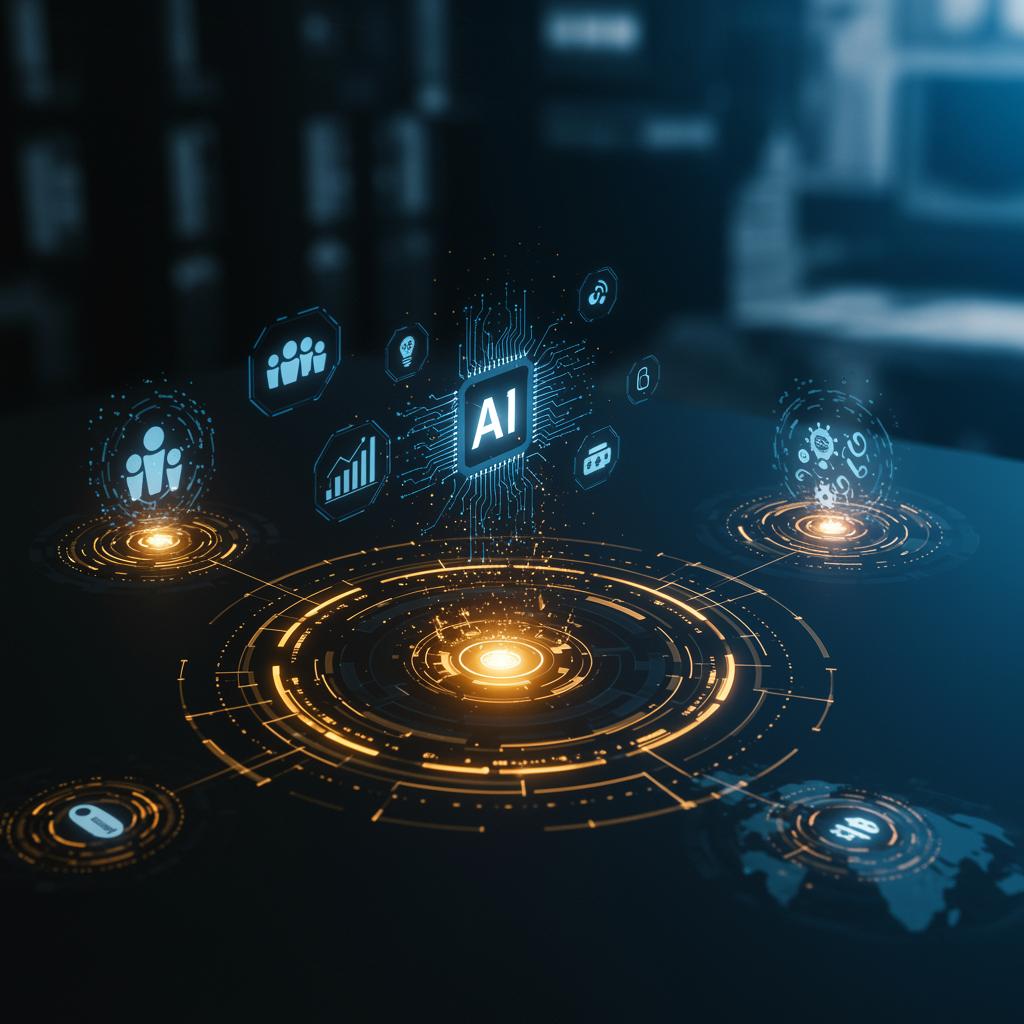
Artificial intelligence has moved beyond experimental applications to become integrated into core business operations. Over the next decade, this integration will deepen significantly.
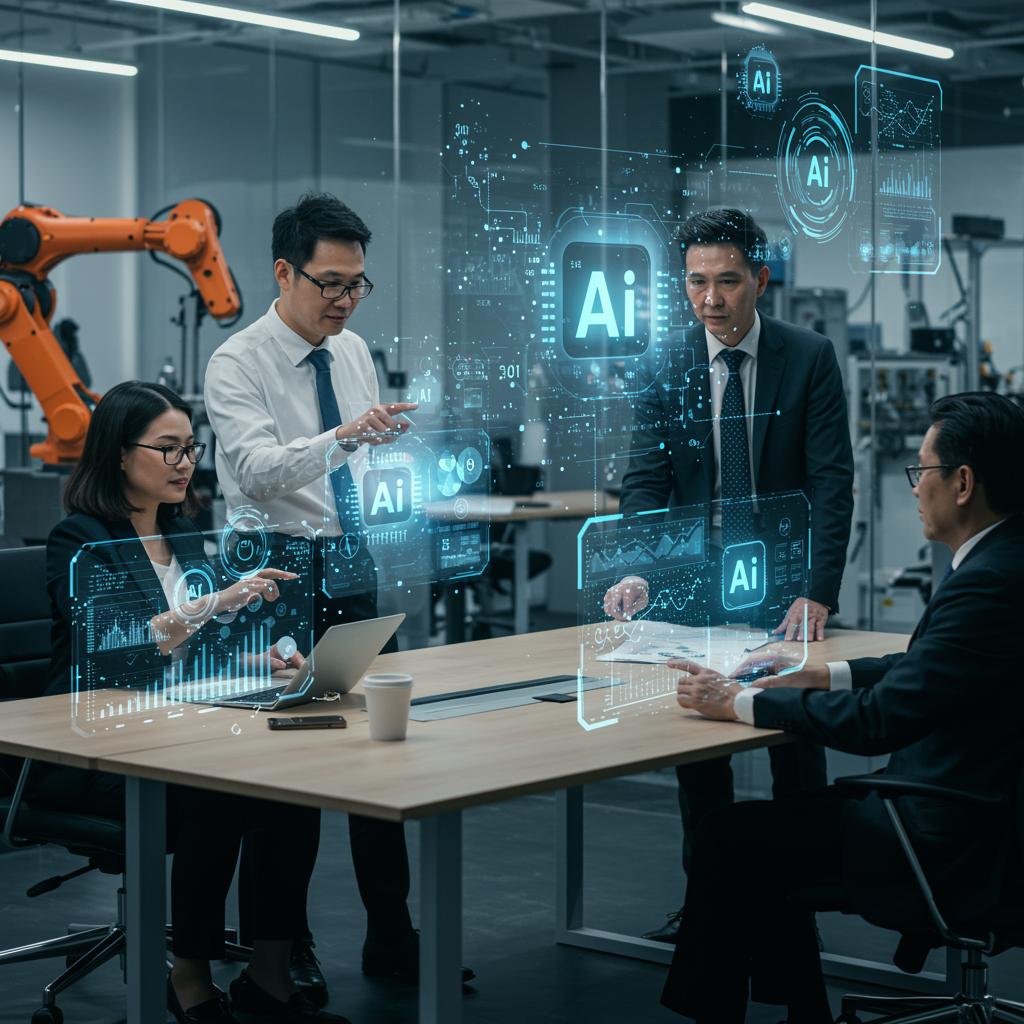
The next generation of AI systems will serve as strategic partners to executives, analyzing vast datasets to identify patterns invisible to human analysts and generating scenario models with unprecedented accuracy. The most successful organizations will find the right balance between AI capabilities and human wisdom, with AI handling data analysis and scenario planning while humans focus on values-based decisions and creative strategy.
Businesses will leverage AI to deliver truly personalized experiences across all customer touchpoints. Financial services firms already deploy AI systems that create bespoke financial planning approaches based on life goals, risk tolerance, and psychological profiles. Retail brands are developing manufacturing processes that allow mass personalization at costs approaching traditional mass production.
Routine business operations will become increasingly autonomous. AI systems will not only execute processes but continuously optimize them. Manufacturing companies are pioneering self-healing supply chains that automatically reroute resources in response to disruptions. Marketing departments are deploying campaigns that self-optimize based on real-time performance data.
The Distributed Workforce Revolution
The pandemic-era shift to remote work was just the beginning of a more fundamental transformation. The next decade will see the emergence of truly distributed organizations that transcend traditional boundaries.
Countries and cities are competing to attract location-independent knowledge workers by developing specialized infrastructure. Digital nomad villages with high-speed connectivity, co-working spaces, and supportive communities are emerging worldwide. Businesses are responding by creating hub-and-spoke models that combine central offices with distributed workspaces.
Rather than maintaining rigid organizational structures, leading companies are building flexible talent clouds of both permanent employees and specialized contractors. Platform technologies are emerging to support this model, providing sophisticated tools for finding, vetting, onboarding, managing, and compensating distributed talent.
The next generation of collaboration tools will move beyond video calls to create truly immersive shared workspaces. Mixed reality technologies will enable distributed teams to collaborate as if physically co-located, manipulating virtual objects and moving through shared digital environments.
Blockchain and Digital Trust Architectures
After years of hype, blockchain and distributed ledger technologies are maturing into practical business solutions focused on establishing digital trust and enabling new forms of collaboration.
Businesses are using blockchain to tokenize assets, enabling fractional ownership, automated value distribution, and programmable rights management. Media companies use tokens to create direct relationships with audiences. Real estate firms are tokenizing properties to enable fractional investment.
Blockchain-based systems enable end-to-end visibility across complex supply chains with immutable verification of product origins, manufacturing conditions, and distribution paths. This capability is particularly valuable in pharmaceuticals, luxury goods, and food safety.
The next decade will see the emergence of decentralized autonomous organizations that operate according to transparent rules encoded in smart contracts, enabling coordination among distributed stakeholders without traditional management hierarchies.
Sustainable Business Transformation
Environmental sustainability has moved from a peripheral concern to a central strategic priority. The next decade will see sustainability fully integrated into business models, operations, and value propositions.
Linear take-make-dispose approaches are giving way to circular models that minimize waste. Leading companies are redesigning products for disassembly and reuse, developing take-back programs, and transforming waste into value.
Simply reducing emissions is no longer sufficient. Forward-thinking organizations are developing carbon-negative operations that actively remove more carbon than they emit. Microsoft's commitment to become carbon negative by 2030 represents an early example.
As climate impacts intensify, businesses must prepare for disruptions ranging from extreme weather to resource scarcity. Leading organizations are conducting comprehensive climate risk assessments and developing adaptive strategies.
Human-Centered Technology Integration
As technology becomes increasingly powerful, the most successful businesses will deploy it in ways that enhance rather than diminish human capabilities and well-being.
Rather than replacing workers, smart businesses are using technology to augment their capabilities. Augmented reality systems provide just-in-time information and guidance, enabling higher performance while reducing errors. The augmented worker is more capable, more productive, and reports higher job satisfaction.
The next decade will see growing recognition that employee wellbeing is a critical business performance factor. Leading organizations are redesigning work processes, physical environments, and technology interfaces to promote both physical and mental wellbeing.
As AI systems become more powerful, establishing robust governance frameworks is essential. Leading companies are implementing transparent AI policies, conducting algorithmic impact assessments, and establishing ethics review boards.
Quantum Computing Applications
While still in early stages, quantum computing is beginning to move from research labs to practical business applications.
Quantum computing excels at solving complex optimization problems. This capability will transform logistics, supply chain management, financial portfolio optimization, and drug discovery. Early experiments suggest quantum route optimization could reduce delivery times by up to thirty percent while cutting fuel consumption.
Quantum simulation enables researchers to model molecular interactions with unprecedented accuracy, accelerating the development of new materials for applications ranging from more efficient solar panels to lighter aerospace components.
As quantum computing advances, it threatens to break many cryptographic systems. Forward-thinking organizations are already implementing quantum-resistant security protocols to protect sensitive data against future quantum attacks.
Biotech Integration Across Industries
Biotechnology is expanding beyond healthcare to transform a wide range of industries, from agriculture to manufacturing.
Engineered biological systems are enabling more sustainable production processes. Companies are using modified microorganisms to produce everything from pharmaceuticals to textiles with dramatically reduced environmental footprints.
The integration of genomics, wearable sensors, and AI analytics is enabling truly personalized approaches to health and wellness. Insurance companies are exploring models that reward preventive health behaviors tracked through wearable devices.
Advanced manufacturing technologies are converging with biological processes to enable biofabrication. From lab-grown meat to 3D-printed organs, these technologies are creating entirely new product categories.
Conclusion: Preparing for the Innovation Decade
The business innovations outlined above will not develop in isolation. They will converge and interact in complex ways, creating both challenges and opportunities.
Organizations that thrive will foster cultures of continuous learning and experimentation, enabling them to respond quickly to emerging technologies. Rather than operating as self-contained entities, leading businesses will participate in complex ecosystems of partners, platforms, and communities. The most successful innovations will align with meaningful human needs and values, contributing to both business performance and broader societal well-being.
The next decade will undoubtedly bring surprises that no article can predict. However, by understanding these fundamental innovation trends and developing organizational capabilities to respond to change, business leaders can position their organizations not just to survive but to thrive in the rapidly evolving landscape ahead.
The views expressed in this article are those of the author and do not necessarily reflect the views of WriteFlow. WriteFlow does not endorse this content and does not guarantee its accuracy or completeness.



Comments (0)