The Green Wake-Up Call: Why the US, UK, and Canada Must Act Now on Climate Change

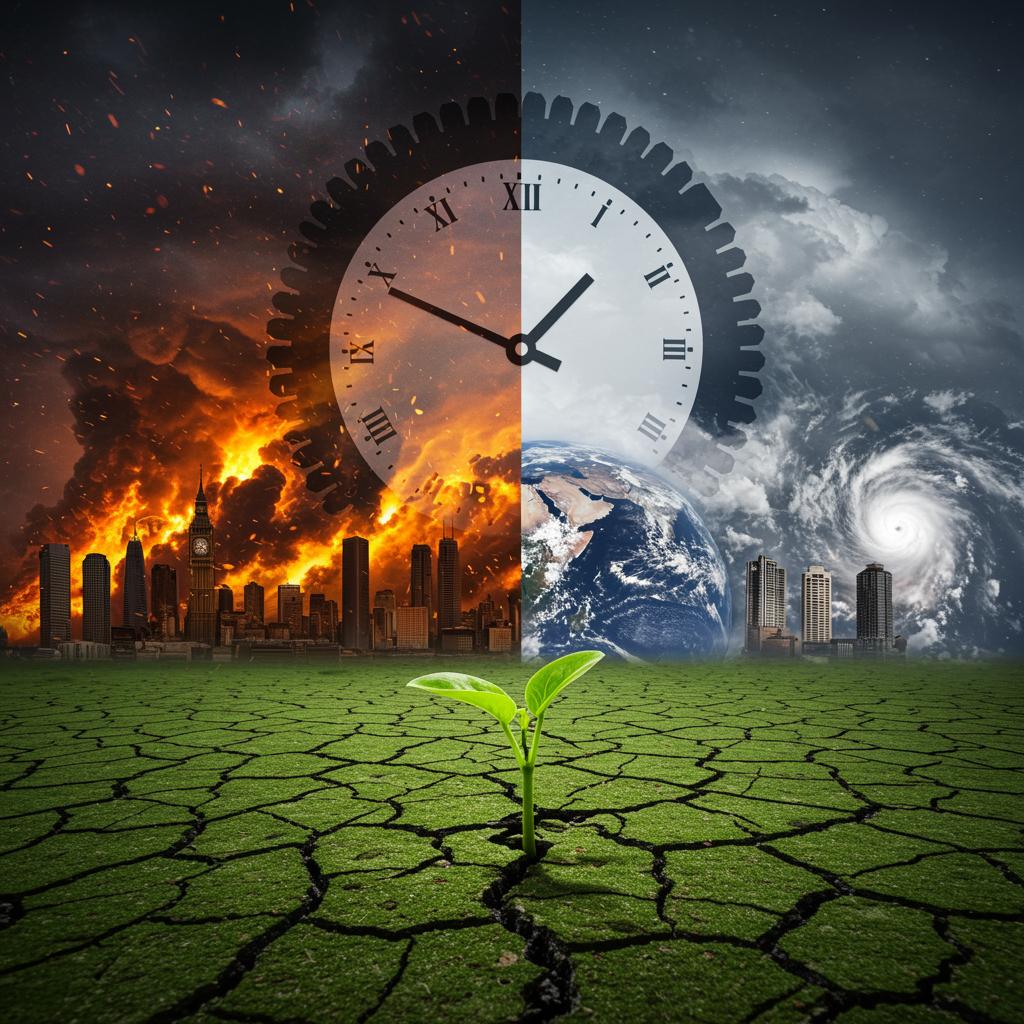
Introduction: The Climate Crisis at Our Doorstep
The science is clear. The planet is warming at an unprecedented rate, and human activity is the primary cause. As we move through 2025, the effects of climate change are no longer distant warnings—they're leading the news. Record-breaking heatwaves, devastating floods, catastrophic wildfires, and increasingly powerful hurricanes are becoming routine across North America and the United Kingdom.
The United States, the United Kingdom, and Canada rank among the world's wealthiest economies and highest per-capita carbon emitters. That economic power brings both historical responsibility and the ability to lead. Yet despite diplomatic promises and incremental policy changes, these nations continue to fall short of the bold action required to confront what may be humanity's greatest existential challenge.
This article explains why immediate, coordinated, and ambitious climate action from these three allied nations is not just a moral duty but an economic opportunity. The era of half-measures and distant targets is over. The green wake-up call is ringing—and it's time to answer.
Part I: The Mounting Evidence We Can No Longer Ignore
Accelerating Climate Impacts Across Three Nations
The summer of 2024 offered a sobering preview of our climate future. In California and British Columbia, wildfires of unprecedented size and intensity destroyed thousands of homes. The southeastern United States experienced its most active hurricane season on record, forcing repeated evacuations from Florida to North Carolina. The United Kingdom saw agricultural disruption from extreme rainfall in Scotland and drought across southern England.
The economic toll has been staggering:
United States: Climate-related disasters cost the economy over $175 billion in 2024 alone, according to the National Oceanic and Atmospheric Administration.
Canada: The Canadian Climate Institute estimates that climate impacts reduced Canada's GDP by 3 percent last year, with disproportionate effects on rural and Indigenous communities.
United Kingdom: The Bank of England reports that climate adaptation costs have tripled since 2020, with flood infrastructure alone requiring £1.2 billion annually.
And those figures only capture the countable costs—destroyed property, agricultural losses, damaged infrastructure, disaster response. They don't account for the human toll: lives lost, communities displaced, mental health struggles, and cultural heritage erased.
The Scientific Consensus: It's Worse Than We Thought
The Intergovernmental Panel on Climate Change's Sixth Assessment Report, completed in 2022, warned that many climate impacts were accelerating faster than previously projected. More recent research has only deepened those concerns.
Global temperature rise is tracking toward the upper bounds of earlier projections.
Arctic ice loss is occurring 30 percent faster than models predicted a decade ago.
Ocean acidification is progressing at rates that threaten marine ecosystem collapse.
Climate feedback loops—such as methane release from thawing permafrost—are showing signs of activation.
Dr. Katherine Richardson, a climate scientist at the University of Copenhagen, puts it bluntly: "The data we're collecting in real time suggests we've underestimated both the pace and intensity of climate disruption. The window for preventing catastrophic outcomes is closing rapidly."
The Carbon Budget Reality
Despite growing public concern and international agreements, global carbon emissions continue to rise. The remaining carbon budget—the amount of CO₂ we can still emit while keeping warming to 1.5°C above pre-industrial levels—is nearly exhausted.
According to the Global Carbon Project, at current emission rates:
The 1.5°C budget will be depleted by 2027.
The 2°C budget will be exhausted by 2035.
Even these estimates may be optimistic, as they don't fully account for newly discovered feedback mechanisms. The stark reality is that incremental approaches and distant net-zero targets set for 2050 are fundamentally inadequate to the scale and urgency of the challenge.
Part II: Why These Three Nations Bear Special Responsibility
Historical Emissions and Moral Obligation
The United States, the United Kingdom, and Canada have contributed disproportionately to atmospheric carbon concentrations:
The U.S. alone is responsible for roughly 25 percent of cumulative historical emissions.
The UK, as the birthplace of the Industrial Revolution, set the world on its carbon-intensive development path.
Canada ranks among the highest per-capita emitters globally.
This history creates a clear moral obligation to lead. Dr. Ayana Elizabeth Johnson, a marine biologist and policy expert, notes: "Those who benefited most from carbon-fueled development and contributed most to the problem have both the greatest responsibility and the greatest capacity to lead the transition to a sustainable future."
Economic and Technological Capacity
These three nations have unique advantages that position them to lead the climate transition:
Financial resources: Together, they account for over 25 percent of global GDP.
Innovation ecosystems: World-leading universities, research institutions, and technology sectors.
Governance stability: Despite political polarization, these democracies maintain institutional continuity and the rule of law.
Cultural influence: Significant soft power to shape global norms and aspirations.
Few other countries or blocs can match this combination of resources, technological capacity, and global influence. "The question isn't whether these nations can afford to lead on climate action," argues economist Nicholas Stern. "It's whether they can afford not to."
Security Implications of Inaction
Military and intelligence agencies across all three countries have recognized climate change as a "threat multiplier." Rising seas, extreme weather, agricultural disruption, and water scarcity intensify existing conflicts and create new security challenges.
The Pentagon's 2024 Climate Risk Analysis identifies multiple direct threats to national security:
Increased instability in strategically important regions
Strain on military logistics and infrastructure
Humanitarian crises requiring military response
Competition for newly accessible Arctic resources
Similar assessments from UK and Canadian defense establishments emphasize that climate action is not just an environmental or economic issue—it is a fundamental security imperative.
Part III: The False Economy of Delay
Short-Term Thinking vs. Long-Term Costs
The common argument against aggressive climate action—that it costs too much—fails basic economic analysis. Multiple independent studies confirm that the cost of inaction far exceeds the investment required for transition:
The London School of Economics estimates that every dollar spent on climate mitigation saves $7 to $10 in avoided damages and adaptation costs.
Delayed action increases total transition costs by roughly 40 percent per decade.
Climate procrastination locks in carbon-intensive infrastructure that becomes increasingly expensive to replace before the end of its useful life.
Mark Carney, former Governor of both the Bank of England and the Bank of Canada, warns: "We're facing what economists call the 'tragedy of the horizon'—the catastrophic impacts of climate change will be felt beyond the traditional horizons of most actors, imposing costs on future generations that the current generation has no direct incentive to fix."
The Competitive Advantage of Climate Leadership
The transition to a low-carbon economy represents the greatest economic opportunity of the 21st century. Nations that lead this transition will:
Develop exportable clean technologies and expertise
Attract global investment capital increasingly concerned with climate risk
Create millions of high-quality, non-outsourceable jobs
Reduce vulnerability to fossil fuel price volatility
Improve public health through reduced pollution
China recognized this opportunity early and invested heavily in renewable energy manufacturing. It now dominates global solar panel and electric vehicle battery production. The U.S., UK, and Canada risk being left behind in the clean economy race without more aggressive action.
The Financial System Awakens
The perception that markets favor climate inaction is increasingly outdated. Major financial institutions now recognize climate change as a systemic risk:
BlackRock, the world's largest asset manager, now places climate risk at the center of its investment strategy.
Central banks in all three nations have begun climate stress testing of financial institutions.
Insurance companies are retreating from high-risk areas, creating protection gaps.
Credit rating agencies now incorporate climate vulnerability into sovereign and municipal ratings.
The financial system is sending a clear signal: climate action is no longer optional. Economies that delay will face higher capital costs and reduced investment.
Part IV: Breaking Through Policy Paralysis
Beyond Political Polarization
Climate policy has been hamstrung by political polarization, particularly in the United States. However, several developments suggest the potential for breakthroughs:
Growing bipartisan support for specific climate solutions like clean energy tax credits and grid modernization
State- and provincial-level leadership that transcends national political gridlock
Business community advocacy for policy certainty on carbon
Youth-led movements applying pressure across the political spectrum
"The political feasibility of climate action is not fixed," observes political scientist Leah Stokes. "It's being actively reshaped by social movements, market forces, and lived experience with climate impacts."
Policy Innovations Worth Scaling
Despite overall inadequacy, each nation has implemented promising policies that could be expanded and shared.
United States:
The Inflation Reduction Act created unprecedented clean energy investments.
The Defense Production Act was activated for clean technology manufacturing.
FERC transmission reforms are enabling renewable energy deployment.
United Kingdom:
A carbon price floor provides certainty for low-carbon investment.
Contracts for Difference auction systems drive offshore wind expansion.
Mandatory climate risk disclosure requirements apply to businesses.
Canada:
A national carbon price returns revenue to citizens.
Just Transition planning supports fossil fuel-dependent communities.
Indigenous-led conservation initiatives are expanding.
A coordinated approach would strengthen these policies while addressing their limitations and gaps.
The Just Transition Imperative
Climate action cannot succeed without addressing equity concerns, both within and between nations. Fossil fuel workers, frontline communities, and developing countries need assurance that the green transition will improve their prospects rather than harm them.
Successful just transition frameworks include:
Education and retraining programs with income support
Targeted infrastructure investment in fossil fuel-dependent regions
Community ownership of renewable energy projects
Progressive distribution of both costs and benefits
"Justice isn't just a moral nicety in climate policy—it's a practical necessity," argues environmental justice advocate Catherine Coleman Flowers. "Without it, we'll face insurmountable political resistance to the scale of change required."
Part V: A Trilateral Climate Action Plan
Immediate Policy Priorities (2025–2027)
1. Establish a Trilateral Climate Emergency Framework
Coordinated carbon pricing starting at $100 per ton and rising $15 annually
Harmonized border carbon adjustments to prevent carbon leakage
Joint clean procurement standards leveraging government purchasing power
2. Launch a Clean Infrastructure Marshall Plan
$500 billion in combined public investment over five years
Focus on grid modernization, public transportation, and building retrofits
Standardized permitting reforms to accelerate project deployment
3. Create a Climate Technology Acceleration Initiative
Pooled R&D funding with shared intellectual property arrangements
Coordinated regulatory sandboxes for emerging solutions
Joint manufacturing capacity for strategic clean technologies
Medium-Term System Transformation (2027–2030)
1. Phase Out Fossil Fuel Subsidies and Financing
Eliminate all direct production subsidies by 2027
End public financing of fossil fuel projects internationally
Require managed wind-down plans from existing producers
2. Transform Food and Land Systems
Shift agricultural subsidies to support carbon sequestration
Implement national reforestation and ecosystem restoration programs
Develop policy frameworks for sustainable agriculture adoption
3. Establish Climate Resilience Standards
Mandatory climate risk assessment for all major infrastructure
Coordinated managed retreat programs from highest-risk areas
Shared early warning systems and disaster response capabilities
International Leadership Strategy
1. Reform International Financial Institutions
Push for IMF and World Bank governance reforms to prioritize climate
Establish a Loss and Damage financing mechanism with significant capitalization
Create preferential financing terms for developing countries pursuing low-carbon development
2. Strengthen Paris Agreement Implementation
Submit new Nationally Determined Contributions aligned with a 1.5°C pathway before COP30
Implement robust carbon accounting and transparency measures
Provide technical support to developing countries for climate planning
3. Form a Climate Technology Transfer Coalition
Waive intellectual property restrictions on critical climate technologies
Finance technology deployment in developing countries
Build regional manufacturing hubs for clean energy components
Conclusion: The Choice Before Us
The climate crisis presents a stark choice for the United States, the United Kingdom, and Canada. They can continue with incremental approaches that virtually guarantee catastrophic warming, or they can embrace the challenge with the urgency and scale it demands.
History will judge harshly those who had the capacity to act but chose comfort and convenience over responsibility. Conversely, leaders who rise to this moment will be remembered as having faced humanity's greatest challenge with courage and foresight.
The green wake-up call is ringing. How these three influential nations respond will shape not just their own futures, but the livable condition of our planet for centuries to come. The scientific evidence is clear, the economic case is compelling, and the moral imperative is undeniable.
The time for action is now.
The views expressed in this article are those of the author and do not necessarily reflect the views of WriteFlow. WriteFlow does not endorse this content and does not guarantee its accuracy or completeness.




Comments (0)