From London to Toronto: How Cities Are Leading the Green Revolution

Introduction: The Urban Environmental Frontier
In an era where climate change threatens our planet's future, cities are emerging as unexpected heroes in the fight against environmental degradation. Urban centers, once considered primary contributors to pollution and resource depletion, are now spearheading innovative solutions that are transforming metropolises into models of sustainability. This paradigm shift is not merely about survival. It is about reimagining what urban living can be.
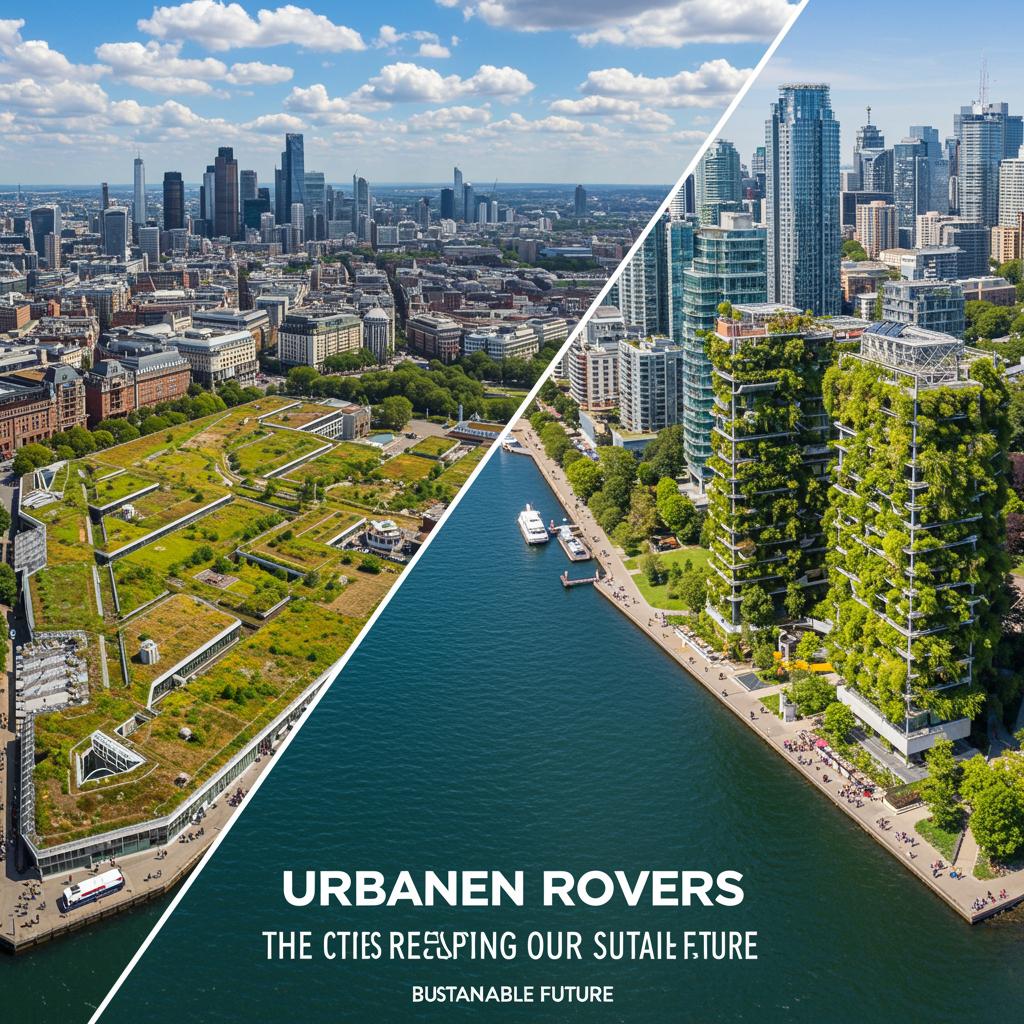
London and Toronto stand at the forefront of this global green revolution, implementing groundbreaking policies and initiatives that are reshaping urban planning worldwide. Their success stories offer invaluable blueprints for cities facing similar environmental challenges, demonstrating how metropolitan areas can become catalysts for positive environmental change rather than obstacles.
This exploration delves into how these two influential cities are pioneering sustainable urban development, the specific strategies they are implementing, the challenges they have overcome, and the measurable impacts of their green initiatives. From ambitious carbon neutrality goals to community-driven environmental justice projects, these urban centers are writing the playbook for the sustainable cities of tomorrow.
The Urgency of Urban Environmentalism
Cities as Environmental Battlegrounds
Cities occupy just three percent of the Earth's land surface but account for sixty to eighty percent of energy consumption and seventy-five percent of carbon emissions. With sixty-eight percent of the world's population projected to live in urban areas by 2050, cities represent both our greatest environmental challenge and our most promising opportunity for meaningful climate action.
Urban environments have historically been characterized by excessive carbon emissions from transportation and buildings, poor air quality and urban heat island effects, inefficient waste management systems, limited green spaces and biodiversity, and water management challenges with strained infrastructure. Yet these same urban centers possess unique advantages for implementing environmental solutions. They have concentrated populations that can benefit from efficiency improvements, economic and intellectual resources to drive innovation, governmental structures capable of implementing transformative policies, opportunities for large-scale demonstration projects, and networks that facilitate rapid knowledge sharing between cities.
As London's former mayor Boris Johnson noted, cities are where the future happens first. This prescient observation encapsulates why urban environmental leadership matters so profoundly to our collective future.
London: The Sustainable Metropolis
Policy Framework: Setting Ambitious Targets
London has positioned itself as a global leader in urban sustainability through its comprehensive policy framework. The city's Environmental Strategy, launched in 2018 and expanded in 2023, outlines London's path to becoming a zero-carbon city by 2030—twenty years ahead of the United Kingdom's national target.
Key policy commitments include reducing carbon emissions by sixty percent by 2025 compared to 1990 levels, making London the world's first National Park City with green spaces covering more than half of its area, improving air quality to meet World Health Organization guidelines by 2025, achieving zero waste status by 2030, and creating a fully circular economy by 2035.
London's Mayor Sadiq Khan has made environmental action a cornerstone of his administration, stating that the city faces a climate emergency and that he is determined to make London a zero-carbon city by 2030. He emphasizes that this is not just about the environment but about creating a fairer, healthier, and more prosperous city for all Londoners.
Transportation Revolution: Beyond the Congestion Charge
London's transportation sector is undergoing a radical transformation, building upon the pioneering congestion charge introduced in 2003, which reduced traffic by thirty percent in central London.
The city's transportation initiatives now include the Ultra Low Emission Zone, expanded in 2023 to cover all of Greater London, which charges vehicles that do not meet strict emission standards and has reduced nitrogen dioxide levels by forty-four percent in central London. The city aims to have a fully electric bus fleet by 2026, with over 850 electric buses already in operation. The Cycleways network now spans over three hundred kilometers of protected cycling routes, with £1.4 billion invested in cycling infrastructure since 2018. Major areas including Oxford Street and parts of the South Bank have been converted to pedestrian-only zones, reclaiming urban space from vehicles. Expanded electric ferry services on the Thames reduce road congestion while producing zero emissions.
These initiatives collectively cut transportation-related emissions by thirty-seven percent between 2015 and 2023, while improving mobility options for residents.
Green Buildings and Infrastructure
London's built environment is being reimagined through innovative policies and practices. The London Plan requires all new developments to be net-zero carbon and incorporate green infrastructure. The Retrofit Revolution program has upgraded over 200,000 homes and 1,000 public buildings for energy efficiency. Solar Together London has facilitated the installation of rooftop solar on more than 25,000 properties. Mandatory green roofs on new commercial developments have added 1.5 million square meters of green roof space since 2020. The RE:FIT program has helped reduce carbon emissions from public buildings by forty percent.
Notable projects include The Crystal in East London, one of the world's most sustainable buildings, which generates its own energy and harvests rainwater. Bloomberg's European Headquarters achieved the highest BREEAM sustainability rating ever awarded. The Walkie Talkie building at 20 Fenchurch Street features London's highest public garden.
Nature-Based Solutions
London's commitment to becoming the world's first National Park City has driven remarkable green initiatives. The urban forest project has planted 300,000 new trees, increasing London's tree canopy by three percent since 2020. Rewilding projects have restored 150 hectares of urban wilderness, including Walthamstow and Woodberry Wetlands. Over 2,500 community growing spaces provide local food production and green skills training. The Green Grid, a network of interconnected green spaces and corridors, supports biodiversity and provides natural cooling. The Blue Network has restored fifteen kilometers of London's rivers and waterways to natural states.
These initiatives have contributed to a twenty percent increase in urban biodiversity since 2018 and provided eighty-two percent of Londoners with access to quality green space within a ten-minute walk from their homes.
Toronto: North America's Green Pioneer
Climate Leadership and Governance
Toronto's approach to environmental sustainability centers on its TransformTO Climate Action Strategy, which aims to reduce greenhouse gas emissions by sixty-five percent by 2030 and achieve net-zero emissions by 2040.
The city's governance innovations include the Climate Advisory Group, comprising scientific experts, Indigenous knowledge keepers, business leaders, and community representatives. Neighborhood Climate Action Plans are tailored to local contexts and needs. The Climate Accountability Framework requires mandatory annual progress reporting. Climate considerations are integrated into all municipal decision-making. The Climate Equity Office ensures that just transition principles guide all initiatives.
Mayor Olivia Chow has emphasized that Toronto's climate action is not just about reducing emissions but about creating a more equitable, resilient, and livable city for everyone.
Green Building Revolution
Toronto has implemented some of North America's most progressive green building policies. The Toronto Green Standard mandates increasingly stringent sustainability requirements for new construction, with all new buildings required to be near-zero emissions by 2028. The High-Rise Retrofit Improvement Support Program provides financing for energy efficiency upgrades in multi-unit residential buildings. The Green Roof Bylaw, North America's first mandatory green roof requirement, has resulted in over 640 green roofs covering more than 500,000 square meters. The Zero Emissions Buildings Framework provides a roadmap for eliminating emissions from the building sector. Mass timber construction incentives have led to Toronto becoming a leader in sustainable wood construction.
Landmark sustainable buildings include The Arbour at George Brown College, one of North America's tallest mass timber buildings; The Well, a mixed-use development with district energy systems and advanced water management; and Quayside, a climate-positive community being developed on Toronto's waterfront.
Water Innovation and Shoreline Restoration
Toronto's relationship with Lake Ontario has driven innovative water management approaches. The Don River Naturalization Project is a $1.25 billion initiative to restore the river mouth and create new wetlands. Waterfront Toronto's flood protection landform protects 240 hectares from flooding while creating new public spaces. Green infrastructure for stormwater management includes over four hundred bioswales and permeable surfaces. Water efficiency programs have reduced per capita consumption by fifteen percent despite population growth. The Blue Flag beaches program improves water quality at Toronto's lakefront.
These water initiatives simultaneously address climate resilience, biodiversity protection, and public recreation needs.
Community Engagement and Social Equity
Toronto has pioneered approaches to ensure environmental benefits are equitably distributed. The Neighborhood Climate Action Program funds community-led initiatives in underserved areas. Indigenous Environmental Leadership programs incorporate traditional ecological knowledge into city planning. The Tower Renewal Partnership improves sustainability in aging apartment buildings where many low-income residents live. The Green Jobs Strategy creates pathways to environmental careers for marginalized communities. The Urban Agriculture Action Plan expands food production in the city, with over two hundred community gardens.
These programs have generated measurable improvements in environmental justice indicators, with formerly underserved neighborhoods seeing the largest increases in green space access and air quality improvements.
Comparative Analysis: Learning From Two Approaches
Quantifiable Impacts
Both cities have achieved remarkable environmental improvements. London has seen a forty-six percent reduction in carbon emissions since 2000, a ninety-nine percent reduction in hourly nitrogen dioxide exceedances since 2016, a twenty percent increase in public transportation ridership, a forty-five percent reduction in waste sent to landfill, and a 12.5 percent increase in green space coverage.
Toronto has achieved a thirty-eight percent reduction in carbon emissions since 2008, a twenty-five percent improvement in air quality index readings, a sixteen percent decrease in per capita water consumption, ninety-three percent of residents within a ten-minute walk of green space, and a 270 percent increase in cycling trips since 2015.
These metrics confirm that well-designed urban environmental policies deliver measurable benefits within relatively short timeframes.
Challenges and Obstacles
Despite their impressive achievements, both cities face significant challenges. Economic barriers include high upfront costs for green infrastructure, competing budget priorities especially post-pandemic, risk aversion from private investors, and difficulty quantifying long-term financial benefits. Technical and physical constraints include aging infrastructure requiring extensive retrofitting, limited space for new green infrastructure in dense urban cores, heritage preservation requirements conflicting with efficiency upgrades, and technical challenges in decarbonizing certain sectors like heavy industry and heating.
Social and political resistance presents additional hurdles, including concerns about affordability impacts of environmental regulations, political opposition to measures perceived as restricting personal choices, balancing competing stakeholder interests, and ensuring equitable distribution of both costs and benefits. Climate vulnerabilities such as increasing frequency of extreme weather events, rising sea and lake levels threatening coastal infrastructure, intensifying heat island effects during summer months, and strain on emergency services during climate disruptions further complicate their efforts.
How cities overcome these challenges may ultimately prove more instructive than their successes, providing valuable lessons for other urban areas.
Future Directions: The Next Frontier
Emerging Innovations
Both London and Toronto are exploring cutting-edge approaches that may define the next phase of urban environmentalism. Urban digital twins create virtual models of city systems to test interventions before implementation. Decentralized energy microgrids build neighborhood-scale renewable energy networks. Carbon-negative construction uses materials that sequester more carbon than they emit. Vertical agriculture develops building-integrated food production at scale. Climate-responsive infrastructure designs systems that automatically adapt to changing weather conditions.
Cross-City Collaboration
The C40 Cities Climate Leadership Group has facilitated knowledge sharing between London, Toronto, and other global cities, accelerating the adoption of successful approaches across borders. Key collaborative initiatives include the Net Zero Carbon Buildings Declaration, the Clean Construction Forum, the Urban Nature Declaration, the Zero Waste Declaration, and the Green and Healthy Streets Declaration.
This international knowledge transfer multiplies the impact of local innovations, creating global momentum for urban sustainability.
Conclusion: Cities as Catalysts for Global Change
London and Toronto exemplify how cities can transform environmental challenges into opportunities for innovation, economic development, and improved quality of life. Their experiences prove that urban areas can substantially reduce their environmental footprints while becoming more livable, equitable, and resilient places.
The ultimate significance of these urban environmental pioneers lies not just in their local achievements, but in their role as testing grounds for solutions that can be adopted globally. As former United Nations Secretary-General Ban Ki-moon observed, our struggle for global sustainability will be won or lost in cities.
The green revolution unfolding in London, Toronto, and other forward-thinking cities offers a compelling vision of a more sustainable urban future—one where dense human settlement becomes an environmental asset rather than a liability. As more cities adopt and adapt these pioneering approaches, the cumulative impact could reshape our planetary trajectory.
Perhaps most importantly, these urban environmental success stories provide something increasingly precious in the face of climate challenges: tangible proof that meaningful progress is possible, and that human ingenuity, when properly directed, can create cities that thrive within planetary boundaries while offering improved quality of life for all residents.
The views expressed in this article are those of the author and do not necessarily reflect the views of WriteFlow. WriteFlow does not endorse this content and does not guarantee its accuracy or completeness.



Comments (0)