Cross-Border Crimes: International Gangs and the Rise of Global Criminal Networks

Introduction: The Borderless Nature of Modern Crime
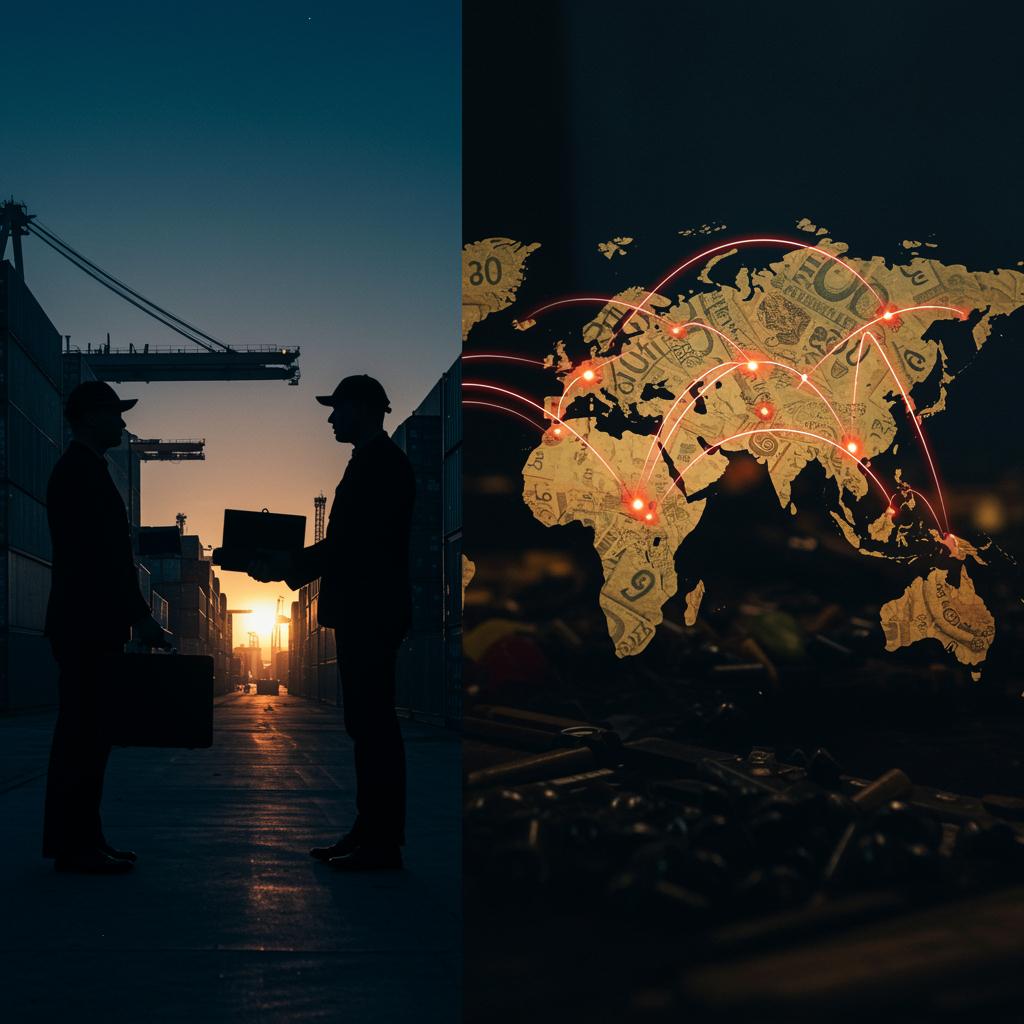
In an increasingly interconnected world, criminal organizations have evolved to exploit the very systems designed to facilitate global commerce, communication, and travel. What were once localized gangs have transformed into sophisticated transnational criminal enterprises that span continents and generate billions in illicit revenue annually. These global criminal networks represent one of the most significant security challenges of the twenty-first century.
Modern criminal organizations leverage advanced technology, exploit legal loopholes, and capitalize on globalization's benefits while evading its regulatory mechanisms. They operate in a gray zone between traditional law enforcement jurisdictions, making detection and prosecution extraordinarily challenging for national authorities working within confined borders.
Historical Evolution of International Criminal Organizations
The roots of transnational organized crime can be traced back centuries, but the modern iteration took shape after World War II. The Italian-American Mafia's expansion into international drug trafficking marked one of the first instances of truly global criminal networking. However, the collapse of the Soviet Union in 1991 created unprecedented opportunities for international criminal expansion.
The dismantling of communist governments across Eastern Europe created power vacuums that criminal organizations quickly filled. Former state security personnel possessed valuable skills, connections, and access to weapons stockpiles. This convergence gave birth to some of the world's most powerful criminal syndicates, including the Russian Bratva.
Simultaneously, economic liberalization and the removal of trade barriers facilitated the movement of goods, services, and people across borders. While these developments brought legitimate benefits, they also created new opportunities for criminal exploitation. The same shipping containers that carried legitimate goods could also transport drugs, weapons, or human trafficking victims.
Major International Criminal Organizations
Russian Organized Crime Groups
Russian organized crime groups, collectively known as the Russian Mafia or Bratva, represent one of the most influential transnational criminal networks. Unlike traditional hierarchical structures, Russian criminal organizations operate as loose confederations of independent groups that collaborate when mutually beneficial.
These organizations have established significant presences across Europe, North America, Australia, and Israel. Their activities encompass cybercrime, money laundering, arms trafficking, human trafficking, and sophisticated financial fraud. Russian criminal groups are particularly notorious for ransomware operations and cryptocurrency theft.
Mexican Drug Cartels
Mexican drug cartels have evolved from regional trafficking organizations into powerful transnational enterprises operating across multiple continents. Organizations like the Sinaloa Cartel and Jalisco New Generation Cartel maintain extensive networks throughout the Americas and have expanded to Europe, Asia, and Africa.
While drug trafficking remains their primary revenue source, these organizations have diversified into human trafficking, kidnapping, extortion, and illegal mining. Their expansion has been facilitated by strategic partnerships with local criminal groups, corruption of officials, and sophisticated logistics networks.
Chinese Triads and Organized Crime
Chinese organized crime groups have expanded globally following China's economic opening and large-scale diaspora. These organizations operate sophisticated international networks involved in human trafficking, money laundering, cybercrime, and counterfeit goods.
Modern Chinese organized crime is often less visible, operating through seemingly legitimate businesses and exploiting cultural and language barriers. They have been particularly successful in establishing operations in countries with significant Chinese populations.
Italian-American Organized Crime
While past their peak influence, traditional Italian-American organized crime families continue to operate internationally, maintaining connections with Sicilian Mafia groups. Modern operations focus on sophisticated financial crimes, including securities fraud, illegal gambling, and money laundering.
West African Criminal Networks
West African criminal networks, particularly from Nigeria, have become major players in international organized crime. These organizations are known for sophisticated fraud schemes, including advance fee fraud, business email compromise, and romance scams targeting victims worldwide.
Primary Criminal Activities and Revenue Streams
Drug Trafficking
Drug trafficking remains the largest revenue source for most international criminal organizations, generating an estimated $320 billion annually. Modern operations are characterized by their global scope, with production in one region, transit through multiple countries, and consumption in markets thousands of miles away.
The rise of synthetic drugs has particularly benefited criminal organizations, as these substances can be produced anywhere with access to precursor chemicals. This has led to new trafficking routes and the involvement of criminal groups that previously focused on other activities.
Human Trafficking
Human trafficking generates an estimated $150 billion annually while causing immeasurable human suffering. Modern operations are characterized by their international scope, with victims often transported thousands of miles from their countries of origin.
Criminal organizations are involved in all forms of human trafficking, including forced labor, sexual exploitation, and organ trafficking. These operations involve complex international networks that specialize in recruitment, transportation, exploitation, and profit distribution.
Cybercrime and Financial Fraud
Cybercrime has become a major revenue source for international criminal networks, generating hundreds of billions of dollars annually. Modern cybercrime operations involve sophisticated international networks that specialize in different aspects, from developing malware to monetizing stolen data.
The international nature of cybercrime makes it particularly challenging to investigate and prosecute. Criminal organizations can launch attacks from one country, route communications through servers in multiple others, and cash out proceeds in entirely different jurisdictions.
Money Laundering
Money laundering is essential to all international criminal organizations, allowing them to enjoy their proceeds while avoiding detection. Modern operations exploit weaknesses in the global financial system using shell companies, trade-based laundering, cryptocurrency exchanges, and real estate investments.
The development of cryptocurrency has created new money laundering opportunities, as digital assets can be transferred across borders instantly with relative anonymity. Criminal organizations have been quick to adopt cryptocurrency, leading to specialized laundering services.
Arms Trafficking
International arms trafficking involves the illegal transfer of weapons across national borders, often to conflict zones or terrorist groups. This trade undermines international security and contributes to violence worldwide. Criminal organizations involved often have connections to corrupt officials or military personnel.
Operational Methods and Organizational Structures
Network-Based Organizations
Modern international criminal organizations increasingly operate as networks rather than traditional hierarchies. These networks consist of semi-autonomous cells that collaborate on specific operations while maintaining independence. This structure provides resilience against law enforcement disruption and the ability to rapidly adapt.
Network structures facilitate international expansion, as criminal organizations can partner with local groups in new territories rather than attempting direct control. These partnerships leverage local knowledge while reducing exposure to law enforcement.
Technology and Communication
Modern criminal organizations are heavy users of technology, employing encrypted communication, sophisticated financial software, and advanced logistics tools. Many have technology capabilities rivaling legitimate corporations, employing skilled programmers and cybersecurity experts.
Criminal organizations have been quick to adopt new technologies, including artificial intelligence and blockchain. This sophistication has increased their capabilities while making detection more challenging for law enforcement.
Corruption and Institutional Infiltration
Corruption is essential to international criminal operations, allowing them to operate with reduced risk. Criminal groups invest heavily in corrupting government officials, law enforcement officers, and judicial personnel who can facilitate operations or provide protection.
The corruption of financial sector professionals is particularly important, as it facilitates money laundering. Criminal groups often work with corrupt bankers, lawyers, and accountants who provide essential services.
Geographic Hotspots and Transit Routes
Traditional trafficking corridors include the Golden Triangle in Southeast Asia, a major center for methamphetamine and opium production, and the Golden Crescent covering parts of Afghanistan, Iran, and Pakistan, a primary source of heroin. The Balkans serve as a crucial transit corridor for drugs moving from Asia to European markets.
West Africa has emerged as a major transit zone for cocaine moving from South America to European markets, with some countries becoming narco-states where criminal organizations exercise significant influence.
Maritime shipping routes have become critical corridors for criminal activities. Criminal organizations conceal contraband in legitimate shipping containers, often working with corrupt port officials. The sheer volume of maritime trade makes effective screening extremely difficult.
Certain cities have emerged as criminal hubs due to their economic importance or regulatory environments. Dubai, Hong Kong, and Panama City have become centers for money laundering, while major port cities like Rotterdam and Antwerp are crucial nodes in drug trafficking networks.
Impact on Global Security and Society
Economic Consequences
Transnational criminal activities generate between $1.6 and $2.2 trillion annually. This illicit flow distorts legitimate markets, undermines fair competition, and reduces government tax revenues. Criminal organizations often invest profits in legitimate businesses, sometimes using unfair advantages to outcompete honest enterprises.
Social and Human Costs
The human cost of international organized crime is immeasurable. The drug trade is responsible for hundreds of thousands of deaths annually. Human trafficking destroys the lives of millions of victims. The violence associated with criminal organizations terrorizes entire communities and undermines social cohesion.
National Security Implications
International criminal organizations pose significant national security threats. Their corruption of government officials can compromise sensitive information. Criminal organizations have been known to sell weapons to terrorist groups, facilitate illegal immigration, and engage in espionage.
Law Enforcement Challenges and Responses
One of the greatest challenges is the mismatch between the global scope of criminal operations and the limited jurisdiction of national law enforcement. Criminal organizations exploit differences in national laws and legal procedures to avoid prosecution.
International cooperation is often slow and bureaucratic, hampered by diplomatic tensions and sovereignty concerns. The principle of dual criminality, requiring activities to be illegal in both jurisdictions, can create loopholes.
Despite challenges, the international community has developed cooperation mechanisms. Interpol, Europol, and the United Nations Office on Drugs and Crime facilitate information sharing. Bilateral mutual legal assistance treaties provide frameworks for cooperation. Joint investigation teams have proven effective in disrupting complex international operations.
The Role of Technology in Modern Criminal Networks
The digital revolution has fundamentally transformed how criminal organizations operate. Dark web marketplaces provide anonymity for selling illegal goods globally. Cryptocurrency allows value transfer across borders quickly and with relative anonymity.
Criminal organizations are adopting artificial intelligence to identify fraud victims, optimize trafficking routes, and automate operations. Deepfake technology is used for fraud, extortion, and disinformation campaigns.
Criminal groups have invested heavily in cybersecurity and counter-surveillance, employing skilled professionals and using advanced encryption. Some use techniques borrowed from nation-state actors.
Future Trends and Emerging Threats
Climate change is creating new criminal opportunities. New shipping routes due to melting Arctic ice offer drug trafficking routes in regions with limited law enforcement presence. Legal and illegal markets for carbon credits create new fraud opportunities.
The convergence of technologies including artificial intelligence, biotechnology, and quantum computing will create new possibilities for criminal exploitation. The Internet of Things and increasing device connectivity create new attack surfaces.
Criminal organizations are likely to become even more networked and decentralized, adopting business models similar to legitimate multinational corporations. The increasing use of cryptocurrency may reduce the importance of geographic proximity.
Conclusion: The Ongoing Battle
The rise of global criminal networks represents one of the most significant challenges of the twenty-first century. These organizations have demonstrated remarkable adaptability, quickly adopting new technologies and evolving their methods in response to law enforcement.
Success will require unprecedented international cooperation, information sharing, and resource coordination. Law enforcement must continue adapting, requiring significant investment in technology, training, and cooperation mechanisms. The private sector has a crucial role, with financial institutions and technology companies working closely with authorities.
The fight against international organized crime is not just a law enforcement issue but a broader societal challenge. Only through coordinated action across all sectors can the international community hope to contain the threat posed by global criminal networks.
The battle will be long and ongoing. However, the stakes are too high to accept defeat. The security, prosperity, and freedom of societies worldwide depend on successfully containing these criminal threats. The choices made today in developing laws, institutions, and cooperation mechanisms will determine whether future generations inherit a world where the benefits of globalization can be enjoyed safely.
The views expressed in this article are those of the author and do not necessarily reflect the views of WriteFlow. WriteFlow does not endorse this content and does not guarantee its accuracy or completeness.





Comments (0)