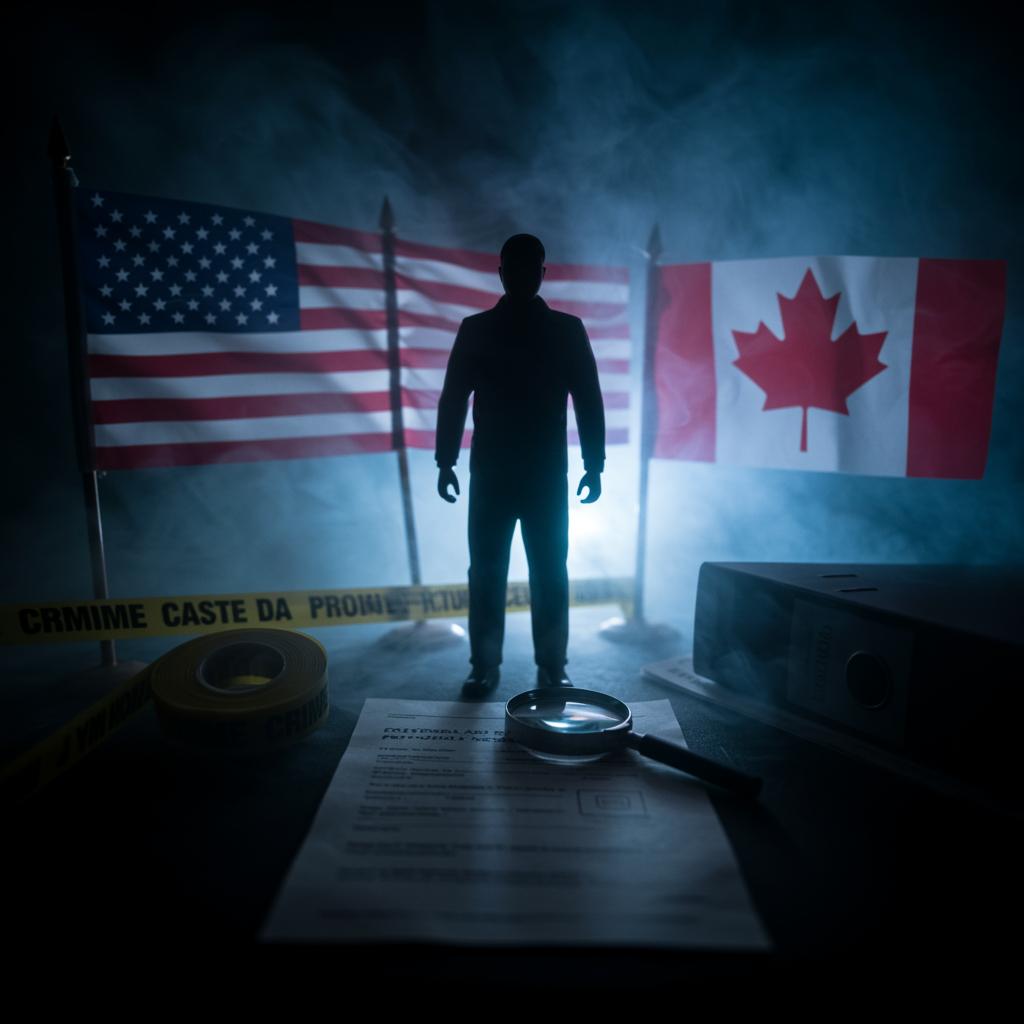
Justice Denied? Unsolved Murders Still Haunting North America and the UK


The Haunting Reality of Unsolved Murder
In the shadowy corners of our modern justice systems, thousands of murder cases remain open files gathering dust in police departments across North America and the United Kingdom. These are not merely statistics. They represent lives cut short, families left without answers, and communities haunted by questions that may never be resolved.
Nearly 346,000 cases of homicide went unsolved from 1965 to 2023, according to FBI data. Each unsolved case represents a failure of the justice system to provide closure, accountability, and peace to those who desperately need it.
The Numbers Game: Statistics Behind the Crisis
In the United States, the murder clearance rate has dropped dramatically over the past several decades. While police departments in the 1960s solved approximately ninety percent of homicides, that figure has fallen to around fifty percent in recent years. This means that roughly half of all murder victims will never see their killers brought to justice.
The situation in major American cities is particularly alarming. Cities like Chicago, Baltimore, and Detroit have seen solve rates drop to as low as thirty to forty percent in some years. The odds of getting away with murder are disturbingly high, creating an environment where violent crime can flourish with impunity.
The United Kingdom presents a somewhat different picture, though still troubling. According to Murdermap, out of 103 homicides reported in 2023, only five have been solved, seventy-three are awaiting trial, six suspects are dead, and nineteen remain unsolved.
Scotland presents an interesting exception. One hundred percent of the 605 homicides committed in Scotland since 2013 have been solved, demonstrating that high clearance rates are achievable with proper resources and training.
The Perfect Storm: Why Cases Go Cold
Understanding why murder cases remain unsolved requires examining the complex interplay of factors that can derail investigations. Unlike television crime dramas, real-world investigations face numerous obstacles.
One primary factor is the changing nature of homicide itself. In the past, many murders were committed by individuals known to the victim. Today, a larger percentage involve strangers, gang violence, and drug-related killings where establishing motive and identifying suspects is far more challenging.
The decline in witness cooperation represents another significant obstacle. In many communities, particularly those plagued by violence and distrust of law enforcement, witnesses are reluctant to come forward. This "no snitching" culture creates a wall of silence that investigators struggle to penetrate.
Resource constraints plague police departments, limiting their ability to conduct thorough investigations. Homicide detectives often carry heavy caseloads, juggling multiple active investigations while also working cold cases. The time and manpower required for comprehensive murder investigations simply aren't available in many departments.
The complexity of modern forensic science, while offering new tools, has also created new challenges. DNA analysis and digital forensics require specialized training and expensive equipment. Even when available, the backlog of evidence awaiting analysis can be substantial, sometimes taking months or years to process critical evidence.
Iconic Cases That Refuse to Fade
No suspects have ever been arrested for the murder of JonBenét Ramsey, a six-year-old beauty pageant winner found dead in her Boulder, Colorado, home on December 26, 1996. This case has become perhaps the most famous unsolved murder in American history, generating thousands of hours of media coverage and persistent speculation.
The Jack the Ripper murders in London's Whitechapel district during 1888 represent the most enduring unsolved serial killer case in history. The case has spawned an entire industry of books, films, tours, and scholarly research.
The Zodiac Killer, who terrorized Northern California in the late 1960s and early 1970s, represents another case that has achieved mythical status. Despite decades of investigation and modern forensic techniques, the killer's identity remains unknown.
The Black Dahlia murder of Elizabeth Short in Los Angeles in 1947 continues to captivate true crime enthusiasts nearly eight decades later. The case has become a symbol of Hollywood's dark underbelly.
Technological Revolution: New Tools for Old Mysteries
The advent of advanced forensic technologies has revolutionized the investigation of cold cases. DNA analysis has proven to be a game-changer, allowing investigators to identify suspects, eliminate false leads, and sometimes exonerate the wrongly convicted.
Genetic genealogy represents one of the most exciting developments, combining DNA analysis with traditional genealogical research to identify suspects through family relationships. This technique gained widespread attention with the 2018 arrest of the Golden State Killer and has led to the resolution of dozens of cold cases.
Digital forensics has become increasingly important as society becomes more connected. Cell phone records, social media activity, and electronic communications can provide crucial evidence. However, the rapid evolution of technology also presents challenges.
Facial recognition technology and improved video analysis have enhanced investigators' ability to identify suspects. The proliferation of security cameras and cell phone videos means more crimes are being recorded than ever before.
Despite these advances, solving murders still requires traditional detective work. Technology provides tools, but it cannot replace the human element of police work.
The Human Cost: Families in Limbo
Behind every unsolved murder statistic lies a human story of profound loss and unresolved grief. Families face a unique form of trauma that can persist for decades, struggling with not only the death of their loved one but also the absence of answers and closure.
The concept of "ambiguous loss" particularly applies to families of unsolved murder victims. They often remain frozen in a state of active grief, unable to fully process their loss because so many questions remain unanswered.
Many family members become amateur investigators, dedicating countless hours to researching their loved one's case. While this can provide a sense of purpose, it can also become all-consuming, preventing healing.
Children who lose parents to unsolved murders face particular challenges, often struggling with feelings of abandonment, fear, and confusion that can persist into adulthood.
Support groups like Parents of Murdered Children and Survivors of Homicide provide emotional support and a community of people who understand this particular pain.
Geographic Patterns: Where Murder Goes Unsolved
The likelihood that a murder will remain unsolved varies dramatically by location. Urban areas with high crime rates and limited police resources tend to have lower clearance rates than rural or suburban communities.
Large metropolitan areas like Chicago, Detroit, and Baltimore have struggled with clearance rates well below the national average. These cities often deal with gang violence, drug-related killings, and a high volume of homicides that overwhelm investigative resources.
Smaller communities often have higher clearance rates, though they face their own challenges. Rural areas may lack specialized forensic resources and experienced homicide investigators.
Tribal lands in North America present a particularly troubling situation, especially regarding murders of Native American women. Complex jurisdictional issues have contributed to extremely high rates of unsolved murders among Native populations.
The Digital Age: Social Media Sleuths and Online Communities
The rise of social media has fundamentally changed how unsolved murders are discussed and investigated. Platforms like Reddit and Facebook have created spaces where amateur investigators can share theories and analyze evidence.
Online communities dedicated to true crime have exploded in popularity, sometimes developing extensive databases of information about unsolved cases. Their collective intelligence has occasionally produced valuable insights.
However, online amateur investigation has also created significant problems. The misidentification of suspects, spread of false information, and harassment of innocent people have all occurred. The 2013 Boston Marathon bombing highlighted these dangers when Reddit users incorrectly identified several innocent people as suspects.
Law enforcement agencies have had mixed reactions, with some appreciating the additional attention and tips while others worry about interference with official investigations.
International Cooperation: Cross-Border Challenges
Unsolved murders involving international elements present unique challenges. Cases may involve victims or suspects who have crossed borders, evidence located in multiple countries, or crimes spanning different legal jurisdictions.
The relationship between the United States and Canada generally provides a model for effective cooperation, with joint task forces and information sharing agreements.
The situation between the United States and Mexico presents greater challenges due to differences in legal systems, language barriers, and varying levels of law enforcement resources.
Interpol plays a crucial role in facilitating international cooperation, but its effectiveness depends on the cooperation of member countries.
Legislative and Policy Responses
Governments have implemented various measures aimed at addressing unsolved murders. In the United States, the Justice for All Act has provided federal funding for DNA testing. The Combined DNA Index System has been expanded, making it easier to link evidence from different cases.
The Debbie Smith Act has provided millions for DNA testing, helping eliminate backlogs of untested rape kits, some of which have led to murder suspect identification.
Some states have established cold case review units or created databases of unsolved cases. California's Cold Case Investigative Team and similar programs have led to the resolution of previously unsolved murders.
In the United Kingdom, the creation of the Serious Crime Analysis Section has improved the ability to investigate complex linked serious crimes.
The Role of Media and Public Attention
Media coverage of unsolved murders has potential benefits and drawbacks. Television programs like "Unsolved Mysteries" and "America's Most Wanted" have helped solve hundreds of cases by bringing them to national attention.
However, sensationalized reporting can create problems, focusing on dramatic details while ignoring important aspects of the investigation. Media attention can also interfere by alerting suspects to evidence.
The families of murder victims often have complicated relationships with media coverage. While they appreciate attention that keeps cases in the public eye, they may be frustrated by inaccurate reporting or invasion of privacy.
Social media has changed the dynamics by allowing anyone to share information. While this can be beneficial, it can also lead to misinformation and harassment of innocent people.
Advances in Forensic Science: Hope for Cold Cases
Next-generation DNA sequencing techniques have dramatically improved the ability to analyze degraded or mixed DNA samples. These techniques can sometimes produce results from evidence that is decades old.
Forensic genealogy has emerged as one of the most promising developments, combining DNA analysis with genealogical research using public genetic databases. This technique has been used to solve dozens of cold cases.
Improvements in digital forensics have kept pace with technology, providing new ways to extract information from electronic devices and trace digital communications.
Advances in forensic anthropology have improved the ability to analyze skeletal remains and determine cause of death even in cases where bodies are discovered years after the murder.
However, forensic science is not infallible. The history includes examples of techniques later found unreliable or misapplied, leading to wrongful convictions.
Looking Forward: The Future of Murder Investigation
The integration of artificial intelligence into criminal investigations represents one of the most promising developments. AI-powered systems can analyze large amounts of data, identify patterns, and assist in prioritizing leads.
The growth of genetic databases suggests that many more cold cases will be solvable in the future. However, this raises important privacy concerns about the appropriate use of genetic information.
Improvements in training for homicide investigators hold promise for increasing clearance rates. Many departments are recognizing the need for specialized training and developing programs to improve investigative skills.
Significant challenges remain. Resource constraints continue to plague law enforcement, and the problem of witness cooperation remains a significant obstacle, particularly in communities where distrust of law enforcement is high.
Conclusion: The Continuing Quest for Justice
The persistence of unsolved murders represents one of the most challenging problems facing modern law enforcement. These cases embody our collective failure to protect the innocent, hold the guilty accountable, and provide closure to those who have suffered unimaginable loss.
Yet they also represent something more hopeful: the enduring human commitment to seeking truth and justice, even in the face of seemingly insurmountable obstacles.
The families who refuse to give up hope, the investigators who continue working cold cases, the scientists who develop new techniques, and the communities who keep victims' memories alive all demonstrate that the quest for justice continues.
Advances in forensic science provide genuine reason for optimism that more unsolved murders will be resolved in the future. Evidence that seemed useless decades ago may hold the key to solving cases today.
However, realizing this potential requires sustained commitment from law enforcement, policymakers, and society. Adequate funding for cold case investigations, proper training, and continued investment in forensic capabilities are all essential.
The haunting reality of unsolved murders will likely persist, but so too will the efforts to solve them. In police departments, forensic laboratories, and family living rooms across North America and the United Kingdom, people continue to work on these cases with dedication and hope. Their efforts ensure that the search for justice continues and that the victims of unsolved murders are not forgotten.
The views expressed in this article are those of the author and do not necessarily reflect the views of WriteFlow. WriteFlow does not endorse this content and does not guarantee its accuracy or completeness.




Comments (0)