The Architecture of Movement: How Interstate Infrastructure Influences Urban Design

Introduction
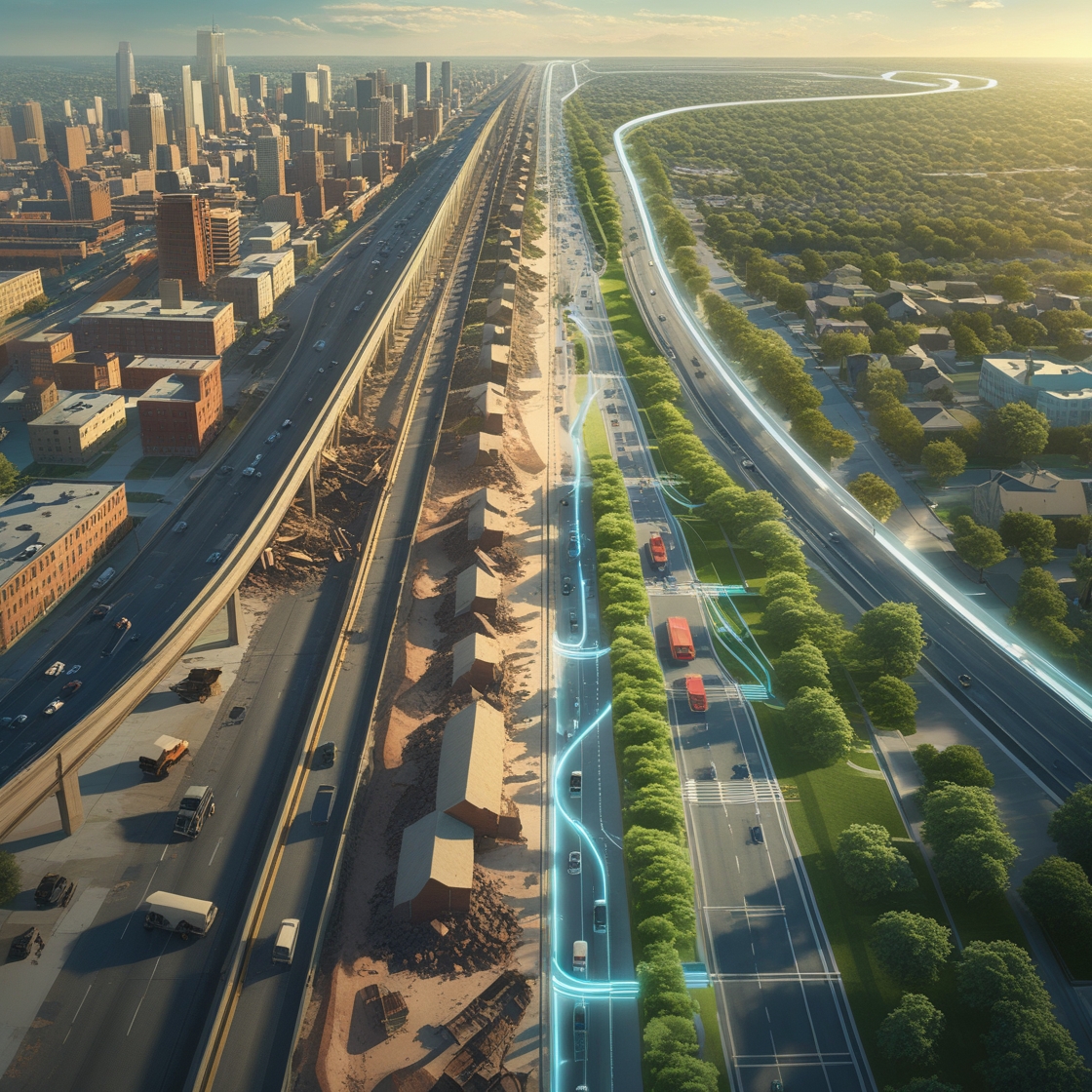
Interstate highways and transportation networks are not just functional systems that move people from point A to point B. They are powerful forces that shape the very fabric of our cities. From the sprawling suburbs that emerged alongside America's highways to the revitalized urban cores created through infrastructure removal projects, the relationship between transportation systems and urban design is profound and complex.
The Birth of Interstate America: Reshaping the Urban Landscape
When President Eisenhower signed the Federal-Aid Highway Act in 1956, he set in motion one of the largest public works projects in history. The 41,000-mile National System of Interstate and Defense Highways would forever transform American cities.
The interstate system's immediate impact was dramatic. Neighborhoods were bifurcated, urban cores were circumvented, and development patterns shifted dramatically outward. Cities like Detroit, Cincinnati, and Kansas City saw historic neighborhoods demolished to make way for concrete arteries, while suburban growth exploded along these new corridors.
This suburban expansion created what urban planners call "edge cities"—clusters of commercial, retail, and office developments at highway intersections far from traditional downtowns. Places like Tysons Corner outside Washington D.C. and the areas around the Perimeter in Atlanta evolved from farmland into major employment centers virtually overnight.
Highway Revolts and Urban Reclamation
By the late 1960s, the destructive aspects of highway construction sparked "highway revolts" across America. In San Francisco, the Embarcadero Freeway was eventually removed after the 1989 earthquake, transforming a concrete barrier into a vibrant waterfront promenade. Similar projects in Boston, Portland, and Milwaukee have reconnected neighborhoods and created valuable public spaces.
The Boston project, known as the "Big Dig," buried a congested elevated highway underground, reuniting downtown with the waterfront and creating new parks and development opportunities. Portland removed a section of Harbor Drive along the Willamette River, replacing it with a park that has become a beloved public space. Milwaukee dismantled the Park East Freeway spur, opening land that had sat vacant for decades for redevelopment.
These highway removal projects demonstrate a profound shift in urban thinking—recognizing that infrastructure should serve communities rather than divide them. Cities are increasingly viewing transportation networks as opportunities to enhance urban life rather than simply move traffic.
Design at the Intersection: Creating Places, Not Just Passages
Modern urban designers have begun to reimagine highway infrastructure as multifunctional systems that can contribute positively to city life.
Capping projects have emerged as one of the most innovative approaches. Klyde Warren Park in Dallas and Capitol Crossing in Washington D.C. build parks and developments over sunken highways, healing urban scars while creating new public spaces. These projects transform what was once a neighborhood barrier into a community asset, increasing property values and improving quality of life.
Multi-modal corridors are another important development. These routes integrate highways with light rail, bike paths, and pedestrian spaces to serve diverse transportation needs while minimizing environmental impacts. By accommodating multiple modes of travel, they reduce car dependency and create more inclusive transportation systems.
Context-sensitive design approaches have also gained traction, ensuring that new transportation projects respect and respond to local character rather than imposing standardized solutions. This means considering historic resources, neighborhood fabric, and community values alongside engineering requirements.
The Future: Smart Infrastructure in the Connected City
As transportation technology evolves, so too will its relationship with urban form. Smart highways with embedded sensors can optimize traffic flow and reduce emissions. Real-time data collection allows for dynamic management of congestion, adaptive traffic signals, and predictive maintenance.
Transit-oriented development creates walkable urban nodes around transportation hubs, reducing car dependency while fostering vibrant neighborhoods. These mixed-use communities integrate housing, employment, retail, and services within easy walking distance of transit stations, creating alternatives to car-dependent sprawl.
The rise of autonomous vehicles may further transform this relationship. Self-driving cars could potentially reduce the need for parking, enabling narrower roadways and freeing up valuable urban land for housing, parks, and community spaces. However, without careful planning, autonomous vehicles could also exacerbate sprawl and congestion. The outcome depends on policy choices made today.
Learning from the Past, Designing for Tomorrow
The history of interstate infrastructure offers valuable lessons for urban designers. Transportation systems wield enormous power to divide or connect communities, to enable sprawl or foster density, to degrade or enhance the public realm.
The most successful modern approaches recognize that highways, streets, and transit lines are not merely technical systems but fundamental shapers of urban experience. By designing transportation networks as integral components of great places—rather than simply as conduits between them—we can create more sustainable, equitable, and vibrant cities.
Equity must remain at the center of these efforts. Past highway projects disproportionately harmed low-income neighborhoods and communities of color, often displacing residents and cutting off access to opportunity. Reimagining infrastructure today means addressing those historic harms and ensuring that future investments benefit all communities fairly.
Conclusion
As we rebuild America's aging infrastructure, we have an unprecedented opportunity to reimagine these systems not just as ways to move people and goods, but as catalysts for creating more livable, connected, and beautiful urban environments.
The architecture of movement is, in the end, the architecture of possibility—the framework upon which we build the cities of tomorrow. Every dollar spent on transportation is also a dollar spent on shaping how we live, work, and interact with one another. By understanding that connection, we can design infrastructure that does more than function. It can inspire.
The views expressed in this article are those of the author and do not necessarily reflect the views of WriteFlow. WriteFlow does not endorse this content and does not guarantee its accuracy or completeness.


Comments (0)