How Technology Is Changing Crime: Cybercriminals on the Rise in the US, UK & Canada

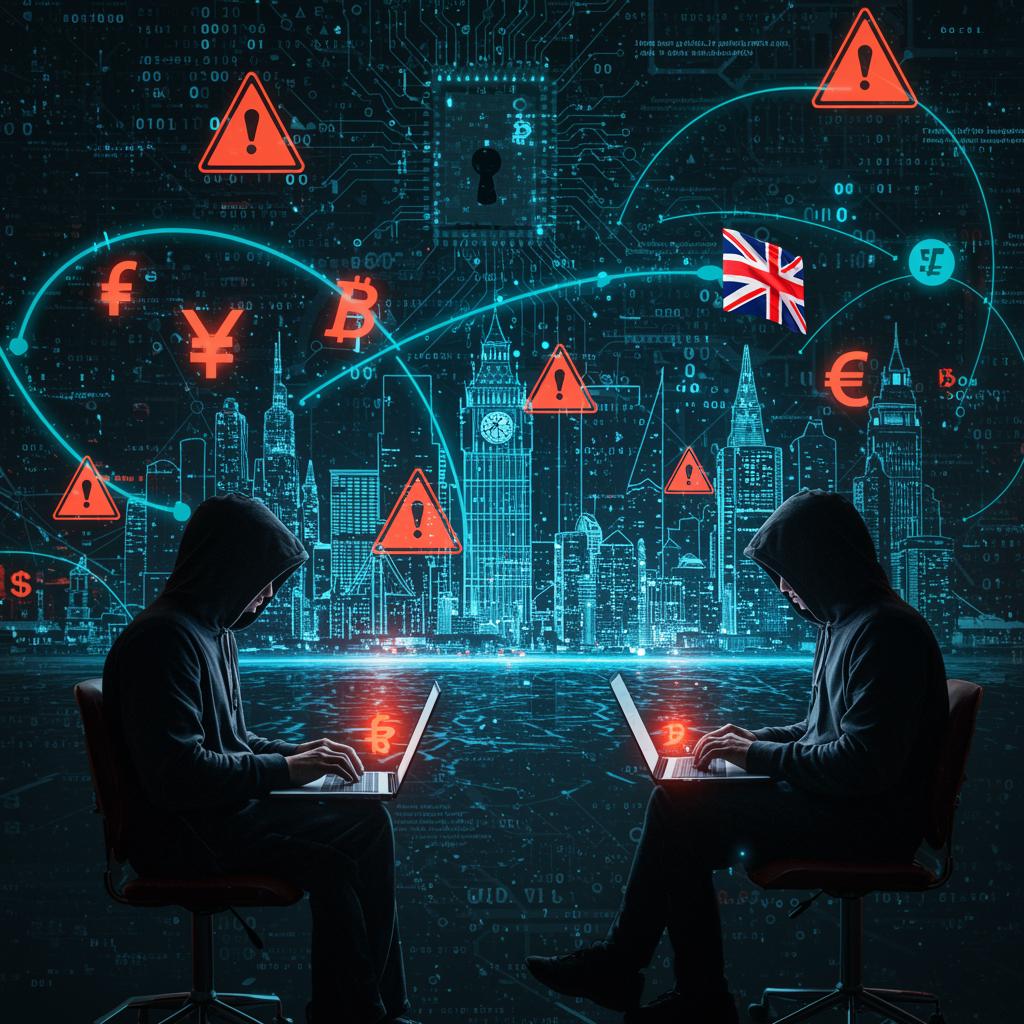
The digital revolution has fundamentally transformed the landscape of criminal activity across North America and Europe, creating unprecedented opportunities for illicit enterprises while simultaneously challenging traditional concepts of jurisdiction, enforcement, and security. As the United States, United Kingdom, and Canada have embraced digital technologies to drive economic growth and social connectivity, they have inadvertently created vast new territories for criminal exploitation. The rise of cybercriminals in these nations represents not merely an evolution of existing criminal activities, but a complete paradigm shift that has redefined what it means to commit crime in the 21st century. The Digital Transformation of Criminal Enterprise The transition from physical to digital crime represents one of the most significant shifts in criminal methodology since the industrial revolution. Traditional criminal activities that once required physical presence, extensive logistical planning, and significant resources can now be executed from anywhere in the world with nothing more than a computer and internet connection. This democratization of criminal capability has lowered barriers to entry while exponentially increasing the potential scale and impact of criminal activities. In the United States, the Federal Bureau of Investigation reports that cybercrime complaints have increased by over 300% in the past five years, with financial losses exceeding $10 billion annually. The sophistication of these operations has evolved from simple email scams to complex, multi-layered attacks that can paralyze entire infrastructure systems. The 2021 Colonial Pipeline ransomware attack, which disrupted fuel supplies across the Eastern United States for nearly a week, demonstrated how cybercriminals could achieve impacts that would have required massive physical operations in previous eras. The United Kingdom has experienced similar exponential growth in cybercriminal activity, with the National Crime Agency reporting that cybercrime now affects more British citizens than all other forms of crime combined. British financial institutions lose over £1.2 billion annually to cybercrime, while the broader economic impact, including business disruption and recovery costs, is estimated to exceed £27 billion per year. The interconnected nature of the UK's financial sector, combined with London's role as a global financial hub, has made the country both a prime target and a launching point for international cybercriminal operations. Canada, despite its smaller population, has not been immune to this digital crime wave. The Canadian Anti-Fraud Centre reports that cybercrime losses have tripled in the past three years, with organized cybercriminal groups increasingly targeting Canadian financial institutions, government agencies, and critical infrastructure. The country's vast geographic expanse and reliance on digital communications for connecting remote communities has created unique vulnerabilities that cybercriminals have been quick to exploit. The Evolution of Cybercriminal Organizations Modern cybercriminal organizations bear little resemblance to traditional criminal enterprises, operating more like technology startups than conventional crime syndicates. These groups have developed sophisticated business models that include customer service departments, quality assurance processes, and even employee benefits packages. The emergence of "Cybercrime-as-a-Service" has created an entire underground economy where specialized skills are bought and sold like legitimate business services. The organizational structure of modern cybercriminal enterprises reflects the distributed nature of digital operations. Unlike traditional criminal organizations that require geographic proximity and physical meeting spaces, cybercriminal groups can operate across multiple time zones and continents, with members who may never meet in person. This distributed model provides significant advantages in terms of operational security, risk distribution, and resource optimization, while making detection and prosecution exponentially more difficult for law enforcement agencies. Specialization within cybercriminal organizations has reached levels that rival legitimate technology companies. Groups now employ dedicated malware developers, social engineering specialists, money laundering experts, and customer relationship managers. The level of technical expertise within these organizations often exceeds that found in many legitimate businesses, as cybercriminals are driven by immediate financial incentives and operate without the regulatory constraints that limit innovation in legitimate technology sectors. The recruitment methods employed by cybercriminal organizations have also evolved to match the digital nature of their operations. Online forums, social media platforms, and even legitimate job sites are used to identify and recruit individuals with the technical skills necessary for cybercriminal operations. Universities and technical schools have become hunting grounds for cybercriminal recruiters, who often target students facing financial difficulties or those disillusioned with traditional career prospects. Ransomware: The New Bank Robbery Ransomware has emerged as the most visible and destructive form of modern cybercrime, representing a fundamental shift from traditional property crimes to something closer to digital kidnapping or extortion. The evolution of ransomware from simple screen-locking programs to sophisticated encryption systems that can paralyze entire organizations demonstrates the rapid technological advancement within cybercriminal enterprises. The United States has become the primary battleground for ransomware operations, with attacks targeting everything from local government agencies to major corporations and critical infrastructure providers. The 2023 MOVEit attack affected over 1,000 organizations globally, demonstrating how a single vulnerability can be exploited to impact millions of individuals and thousands of businesses simultaneously. The economic impact extends far beyond the ransom payments themselves, as organizations must invest heavily in system recovery, security improvements, and business continuity planning. British organizations have faced increasingly sophisticated ransomware attacks that demonstrate cybercriminals' understanding of both technical vulnerabilities and business operations. Attacks on the National Health Service have shown how cybercriminals can weaponize essential services, while attacks on financial institutions have demonstrated their ability to threaten the stability of entire economic sectors. The interconnected nature of British business operations means that a successful attack on one organization can cascade through supply chains and business networks, amplifying the impact far beyond the initial target. Canadian critical infrastructure has become a particular focus for ransomware operators, who recognize that the country's vast geography and reliance on digital communications create unique vulnerabilities. Attacks on provincial health systems, municipal governments, and energy sector companies have demonstrated how cybercriminals can exploit the distributed nature of Canadian governance and service delivery to maximize disruption and increase pressure for ransom payments. The economics of ransomware operations have created a self-reinforcing cycle of growth and sophistication. The enormous profits generated by successful attacks fund research and development efforts that produce even more sophisticated tools and techniques. Cybercriminal organizations now maintain research and development departments that rival those of legitimate technology companies, constantly innovating to stay ahead of defensive measures and law enforcement capabilities. Financial Fraud in the Digital Age The digitization of financial services has created unprecedented opportunities for financial fraud, enabling cybercriminals to steal money on scales that were impossible in the pre-digital era. The shift from physical currency and paper-based transactions to digital payments and online banking has created new attack vectors while eliminating many of the physical constraints that previously limited financial crimes. Online banking fraud has evolved from simple password theft to sophisticated attacks that exploit vulnerabilities in multi-factor authentication systems, mobile banking applications, and digital payment platforms. Cybercriminals have developed techniques for intercepting two-factor authentication codes, manipulating mobile banking applications, and exploiting vulnerabilities in payment processing systems. The speed of digital transactions means that stolen funds can be transferred and laundered within minutes, often making recovery impossible even when fraud is detected quickly. Credit card fraud has been transformed by the availability of large databases of stolen financial information, often obtained through data breaches at major retailers, financial institutions, and service providers. The underground economy for stolen financial data has become highly sophisticated, with specialized markets for different types of information and quality ratings for data sellers. The global nature of these markets means that financial information stolen in one country can be used to commit fraud anywhere in the world within hours of the initial breach. The emergence of cryptocurrency has created new opportunities for both committing financial fraud and laundering the proceeds of cybercriminal activities. While cryptocurrencies were initially viewed as offering greater security and anonymity than traditional financial systems, they have instead created new vulnerabilities that cybercriminals have been quick to exploit. Cryptocurrency exchanges have become prime targets for cybercriminal attacks, while the pseudonymous nature of many cryptocurrencies has made them ideal vehicles for money laundering operations. Social Engineering: The Human Element Despite the technological sophistication of modern cybercrime, human psychology remains a critical vulnerability that cybercriminals continue to exploit with increasing effectiveness. Social engineering attacks have evolved from simple phishing emails to sophisticated psychological manipulation campaigns that can deceive even security-conscious individuals and organizations. The United States has seen a dramatic increase in business email compromise attacks, where cybercriminals use social engineering techniques to convince employees to transfer money or provide sensitive information. These attacks often involve extensive research into target organizations, including analysis of social media profiles, corporate websites, and public records to create convincing impersonation attempts. The financial losses from these attacks now exceed those from traditional bank robberies by several orders of magnitude. British organizations have faced increasingly sophisticated social engineering attacks that exploit cultural norms and social expectations. Cybercriminals have demonstrated deep understanding of British business culture, communication styles, and organizational hierarchies, using this knowledge to craft convincing pretexts for their attacks. The integration of artificial intelligence and machine learning technologies has enabled cybercriminals to personalize their attacks at scale, creating individualized manipulation attempts for thousands of targets simultaneously. Canadian social engineering attacks have often exploited the country's cultural emphasis on politeness and helpfulness, with cybercriminals posing as government officials, technical support representatives, or charitable organizations to gain trust and compliance from their targets. The distributed nature of Canadian government services has created opportunities for cybercriminals to impersonate officials from various agencies and levels of government, often exploiting confusion about jurisdictional responsibilities to avoid detection. The psychological impact of successful social engineering attacks extends far beyond the immediate financial losses, often causing lasting damage to victims' trust in digital systems and their confidence in their own judgment. This psychological dimension of cybercrime represents a new form of victimization that traditional crime statistics and response systems are poorly equipped to address. Critical Infrastructure Under Attack The targeting of critical infrastructure by cybercriminals represents one of the most concerning developments in the evolution of digital crime, as these attacks can affect entire populations and threaten national security. The interconnected nature of modern infrastructure systems means that successful attacks can cascade through multiple sectors, causing widespread disruption that extends far beyond the immediate target. Power grid attacks have demonstrated cybercriminals' capability to threaten essential services that entire societies depend upon. The 2015 attack on Ukraine's power grid, while not targeting the US, UK, or Canada directly, served as a proof of concept that influenced cybercriminal strategies worldwide. Subsequent attacks on power systems in these countries have shown how cybercriminals can exploit the increasing digitization of power generation and distribution systems to cause widespread blackouts and economic disruption. Transportation systems have become increasingly vulnerable as they have adopted digital technologies for traffic management, logistics coordination, and safety systems. Cybercriminal attacks on port management systems, air traffic control networks, and railway signaling systems have demonstrated how digital vulnerabilities can translate into physical safety risks. The potential for cybercriminal attacks to cause transportation accidents or casualties adds a new dimension to digital crime that extends far beyond traditional financial motivations. Water treatment and distribution systems have emerged as particularly attractive targets for cybercriminals, both because of their critical importance and because they often lack the sophisticated cybersecurity measures found in other sectors. Attacks on water systems can threaten public health directly, while the distributed nature of water infrastructure makes it difficult to protect comprehensively. The 2021 attack on a Florida water treatment plant, where cybercriminals attempted to increase sodium hydroxide levels to dangerous concentrations, demonstrated how cybercrime can literally become a matter of life and death. Healthcare systems have become prime targets for cybercriminal attacks, particularly during the COVID-19 pandemic when healthcare organizations were under extreme operational pressure. Ransomware attacks on hospitals have forced the cancellation of surgeries, the diversion of ambulances, and the temporary shutdown of entire medical facilities. The life-and-death nature of healthcare services gives cybercriminals enormous leverage in ransom negotiations, while the vast amounts of sensitive personal information stored in healthcare systems make them attractive targets for data theft operations. The Dark Web Economy The development of the dark web has created a parallel economy that facilitates cybercriminal activities while providing anonymity and security for illegal transactions. This hidden internet infrastructure has become the backbone of modern cybercriminal operations, enabling coordination, resource sharing, and commerce on a global scale. Cybercriminal marketplaces on the dark web operate with levels of sophistication that rival legitimate e-commerce platforms, complete with user reviews, customer service departments, and quality guarantees. These platforms enable cybercriminals to purchase everything from stolen data and malware to money laundering services and false identity documents. The professionalization of these marketplaces has lowered barriers to entry for cybercriminal activities while enabling specialization and efficiency improvements across the entire ecosystem. The emergence of cybercrime-as-a-service business models has transformed the dark web economy from a simple marketplace for illegal goods into a comprehensive service economy. Cybercriminals can now outsource virtually every aspect of their operations, from initial system penetration to final money laundering, allowing individuals with limited technical skills to conduct sophisticated attacks. This industrialization of cybercrime has dramatically increased the volume and sophistication of attacks while making it more difficult for law enforcement to track and prosecute cybercriminal activities. Cryptocurrency integration within dark web marketplaces has solved many of the payment and trust issues that previously limited illegal commerce. Smart contracts and escrow services provide security for transactions between parties who cannot meet in person or rely on traditional legal protections. The pseudonymous nature of many cryptocurrencies, combined with sophisticated mixing and laundering services, has made it extremely difficult for law enforcement to trace financial flows within the dark web economy. Artificial Intelligence and Machine Learning in Cybercrime The integration of artificial intelligence and machine learning technologies into cybercriminal operations represents the latest evolution in the technological arms race between criminals and defenders. These technologies enable cybercriminals to automate and scale their operations while adapting their tactics in real-time to overcome defensive measures. AI-powered social engineering attacks can now generate personalized phishing emails at scale, analyzing social media profiles, communication patterns, and personal relationships to create convincing impersonation attempts. Machine learning algorithms can identify the most effective psychological triggers for specific individuals or demographic groups, enabling cybercriminals to optimize their manipulation techniques for maximum effectiveness. Automated vulnerability discovery and exploitation systems powered by machine learning can identify and exploit security weaknesses faster than human security professionals can patch them. These systems can analyze vast amounts of code, network traffic, and system configurations to identify potential attack vectors, then automatically develop and deploy exploits without human intervention. Deepfake technology has created new opportunities for cybercriminal impersonation and fraud, enabling the creation of convincing audio and video content that can be used to deceive victims or manipulate financial systems. The increasing quality and decreasing cost of deepfake technology means that sophisticated impersonation attacks are becoming accessible to cybercriminals with limited resources or technical expertise. AI-powered evasion techniques enable malware and attack tools to adapt their behavior in real-time to avoid detection by security systems. Machine learning algorithms can analyze defensive responses and automatically modify attack strategies to maintain effectiveness, creating a dynamic threat landscape that constantly evolves to overcome static defensive measures. Cross-Border Challenges and Jurisdiction Issues The global nature of cybercriminal operations has created unprecedented challenges for law enforcement agencies that are constrained by traditional concepts of jurisdiction and sovereignty. Cybercriminals routinely operate across multiple countries simultaneously, exploiting differences in legal systems, law enforcement capabilities, and international cooperation agreements to avoid prosecution. The United States faces particular challenges in prosecuting cybercriminals who operate from countries with limited law enforcement cooperation or extradition agreements. Many sophisticated cybercriminal organizations are based in countries that either lack the capability to investigate and prosecute cybercrime or actively protect cybercriminals whose activities target foreign nations. This jurisdictional arbitrage enables cybercriminals to operate with near impunity while targeting victims in countries with strong rule of law traditions. The United Kingdom's departure from the European Union has complicated cybercrime investigations and prosecutions by limiting access to EU-wide law enforcement cooperation mechanisms. Brexit has created new barriers to information sharing, evidence collection, and suspect extradition, potentially creating opportunities for cybercriminals to exploit gaps in international cooperation. The UK's efforts to establish new bilateral cooperation agreements have made progress, but the complexity of cybercriminal operations often requires multilateral coordination that can be difficult to achieve through bilateral mechanisms alone. Canada's position between the United States and Europe, combined with its membership in various international organizations, provides unique opportunities for facilitating international cybercrime investigations. However, the country also faces challenges in balancing privacy rights with law enforcement needs, particularly given the global nature of digital communications and data storage. Canadian cybercriminals often exploit the country's reputation for privacy protection and rule of law to avoid detection while targeting victims in other countries. Economic Impact and Hidden Costs The economic impact of cybercrime extends far beyond the direct financial losses reported in crime statistics, creating hidden costs that ripple through entire economic systems. The need for cybersecurity investments, insurance premiums, business continuity planning, and regulatory compliance creates a massive drag on economic productivity that is difficult to quantify but impossible to ignore. Cybercrime has created an entire cybersecurity industry that now employs millions of people and generates hundreds of billions of dollars in revenue annually. While this represents economic activity, it is essentially a deadweight loss from a societal perspective, as these resources could otherwise be deployed in productive activities. The cybersecurity industry exists primarily to counter threats created by cybercriminals, representing a massive misallocation of human and financial resources. The indirect costs of cybercrime include reduced trust in digital systems, leading to slower adoption of beneficial technologies and reduced efficiency in business operations. Organizations must invest heavily in security measures that reduce usability and increase operational complexity, while individuals may avoid using digital services that could improve their quality of life or economic opportunities. Insurance markets have been fundamentally disrupted by cybercrime, with cyber insurance premiums increasing dramatically while coverage becomes more limited and exclusionary. The unpredictable nature of cyber risks, combined with the potential for catastrophic losses, has made it difficult for insurers to accurately price coverage or maintain adequate reserves. This insurance market disruption affects the broader economy by increasing costs for all organizations and potentially making some business models unviable. Law Enforcement Evolution and Response Law enforcement agencies across the United States, United Kingdom, and Canada have been forced to undergo rapid transformation to address the cybercrime threat, developing new capabilities, organizational structures, and international cooperation mechanisms. These changes represent one of the most significant evolutions in law enforcement since the development of modern police forces in the 19th century. The FBI's establishment of dedicated cybercrime units and the creation of specialized cybercrime prosecutors represent a fundamental shift in how American law enforcement approaches criminal investigation and prosecution. The agency has invested heavily in technical capabilities, personnel training, and international cooperation mechanisms, while developing new investigative techniques specifically designed for digital environments. The challenges of investigating crimes that may involve hundreds of victims across dozens of countries have required new approaches to case management, evidence collection, and prosecution strategy. The UK's National Crime Agency has developed sophisticated cybercrime investigation capabilities while working to coordinate responses across multiple agencies and jurisdictions. The agency's collaboration with private sector partners, academic institutions, and international law enforcement organizations has created new models for public-private cooperation in addressing cybercrime threats. The complexity of investigating cybercriminal organizations that may involve individuals across multiple countries has required new legal frameworks and investigative authorities. The Royal Canadian Mounted Police has adapted its federal policing role to address cybercrime threats that often involve coordination between federal, provincial, and municipal agencies. Canada's decentralized policing model creates unique challenges for cybercrime investigation, as attacks may affect multiple jurisdictions simultaneously while originating from outside the country entirely. The development of new coordination mechanisms and information sharing protocols has been essential for effective cybercrime response. Future Trends and Emerging Threats The evolution of cybercrime shows no signs of slowing, with emerging technologies creating new opportunities for criminal exploitation while simultaneously enabling new defensive capabilities. The next phase of cybercriminal evolution is likely to be shaped by developments in quantum computing, Internet of Things devices, artificial intelligence, and biotechnology. Quantum computing represents both a potential threat and opportunity in the cybercrime landscape. While quantum computers could theoretically break many of the encryption systems that currently protect digital communications and transactions, they could also enable new forms of security that are fundamentally unbreakable. The timeline for practical quantum computing remains uncertain, but cybercriminals and defenders alike are preparing for a post-quantum world that may require complete reinvention of digital security systems. The proliferation of Internet of Things devices creates vast new attack surfaces that cybercriminals are already beginning to exploit. Smart home devices, industrial control systems, and wearable technology often lack adequate security measures while being connected to networks that contain sensitive information or control critical functions. The potential for cybercriminals to weaponize everyday devices for surveillance, fraud, or infrastructure attacks represents a fundamental expansion of the threat landscape. Biotechnology and genetic information represent emerging targets for cybercriminal exploitation, as healthcare systems digitize genetic data and biotechnology companies develop new treatments based on genetic analysis. The potential for genetic discrimination, biological warfare, or medical fraud based on genetic information creates new categories of cybercrime that current legal and regulatory frameworks are poorly equipped to address. Conclusion: Adapting to the New Reality The rise of cybercriminals across the United States, United Kingdom, and Canada represents a fundamental transformation in the nature of criminal activity that requires equally fundamental changes in how societies approach crime prevention, investigation, and prosecution. The digital revolution has created unprecedented opportunities for criminal exploitation while simultaneously challenging traditional concepts of jurisdiction, evidence, and punishment. The speed and scale of technological change means that cybercriminal capabilities will continue to evolve rapidly, requiring constant adaptation from law enforcement agencies, private sector organizations, and individual citizens. The traditional reactive approach to crime prevention is inadequate in a digital environment where attacks can be launched instantly from anywhere in the world and cause damage that spreads at the speed of light. Success in addressing the cybercrime threat will require unprecedented levels of cooperation between government agencies, private sector organizations, and international partners. The interconnected nature of digital systems means that vulnerabilities anywhere can threaten security everywhere, making cybersecurity a shared responsibility that extends across organizational and national boundaries. The human element remains crucial in both cybercriminal operations and cybersecurity defense, despite the increasing technological sophistication of the threat landscape. Education, training, and awareness programs are essential components of any comprehensive cybersecurity strategy, as the most sophisticated technical defenses can be undermined by human error or manipulation. The cybercrime challenge ultimately reflects broader questions about how societies adapt to technological change while preserving security, privacy, and individual freedom. The choices made today about cybersecurity investment, international cooperation, and regulatory frameworks will shape the digital landscape for generations to come, determining whether technology serves to enhance human flourishing or becomes a tool for exploitation and harm. The story of cybercrime's rise across North America and Europe is still being written, with new chapters added daily as technology continues to evolve and criminals continue to adapt. Understanding this evolution is essential for developing effective responses that can protect society while preserving the benefits that digital technology has brought to human civilization. The challenge is not merely technical but fundamentally social, requiring collective action to ensure that the digital future serves the common good rather than the interests of those who would exploit it for criminal gain.
The views expressed in this article are those of the author and do not necessarily reflect the views of WriteFlow. WriteFlow does not endorse this content and does not guarantee its accuracy or completeness.





Comments (0)