How Youth Voters Are Reshaping Politics in Canada, the US, and the UK

Introduction: The Rising Tide of Youth Political Power
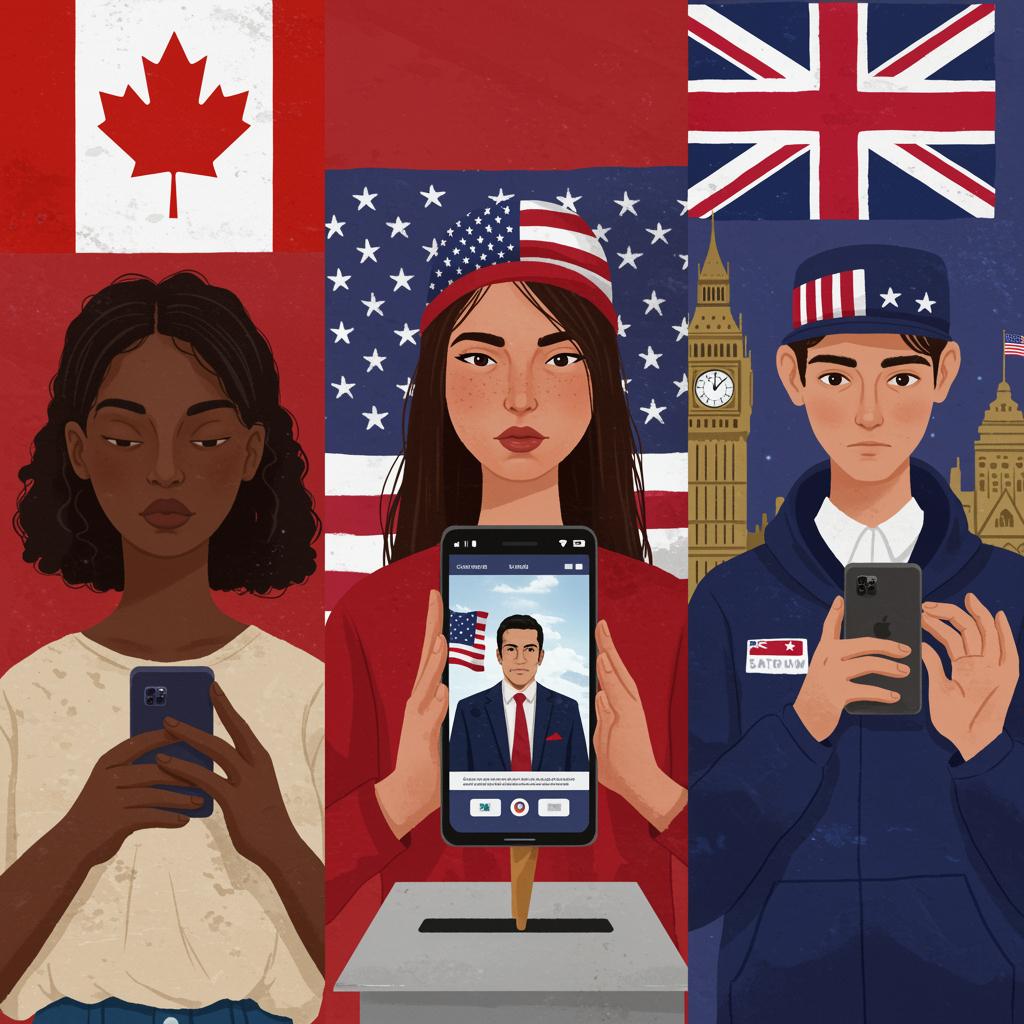
In the quiet corners of university campuses, across social media feeds, and in the streets of major cities, a political revolution is taking shape. It isn't being led by seasoned politicians or wealthy power brokers. Instead, it's driven by a group long dismissed as politically apathetic: young voters. Across Canada, the United States, and the United Kingdom, citizens aged 18 to 29 are defying old stereotypes and reshaping the political landscape with unprecedented engagement and a distinct set of priorities.
"Today's youth aren't just voters—they're architects of a new political reality," says Dr. Eliza Montgomery, a political scientist at King's College London. "What we're witnessing isn't a temporary surge but a fundamental shift in how democracy functions in Western nations."
This article explores how young voters are transforming politics across three influential democracies—examining their participation patterns, their unique priorities, and the digital revolution amplifying their collective voice.
Section 1: By the Numbers – The Youth Vote Phenomenon
Canada: From Apathy to Action
The 2021 Canadian federal election marked a turning point. Elections Canada reported that voter turnout among 18- to 29-year-olds rose to 53 percent, up from 47 percent in 2019. That demographic heavily influenced results in key urban ridings across Ontario, British Columbia, and Quebec.
Canadian youth have shown particular interest in environmental policy, with 74 percent naming climate change as their most important voting issue in post-election surveys. That focus has translated into real political pressure, pushing major parties to expand their climate platforms to appeal to this growing bloc.
United States: Generation Z Enters the Arena
In the United States, the 2020 presidential election saw roughly 55 percent of eligible voters aged 18 to 29 cast ballots—an 11-point jump from 2016 and the highest youth turnout in decades. The 2022 midterms continued that trend, with youth turnout significantly above historical averages for non-presidential elections.
As researcher Maria Holden of the Center for Information & Research on Civic Learning and Engagement (CIRCLE) explains: "Young Americans aren't just voting at higher rates—they're volunteering for campaigns, organizing grassroots movements, and running for office themselves at unprecedented levels."
United Kingdom: Breaking from Tradition
The United Kingdom has seen similar shifts. Youth voter registration surged 38 percent in the five years leading up to 2023. During the Brexit referendum, while overall youth turnout was lower than many had hoped, those who did vote overwhelmingly supported remaining in the European Union—75 percent of 18- to 24-year-olds voted to remain.
Recent local elections show young voters increasingly breaking from traditional family voting patterns, with 62 percent reporting that they vote differently than their parents—a sharp increase from previous generations.
Section 2: Digital Natives, Digital Politics
The Social Media Campaign
Across all three nations, youth political engagement correlates strongly with innovative digital outreach. TikTok, Instagram, and YouTube have become critical battlegrounds where politicians must now compete for attention.
In Canada, Prime Minister Justin Trudeau's early adoption of Instagram helped secure the youth vote in his first election, while Conservative efforts to build a TikTok presence attracted previously unreachable young voters in western provinces.
American politicians have seen similar results. Alexandria Ocasio-Cortez's skilled use of Instagram Live to explain complex legislation has become a case study in effective youth outreach—an approach widely emulated across the political spectrum.
In the UK, the Labour Party's digital strategy targeting university students registered over 800,000 new young voters ahead of recent local elections.
Beyond Algorithms: Digital Organization
Youth voters aren't just consuming political content online—they're creating it and organizing through it.
In Canada, the "Vote Savvy" campaign, led by university students, registered over 120,000 first-time voters through targeted social media efforts.
American youth-led organizations like the Sunrise Movement coordinated climate protests in over 400 cities using primarily digital tools.
British youth have pioneered "parallel voting" platforms, where those below voting age participate in mock elections, building political habits before they turn 18.
"What makes today's youth political movement unique is how seamlessly they integrate online and offline action," observes Dr. James Forester of the University of Toronto. "A hashtag becomes a street protest becomes policy change with remarkable speed."
Section 3: Distinct Political Priorities
The Climate Imperative
Across all three countries, climate change consistently ranks as the top priority for young voters. That emphasis has forced mainstream parties to elevate environmental policies in their platforms.
In Canada, 68 percent of voters under 30 call climate change their top concern, compared to 41 percent of voters over 60.
American youth have been instrumental in pushing the Green New Deal and related climate initiatives into mainstream political discourse.
In the UK, 71 percent of young voters say they would not vote for a candidate without a strong climate platform, regardless of other positions.
Economic Justice and Inequality
The second shared priority is economic inequality, with particular attention to student debt, housing affordability, and living wages.
Canadian youth movements have successfully advocated for expanded student loan forgiveness programs and rent control measures in major cities.
American youth voters provided crucial support for minimum wage increases in multiple states through ballot initiatives.
British youth organizations have centered housing affordability in their advocacy, with notable success in London's rental market reforms.
Social Justice and Identity Politics
Young voters across these democracies show stronger support for progressive social policies.
In Canada, 82 percent of voters under 30 support expanded LGBTQ+ rights, compared to 61 percent of the general population.
American youth show the highest support for racial justice initiatives and police reform of any demographic.
British youth voters express greater concern for immigration rights and international development than older cohorts.
Section 4: Obstacles and Challenges
Structural Barriers to Participation
Despite rising engagement, young voters still face significant hurdles.
Voter ID requirements disproportionately affect young people in all three countries, since they are less likely to have driver's licenses or utility bills in their name.
University students often struggle with registration procedures when they live away from home.
Polling locations are frequently less accessible in areas with high youth populations.
Combating Disinformation
Youth voters, despite their digital fluency, remain vulnerable to targeted disinformation.
In Canada, researchers identified coordinated inauthentic behavior specifically targeting first-time voters with misleading information about registration deadlines.
American youth reported higher exposure to false information about mail-in voting procedures during recent elections.
British youth were targeted by sophisticated disinformation campaigns during the Brexit referendum.
To meet these challenges, youth-led organizations have developed creative solutions.
Vote Buddy programs in Canada pair first-time voters with experienced voters to navigate registration.
Digital literacy initiatives in American high schools have reduced susceptibility to election misinformation by 41 percent.
Youth-designed fact-checking platforms in the UK have reached millions of first-time voters.
Section 5: From Voters to Candidates – The Future of Youth in Politics
The ultimate expression of youth political power lies in direct representation. Across all three nations, record numbers of young candidates are seeking office.
Canada's Youth Leadership
Canada has seen a 43 percent increase in candidates under 30 in federal elections over the past decade. Notable examples include:
Dominique Anglade, who became the first Black woman to lead a major political party in Quebec at age 38.
Terry Beech, elected to Parliament at 25, who has championed digital privacy legislation.
America's Generational Shift
The United States has witnessed extraordinary youth candidacies.
Alexandria Ocasio-Cortez's 2018 victory at age 29 inspired thousands of young candidates nationwide.
Madison Cawthorn became the youngest member of Congress in the modern era at 25.
Young candidates from both major parties have achieved unprecedented success in state legislatures, with over 800 state representatives under 35 currently serving.
Britain's New Generation
The UK has seen its own youth political renaissance.
Nadia Whittome became Britain's youngest MP at 23 in 2019.
Youth representation in local councils has increased by 31 percent since 2018.
Cross-party youth caucuses have formed in Parliament to address generational concerns regardless of partisan affiliation.
Conclusion: Democracy's Digital Natives Come of Age
As we look toward future elections, it's increasingly clear that young voters aren't just participants in democratic processes—they're transforming them. Their blend of digital fluency, issue-focused activism, and willingness to challenge established political norms is creating a distinctly modern form of citizenship.
"What we're seeing isn't a temporary surge in youth engagement but the emergence of a generation that approaches politics fundamentally differently than their predecessors," concludes Dr. Montgomery. "Their impact will be felt for decades as they age into positions of greater influence."
For political parties across the ideological spectrum, the message is clear: ignore youth voters at your peril. Their growing electoral power, distinctive priorities, and technological edge make them kingmakers in closely contested districts—and potentially the architects of a new political reality.
As Canada, the United States, and the United Kingdom navigate increasingly complex domestic and international challenges, the rising influence of young voters may prove to be democracy's most powerful adaptation mechanism—bringing fresh perspectives, urgent priorities, and innovative solutions to systems badly in need of renewal.
The views expressed in this article are those of the author and do not necessarily reflect the views of WriteFlow. WriteFlow does not endorse this content and does not guarantee its accuracy or completeness.

Comments (0)