The Science of Speed: What Makes a Sprinter Unstoppable?

Introduction
In the realm of human athleticism, few spectacles are as mesmerizing as watching an elite sprinter explode from the starting blocks and accelerate to speeds that seem to defy the limitations of the human body. When Usain Bolt set his world record of 9.58 seconds in the 100 meters, he reached a peak speed of 27.8 miles per hour, moving faster than most people can drive through a residential neighborhood. When Shelly-Ann Fraser-Pryce dominates the track with her explosive starts and maintained speed, she demonstrates a mastery of biomechanics that represents years of scientific optimization. The question that captivates scientists, coaches, and fans alike is deceptively simple. What makes these athletes so impossibly fast?
The answer lies in a complex interplay of genetics, biomechanics, neurology, and training methodology that pushes the human body to its absolute limits. Elite sprinting represents perhaps the purest expression of human speed and power, where fractions of seconds separate legends from also-rans, and where the difference between gold and fourth place can be measured in thousandths of a second. Understanding the science behind sprinting reveals not just how these athletes achieve their remarkable speeds, but also illuminates the fundamental principles that govern human movement and performance.
The Fundamental Equation of Speed
The physics of sprinting begins with a deceptively simple equation that governs all running performance. Speed equals stride length multiplied by stride frequency. This basic formula reveals that to run faster, an athlete must either take longer strides, increase the rate at which they take strides, or achieve some optimal combination of both. However, the simplicity of this equation belies the extraordinary complexity involved in maximizing each component.
Elite sprinters like Usain Bolt demonstrate how body dimensions influence this equation. At six foot five with exceptionally long legs, Bolt could cover more ground with each stride than shorter competitors, allowing him to maintain relatively high speeds with fewer steps per second. His peak stride length reached approximately 9.5 feet during his world record runs, significantly longer than most sprinters. Conversely, athletes like Shelly-Ann Fraser-Pryce, at five feet zero, compensate for shorter stride lengths with exceptional stride frequency, often taking over five steps per second at peak speed.
The optimization of this speed equation is not simply a matter of maximizing both variables. Because sprinting speed is the product of both stride length and stride frequency, maximum speed is ultimately limited by both variables, and increasing one often comes at the expense of the other. Elite sprinters spend their careers finding their individual optimal balance, which depends on their unique physical characteristics, muscle fiber composition, and neuromuscular coordination.
The Muscle Fiber Foundation
At the cellular level, sprinting performance is largely determined by muscle fiber composition, specifically the ratio of fast-twitch to slow-twitch muscle fibers. Elite sprinters often possess seventy to eighty percent fast-twitch muscle fibers compared to the general population's fifty-fifty distribution. These fast-twitch fibers, particularly the Type IIx subtype, can contract with tremendous force and speed but fatigue quickly, making them perfectly suited for explosive sprint efforts.
Fast-twitch muscle fibers provide several critical advantages for sprinting performance. They generate force more rapidly than slow-twitch fibers, allowing for quicker ground contact times and more explosive movements. They also produce greater peak power output, enabling the massive forces required to accelerate the body to maximum speed. However, these fibers rely primarily on anaerobic energy systems, which limits their endurance capacity and explains why even elite sprinters begin to decelerate after reaching peak speed around sixty to eighty meters.
The genetic component of muscle fiber distribution means that elite sprinters are literally born with advantages that cannot be replicated through training alone. While training can enhance the power and efficiency of existing muscle fibers, it cannot fundamentally change their type. This genetic lottery explains why many individuals can train extensively for sprinting but never approach elite levels of performance.
Biomechanical Perfection in Motion
The biomechanics of elite sprinting represent a masterclass in efficiency and power application. Every aspect of a sprinter's technique has been refined to maximize force production while minimizing energy waste. The sprint cycle consists of two primary phases. The stance phase, when the foot is in contact with the ground, and the flight phase, when both feet are airborne.
During the stance phase, which lasts only 0.08 to 0.12 seconds at maximum speed, elite sprinters must apply enormous forces to the ground to propel themselves forward. The key to maximizing speed lies in applying these forces at optimal angles and timing. Research shows that the most successful sprinters minimize vertical oscillation, keeping their center of mass moving in as straight a line as possible while still generating sufficient vertical force to maintain stride length.
The ground contact patterns of elite sprinters reveal remarkable consistency and precision. They typically land on the balls of their feet slightly ahead of their center of mass, allowing them to quickly transition from absorbing landing forces to generating propulsive forces. The ankle, knee, and hip work in perfect coordination to create what biomechanists call triple extension, where all three joints extend simultaneously to maximize power output.
The Neuromuscular Symphony
Perhaps the most remarkable aspect of elite sprinting is the neuromuscular coordination required to execute perfect technique at maximum speed. The nervous system must coordinate the firing of hundreds of muscle groups with precision measured in milliseconds. This coordination begins in the brain and travels through the spinal cord to activate specific motor units in a precisely timed sequence.
Elite sprinters develop what sports scientists call motor unit synchronization, where multiple motor units fire simultaneously to produce maximum force output. This synchronization is enhanced through years of specific training and cannot be achieved quickly. The nervous system adaptations that allow for elite sprinting performance often take six to ten years to fully develop, explaining why most sprinters do not reach their peak until their mid-twenties.
The rate of force development, or how quickly muscles can generate maximum force, is particularly crucial for sprinting success. Elite sprinters can reach peak force output in as little as fifty to eighty milliseconds, compared to two hundred to three hundred milliseconds for untrained individuals. This rapid force development is essential for the brief ground contact times that characterize elite sprinting.
Training Methodologies and Adaptations
The training programs that produce world-class sprinters are marvels of periodization and specificity. Modern sprint training incorporates multiple modalities designed to address different aspects of sprint performance.
Maximum velocity training involves short sprints at ninety-five to one hundred percent intensity to develop neuromuscular coordination at race pace. Speed endurance training helps athletes maintain their top speed longer, addressing the natural deceleration that occurs in the latter stages of sprint races. Acceleration training focuses on the explosive start and early acceleration phase, which can determine race outcomes in closely contested events.
Strength training plays a crucial role in sprint development, but not in the way many people imagine. Elite sprinters do not simply try to get as strong as possible. Instead, they focus on developing strength that translates directly to sprint performance. This includes Olympic lifting variations for explosive power, plyometric exercises for reactive strength, and isometric holds for specific strength angles. The goal is always to enhance the force-velocity relationship in ways that improve sprint performance.
The Start: Explosive Beginnings
The importance of the start in elite sprinting cannot be overstated. In races decided by hundredths of seconds, the first few steps can determine the outcome. Elite sprinters like Shelly-Ann Fraser-Pryce have built reputations on their explosive starts, often gaining decisive advantages in the first thirty meters of a race.
The biomechanics of the sprint start involve a complex sequence of movements that must be executed with perfect timing and technique. From the set position, sprinters must generate maximum horizontal force while maintaining balance and preparing for the transition to upright running. The first step out of the blocks is particularly crucial, as it sets the rhythm and angle for the entire acceleration phase.
Elite sprinters can generate ground reaction forces of three to four times their body weight during the start sequence. This enormous force production requires not only muscular strength but also precise technique to direct these forces in the optimal direction. The angle of the first few steps is crucial, as sprinters must gradually transition from the acute forward lean of the start to the more upright posture of maximum velocity running.
Technology and Performance Analysis
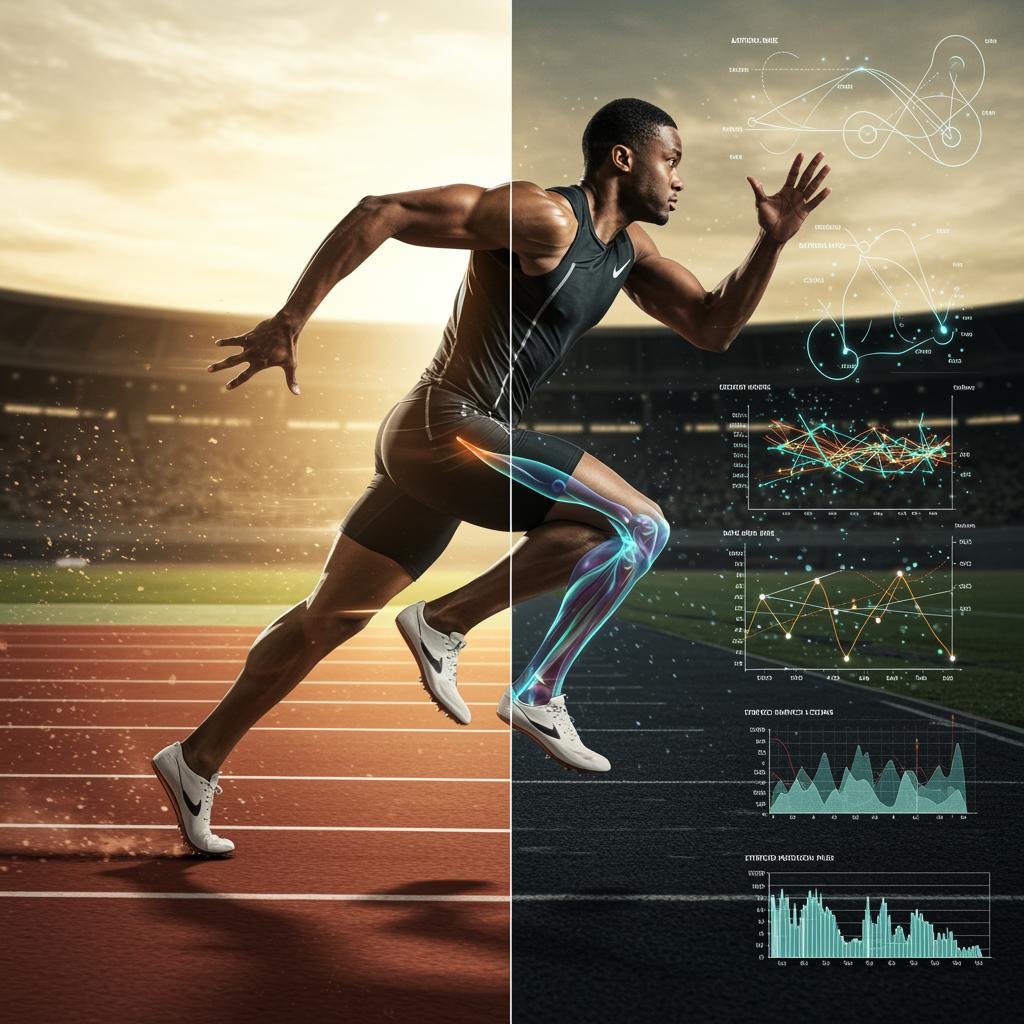
Modern sprint training leverages sophisticated technology to analyze and optimize performance. High-speed cameras operating at thousands of frames per second allow coaches and athletes to examine technique with unprecedented detail. Force plates embedded in tracks measure the exact forces applied during each ground contact, providing objective feedback about power production and application.
GPS and accelerometer technology enable precise measurement of acceleration profiles, allowing coaches to identify exactly when and how athletes reach their peak speeds. This data reveals individual patterns and helps optimize training programs for each athlete's specific needs. Some elite sprinters work with biomechanists who use 3D motion capture systems to analyze running mechanics with scientific precision.
Lactate testing and metabolic analysis help determine the energy system contributions during sprint efforts. While sprinting is primarily anaerobic, understanding how different energy systems contribute to performance helps optimize training intensities and recovery protocols.
The Psychology of Speed
The mental aspects of elite sprinting are often overlooked but critically important. Sprinting at maximum speed requires absolute confidence and the ability to relax while generating maximum force. This seeming contradiction is one of the most challenging aspects of sprint training to master. Athletes must learn to run with controlled aggression, maintaining perfect technique while pushing their bodies to absolute limits.
Visualization and mental rehearsal play significant roles in sprint preparation. Elite athletes spend considerable time mentally rehearsing their races, visualizing perfect technique and successful outcomes. This mental training helps develop the neural pathways that will be activated during competition, essentially practicing the race in the mind before executing it physically.
The ability to handle pressure and perform under intense scrutiny separates elite sprinters from very good ones. Major championships often feature environmental factors like crowd noise, media attention, and competitive pressure that can negatively impact performance if not properly managed.
Injury Prevention and Longevity
The extreme forces and speeds involved in elite sprinting create significant injury risks that must be carefully managed. Hamstring injuries are particularly common among sprinters due to the enormous forces these muscles must generate and control during high-speed running. Modern training programs incorporate extensive injury prevention protocols, including specific strengthening exercises, mobility work, and load management strategies.
Shelly-Ann Fraser-Pryce's longevity in sprinting, with a career spanning over a decade and a half, demonstrates how proper training and injury prevention can extend elite careers. Her approach to training evolution and adaptation has allowed her to remain competitive against athletes half her age, showcasing the importance of intelligent training progression and recovery management.
Recovery protocols for elite sprinters have become increasingly sophisticated, incorporating everything from cryotherapy and compression garments to sleep optimization and nutrition timing. The understanding that adaptation occurs during recovery, not just during training, has revolutionized how elite athletes approach their preparation.
The Future of Sprint Performance
As our understanding of sprint performance continues to evolve, new frontiers are emerging in training methodology and performance optimization. Genetic testing is beginning to provide insights into individual predispositions for certain training adaptations, allowing for more personalized training approaches. While genetic information cannot predict success, it may help optimize training programs for individual athletes.
Wearable technology is becoming increasingly sophisticated, providing real-time feedback about technique, force production, and physiological responses during training. This immediate feedback allows for faster learning and technique refinement, potentially accelerating the development process for young sprinters.
Research into neuromuscular electrical stimulation and other recovery modalities continues to provide new tools for enhancing adaptation and reducing recovery time. As these technologies become more accessible and refined, they may help athletes train at higher intensities more frequently, potentially pushing performance to new levels.
Conclusion: The Pursuit of Perfect Speed
The science of sprinting reveals that elite performance results from the optimization of numerous interconnected systems, from cellular muscle fiber characteristics to complex biomechanical movements to sophisticated training methodologies. Athletes like Usain Bolt and Shelly-Ann Fraser-Pryce represent the pinnacle of this optimization, combining genetic gifts with years of dedicated training and scientific refinement.
Understanding the science behind sprint performance does not diminish the awe-inspiring nature of these achievements. If anything, it enhances our appreciation for the extraordinary complexity and precision required to run faster than any human in history. Each world record represents not just individual excellence but also the advancement of human understanding about the limits of speed and power.
The science of speed ultimately reveals that becoming an unstoppable sprinter requires more than just running fast. It demands the integration of genetics, biomechanics, neurology, psychology, and training science into a seamless whole. For those who achieve this integration, the rewards include not just personal success but also the privilege of showcasing the absolute limits of human speed and the beautiful complexity of athletic excellence.
The views expressed in this article are those of the author and do not necessarily reflect the views of WriteFlow. WriteFlow does not endorse this content and does not guarantee its accuracy or completeness.




Comments (0)