Behind the Scenes: Secrets Hollywood Doesn't Want You to Know

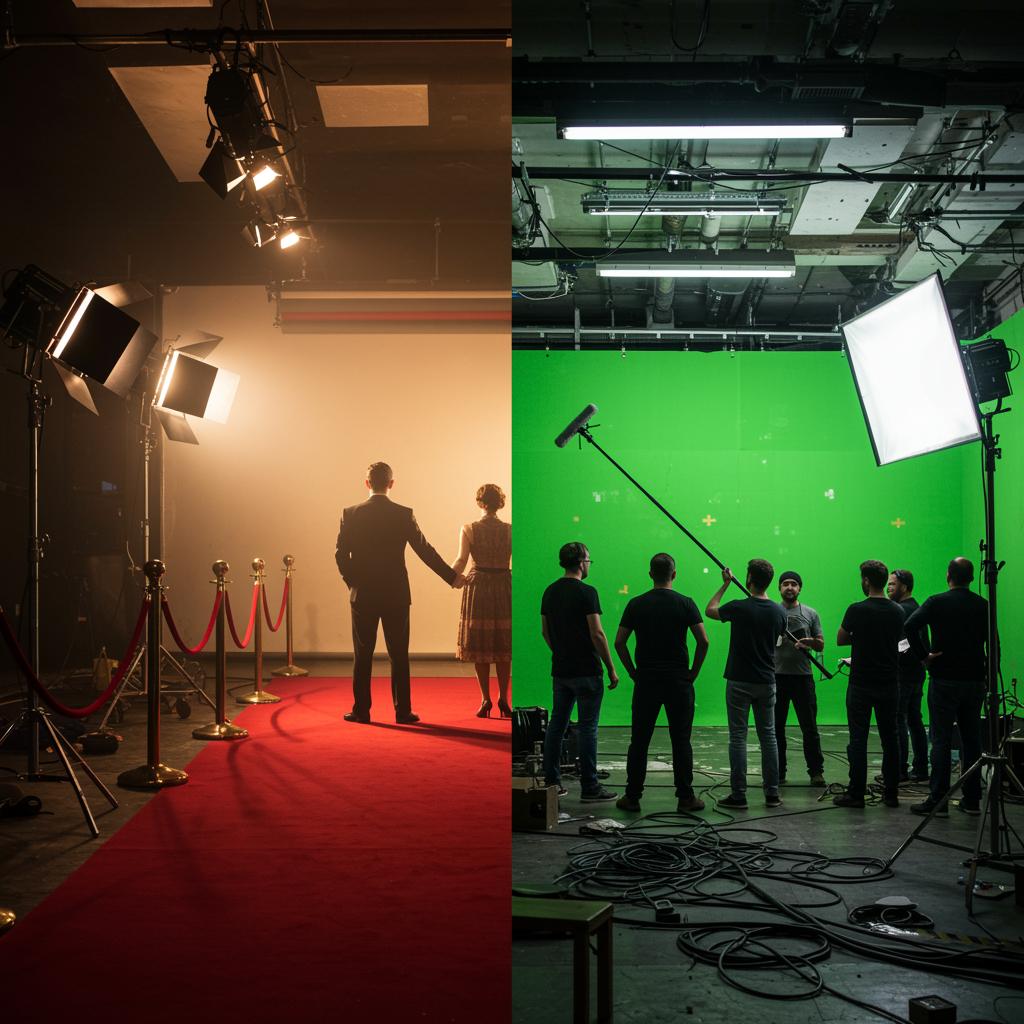
The glitz and glamour of Hollywood movies captivate audiences worldwide, but beneath the polished surface lies a labyrinth of industry secrets, creative shortcuts, and financial wizardry that studios prefer to keep hidden. From manipulated budgets to revolutionary techniques disguised as traditional filmmaking, the entertainment industry operates on principles that would surprise even the most devoted movie fans.
The Great CGI Deception: When "Practical Effects" Aren't So Practical
One of Hollywood's best-kept secrets is how extensively computer-generated imagery has infiltrated films that appear to rely on traditional practical effects. Old-fashioned techniques appear to have made a comeback, but the reality is they never went away. What audiences don't realize is that modern filmmaking employs a sophisticated hybrid approach where practical and digital elements are seamlessly blended, making it nearly impossible to distinguish what's real from what's computer-generated.
Directors and studios often promote their use of "practical effects" as a marketing strategy, knowing that audiences have grown weary of obvious CGI. However, the reality is far more complex. Even films celebrated for their practical approach typically undergo extensive digital enhancement in post-production. Explosions are digitally amplified, backgrounds are completely replaced, and actors' performances are subtly altered through facial capture technology. The industry has become so adept at this integration that what appears to be a single practical stunt might actually involve dozens of digital artists working for months to perfect a five-second sequence.
Budget Magic: The Numbers Game Hollywood Plays
The financial mechanics of Hollywood operate on principles that would make Wall Street executives blush. Movie budgets are often works of creative accounting that bear little resemblance to actual expenditures. Studios routinely inflate production costs to justify higher marketing spends, create tax advantages, or establish negotiating positions with talent and distributors. What the public sees as a "$200 million blockbuster" might have actually cost $120 million to produce, with the remainder allocated to distribution, marketing, and creative accounting maneuvers.
The recent recovery from industry strikes reveals another layer of financial complexity. The number of productions increased 18 percent last year and spend on those projects ramped up by $16.2 billion in comparison with 2023, when simultaneous writers' and actors' strikes shut down much of the business. This dramatic surge in spending wasn't just about catching up on delayed projects; it represents a fundamental shift in how studios approach production scheduling and talent negotiations.
The Location Shell Game: Where Movies Really Get Made
Hollywood's geographic footprint extends far beyond Los Angeles, but not for the reasons most people assume. While tax incentives and lower production costs drive many location decisions, studios have developed sophisticated strategies for maximizing financial benefits while maintaining creative control. Productions routinely establish paper offices in multiple states or countries, shifting different aspects of filmmaking to capitalize on various incentive programs.
The rise of virtual production technologies has further complicated this landscape. Studios can now create photorealistic environments that would have required expensive location shoots just a few years ago. This technological shift allows productions to claim local benefits while actually filming on soundstages thousands of miles away. The economic implications are staggering, as entire regions compete for productions that might only employ a handful of local workers while claiming millions in tax benefits.
The Talent Manipulation Machine
Behind every star's seemingly spontaneous public appearance lies a carefully orchestrated publicity machine that operates with military precision. Studios don't just promote movies; they actively shape public perception of their talent through strategic media manipulation. Social media managers craft "authentic" posts, publicists plant stories in entertainment media, and entire teams work to create the illusion of genuine celebrity interactions with fans.
The relationship between stars and studios has evolved into something resembling a symbiotic partnership, where both parties benefit from maintaining specific public personas regardless of reality. Actors often have no control over their public image once they reach a certain level of fame, with studios making decisions about everything from their romantic relationships to their political statements. The recent surge in celebrity-driven content reflects this dynamic, as studios recognize that audiences are more interested in personalities than traditional storytelling.
Technical Wizardry: The Real Magic Behind Movie Magic
Modern filmmaking employs technologies that would have been considered impossible just a decade ago, yet these innovations remain largely invisible to audiences. Motion capture technology has evolved beyond simple body tracking to include micro-facial expressions, subtle emotional responses, and even subconscious physical behaviors. Actors' performances are routinely enhanced, altered, or completely replaced in post-production, creating a final product that might bear little resemblance to what was actually filmed on set.
CGI, on the other hand, can sometimes feel sterile and lacking in depth. By using practical effects, filmmakers can create a sense of authenticity that's hard to replicate with CGI. This observation highlights a crucial industry secret: the ongoing tension between technological capability and emotional authenticity. Studios invest millions in cutting-edge technology while simultaneously struggling to maintain the human elements that make stories compelling.
The integration of artificial intelligence and machine learning in post-production has reached levels that would shock most viewers. Digital artists can now manipulate lighting, weather conditions, and even actors' ages with unprecedented precision. Entire scenes can be generated from minimal source material, with AI filling in details that would have required armies of artists to create manually. This technological revolution occurs largely behind closed doors, as studios prefer to maintain the illusion that what audiences see represents the original filmed material.
The Streaming Revolution's Hidden Costs
The shift toward streaming platforms has fundamentally altered Hollywood's economic model in ways that extend far beyond subscription fees. Studios now produce content with the primary goal of driving and maintaining subscriptions rather than generating direct revenue from individual projects. This shift has created a system where the success of a movie or show is measured by metrics invisible to the public, such as subscriber retention rates, viewing completion percentages, and engagement algorithms.
The data generated by streaming platforms provides studios with unprecedented insight into audience preferences, allowing them to tailor content with scientific precision. However, this information asymmetry means that creative decisions are increasingly driven by algorithmic recommendations rather than artistic vision. Writers, directors, and producers find themselves creating content designed to satisfy machine learning models rather than human emotions, leading to a homogenization of storytelling that serves corporate interests while potentially stifling creative innovation.
The Future of Deception: What's Coming Next
As Hollywood continues to evolve, the gap between public perception and industry reality is likely to widen. Emerging technologies like deepfake technology, real-time rendering, and advanced AI will make it increasingly difficult for audiences to distinguish between authentic and manufactured content. Studios are already experimenting with digital actors who never existed, posthumous performances by deceased stars, and entirely synthetic films that appear to be traditionally produced.
The industry's relationship with technology reflects broader societal questions about authenticity, creativity, and the nature of entertainment itself. As these capabilities become more sophisticated and less expensive, the fundamental question becomes not what Hollywood can create, but what it should create. The secrets revealed today will seem quaint compared to the techniques that will emerge in the coming decade, as the entertainment industry continues its relentless pursuit of new ways to captivate, manipulate, and ultimately profit from human attention.
Understanding these hidden aspects of Hollywood doesn't diminish the magic of movies; instead, it reveals the true artistry involved in creating compelling entertainment. The real skill lies not just in telling stories, but in maintaining the illusion that those stories spring from pure imagination rather than calculated corporate strategy. In an age where audiences are increasingly sophisticated about media manipulation, Hollywood's greatest trick might be convincing people that the magic is still real, even when everyone knows it's all just smoke and mirrors.
The views expressed in this article are those of the author and do not necessarily reflect the views of WriteFlow. WriteFlow does not endorse this content and does not guarantee its accuracy or completeness.
Comments (0)