The Power of Rituals: Why We Celebrate What We Do

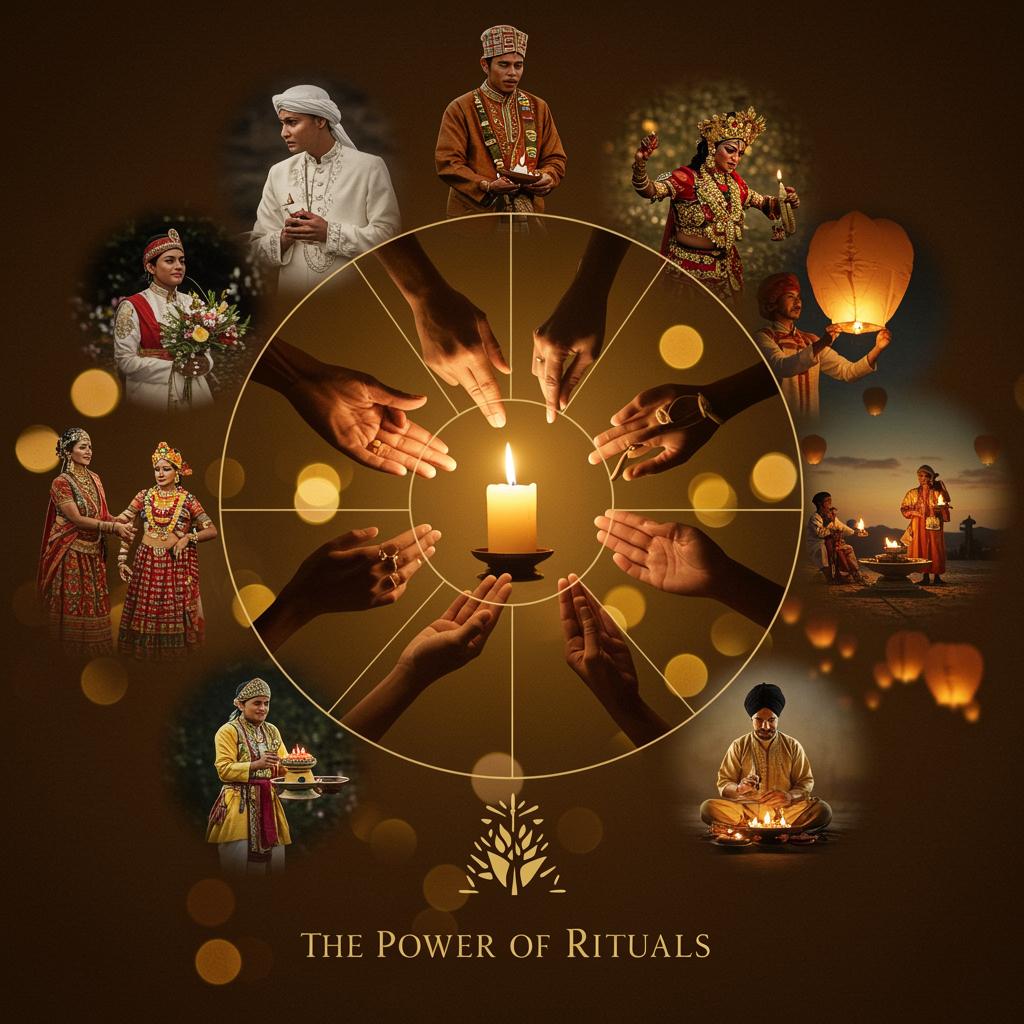
The Invisible Architecture of Human Experience
In a world increasingly defined by digital connections and fleeting interactions, rituals stand as sturdy pillars of meaning in our lives. From the morning coffee routine that signals the start of a productive day to the elaborate wedding ceremonies that have persisted across cultures for millennia, rituals permeate our existence in ways both obvious and subtle. But why do these structured behaviors hold such profound power over the human experience? What drives our need to celebrate, commemorate, and consecrate moments through ritual?
More Than Mere Habits: The Anatomy of Ritual
At first glance, rituals might seem like elaborate habits, repeated behaviors that become ingrained in our daily lives. But rituals transcend simple repetition. Where habits are often unconscious efficiency mechanisms, rituals are deliberate acts of meaning-making. They transform ordinary moments into extraordinary experiences through several key elements.
Intentionality is essential. Rituals demand our full presence and attention, pulling us from the autopilot mode that dominates much of modern life. Symbolism carries weight. Even the simplest ritual connects concrete actions to abstract meanings. Structure provides order. Rituals follow prescribed patterns and sequences, creating predictability in an otherwise chaotic world. Community binds people together in shared experience, strengthening social bonds and collective identity.
Rituals are the formulas by which harmony is restored, wrote anthropologist Victor Turner. This restoration operates on multiple levels. Within ourselves, between people, and between communities and their environment.
The Neuropsychology of Ritual
Modern neuroscience offers fascinating insights into why rituals feel so essential to our wellbeing. When we engage in meaningful ritual behaviors, our brains respond with a cascade of neurochemical reactions.
The predictability of rituals activates the brain's reward pathways, releasing dopamine and creating a sense of pleasure and satisfaction. Group rituals trigger oxytocin release, the bonding hormone that deepens our sense of connection to others. The focused attention required by rituals can induce flow states, where time seems to slow and awareness heightens, reducing anxiety and creating a sense of transcendence.
Dr. Nicholas Hobson, who studies the psychology of rituals at the University of Toronto, explains that rituals create a sense of control, especially during times of uncertainty or transition. They provide an illusion of influence over outcomes that might otherwise feel chaotic or threatening.
Cultural Celebrations: The Tapestry of Human Connection
Across cultures, celebrations represent the most visible and elaborate form of ritual behavior. From Diwali's triumph of light over darkness to the renewal symbolized in New Year's celebrations worldwide, these shared experiences reflect fundamental human needs.
Marking Time
Celebrations help us navigate life's journey by demarcating meaningful transitions: births, coming-of-age, marriages, deaths. These temporal landmarks provide structure to our individual and collective narratives, allowing us to orient ourselves within the greater flow of existence.
The Jewish Passover Seder, for instance, does not merely commemorate historical events. It makes them present again, collapsing time to connect modern celebrants with their ancestors' experiences of liberation. Memory becomes not just recall but re-enactment.
Building Identity
Cultural celebrations serve as repositories of collective memory and identity. By participating in traditional celebrations, we affirm our membership in particular communities and inherit their shared stories, values, and worldviews.
Consider how Lunar New Year celebrations across East Asia reinforce cultural values of family harmony, respect for ancestors, and hopeful renewal. Through specific foods, decorations, and rituals, these celebrations transmit cultural knowledge between generations in ways more visceral and enduring than formal education alone could achieve.
Creating Meaning in Mundane Reality
Perhaps most powerfully, rituals transform ordinary elements of life into carriers of extraordinary meaning. Bread and wine become sacred in religious ceremonies. A birthday candle becomes a vessel for wishes. A wedding ring transforms from a metal object into an eternal symbol of commitment.
Personal Rituals: The Hidden Backbone of Individual Resilience
While cultural celebrations capture our attention with their pageantry, personal rituals often operate more quietly in our lives while wielding remarkable influence on our psychological wellbeing.
Anchors in Transition
Personal rituals prove especially valuable during life transitions. The college graduate who takes a solitary hike before starting a new job. The divorcée who burns old letters to symbolically release the past. The cancer survivor who celebrates each year of remission with a particular meal. These self-created rituals provide emotional scaffolding when navigating unfamiliar territory.
Tools for Emotional Regulation
Psychologists increasingly recognize the role of personal rituals in emotional management. Dr. Francesca Gino of Harvard Business School found that mourners who participated in grieving rituals experienced less intense grief than those who did not. The rituals help people regain a sense of control, Gino explains, and this helps alleviate grief.
Similarly, athletes' pre-performance rituals are not mere superstition. They create psychological conditions conducive to peak performance by reducing anxiety and enhancing focus. The baseball player adjusting his gloves or the pianist's pre-concert routine serves the same fundamental purpose: creating a mental container for extraordinary action.
The Digital Age: Ritual Reinvented
As our lives increasingly unfold in digital spaces, rituals face both challenges and opportunities for reinvention.
Virtual Communities, Real Connections
The pandemic accelerated our adoption of virtual celebrations, from Zoom birthday parties to online wedding ceremonies. While initially seen as poor substitutes for real gatherings, many discovered unexpected benefits to these adapted rituals. Greater inclusivity for distant or disabled community members, creative new traditions, and heightened appreciation for the elements that truly matter in celebration all emerged.
Mindfulness as Modern Ritual
The surging popularity of mindfulness practices represents a form of ritual revival perfectly suited to our over-stimulated age. These practices offer what traditional rituals have always provided: presence, intention, and connection to something larger than ourselves.
The Future of Celebration
As humanity navigates increasing complexity and rapid change, rituals will likely become more rather than less important. We can already observe several emerging trends. Ritual hybridization blends traditions from multiple cultural sources to create personally meaningful celebrations. Eco-rituals reconnect humans with natural cycles and environmental awareness. Secular sacredness provides non-religious rituals that nonetheless offer transcendent experiences and community connection.
The Invitation of Ritual
Perhaps the most remarkable aspect of rituals is their dual nature. They are both universal across human societies and intensely personal in their meaning. They connect us to our deepest humanity while honoring our unique experiences.
In a world often characterized by fragmentation and distraction, rituals offer a powerful countercurrent. They are an invitation to be fully present, to make meaning deliberately, and to connect authentically with ourselves and others. Whether inherited from ancient traditions or newly created to address contemporary needs, rituals remind us that how we mark moments matters. Celebration itself is not a luxury but a fundamental human need.
The next time you raise a glass in a toast, light a candle on a birthday cake, or simply pause for a moment of gratitude before a meal, consider the invisible architecture of meaning you are constructing. In these acts of celebration, we do not just acknowledge what makes us human. We actively create it.
The views expressed in this article are those of the author and do not necessarily reflect the views of WriteFlow. WriteFlow does not endorse this content and does not guarantee its accuracy or completeness.
Comments (0)