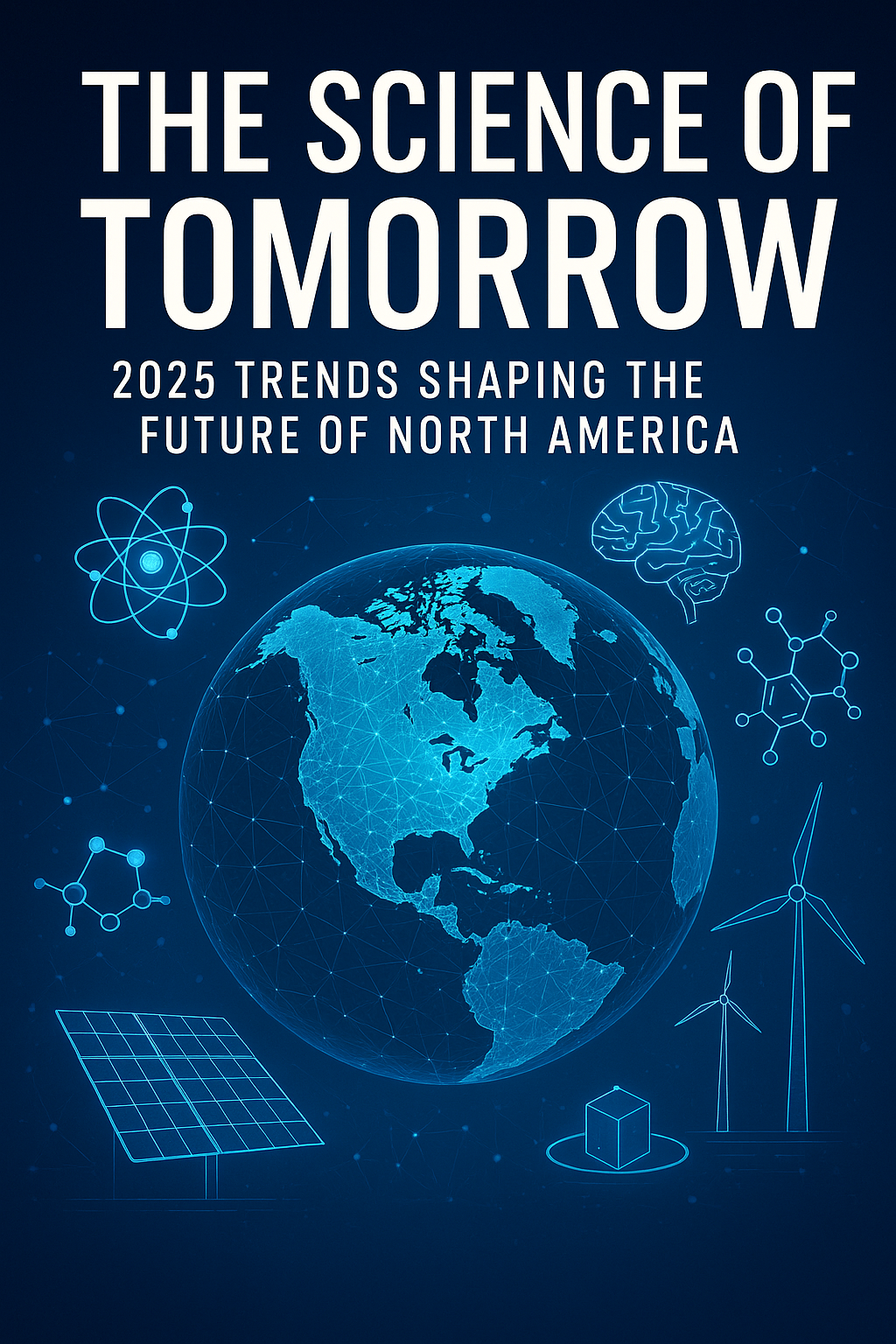
The Science of Tomorrow: 2025 Trends Shaping the Future of North America

Introduction
As we navigate through 2025, North America stands at the forefront of scientific and technological innovation. The convergence of breakthroughs across multiple disciplines is reshaping our society, economy, and environment in profound ways. This exploration of current scientific trends reveals how research and development across the continent are creating new possibilities and addressing long-standing challenges.
Artificial Intelligence: Beyond the Algorithm
The AI landscape in North America has evolved dramatically in the past year. No longer confined to specialized applications, AI systems are becoming deeply integrated into critical infrastructure and decision-making processes. The development of more transparent and explainable AI models has been a particular focus, addressing previous concerns about black box systems.
Healthcare systems across the United States and Canada have implemented AI diagnostic tools that can detect patterns in medical imaging with remarkable accuracy. These systems now serve as valuable assistants to medical professionals, augmenting human expertise rather than replacing it. The FDA's new AI regulatory framework, established in late 2024, has provided clearer pathways for validating and implementing these technologies.
Perhaps most significantly, 2025 has seen the rise of AI systems designed specifically for climate modeling. These sophisticated tools are helping scientists better understand complex environmental interactions and predict the impacts of various interventions with unprecedented precision.
Biotechnology: Engineering Biology for Sustainability
The biotechnology sector has embraced a new mission: leveraging biological systems to address sustainability challenges. Engineered microorganisms that can convert atmospheric carbon dioxide into useful materials have moved from laboratory curiosities to industrial applications. Several facilities in the American Midwest now use these organisms to produce biodegradable plastics, effectively turning a climate liability into a valuable resource.
CRISPR gene-editing technology continues to mature, with clinical applications expanding beyond rare genetic disorders to more common conditions. The first CRISPR treatments for cardiovascular disease entered clinical trials in early 2025, potentially offering new options for one of North America's leading causes of mortality.
Agricultural biotechnology has focused increasingly on developing crop varieties resistant to extreme weather conditions. With drought and flooding events becoming more common across the continent, these climate-adaptive crops represent a crucial innovation for food security.
Renewable Energy: The Infrastructure Revolution
North America's energy landscape is undergoing a profound transformation. The integration of advanced materials science with renewable energy technologies has yielded solar panels with efficiency rates approaching forty percent, nearly double what was standard just five years ago. These high-efficiency panels, combined with improved energy storage solutions, have made solar power economically competitive even in regions with less consistent sunlight.
Grid-scale energy storage has been another area of remarkable progress. New battery technologies using abundant materials like sodium, iron, and sulfur are replacing lithium-ion batteries in many applications, addressing concerns about supply chain vulnerabilities and environmental impacts associated with lithium mining.
Perhaps most excitingly, 2025 has seen significant advances in nuclear fusion research. While commercial fusion power remains years away, several North American research facilities have achieved sustained fusion reactions lasting several minutes. This is a crucial milestone on the path toward this potentially transformative energy source.---
Quantum Computing: From Theory to Application
After years of theoretical promise, quantum computing is finally delivering practical applications in North America. Financial institutions have begun using quantum algorithms to optimize investment portfolios and detect potential market instabilities with unprecedented speed. Material scientists are employing quantum simulations to design novel materials with specific properties, accelerating the development cycle for everything from more efficient batteries to stronger building materials.
The quantum internet, a network that uses quantum principles to enable ultra-secure communications, has expanded from experimental links between research institutions to include several major metropolitan areas. While still limited in scope, this quantum communication infrastructure represents a significant step toward a more secure digital future.
Environmental Science: Understanding and Adapting
Environmental monitoring capabilities have expanded dramatically, providing scientists with more comprehensive data than ever before. Networks of sophisticated sensors throughout North America now track everything from soil moisture and forest health to urban air quality and ocean acidification levels. This wealth of data, combined with advanced modeling techniques, is enabling more effective environmental management strategies.
Restoration ecology has emerged as a particularly dynamic field, with ambitious projects to rebuild damaged ecosystems underway across the continent. These efforts go beyond simply protecting remaining natural areas to actively restoring ecological function to degraded landscapes, often employing insights from Indigenous knowledge systems alongside contemporary scientific approaches.
Climate adaptation science has become increasingly important as communities across North America experience the effects of climate change. From redesigning urban infrastructure to handle more extreme weather events to developing new approaches to wildfire management, scientists are working closely with policymakers and communities to enhance resilience.
The Convergence Era
Perhaps the most significant scientific trend of 2025 is not any single field but rather the increasing convergence of previously separate disciplines. Neuromorphic computing systems inspired by the human brain are informing new approaches to AI. Insights from quantum biology are suggesting novel approaches to solar energy harvesting. Traditional ecological knowledge is being integrated with satellite monitoring to improve land management practices.
This cross-disciplinary approach reflects a growing recognition that the most challenging problems facing North America, from climate change to public health, require solutions that transcend traditional academic and industrial boundaries. Innovation hubs across the continent are increasingly structured to facilitate this kind of boundary-crossing work, bringing together diverse teams with complementary expertise.
Looking Forward
As we move through 2025, the pace of scientific and technological change in North America shows no signs of slowing. The trends highlighted here represent not just incremental improvements but potentially transformative developments that could reshape how we live, work, and interact with our environment.
The challenge now lies in ensuring that these scientific advances benefit society broadly and equitably. This will require thoughtful policy approaches, strong educational systems that prepare people for a changing economy, and ongoing dialogue between scientific communities and the broader public about priorities and concerns.
The science of tomorrow is being written today, and North America's researchers, entrepreneurs, and institutions are playing a leading role in shaping that future. By understanding these trends, we can better prepare for and participate in the changes to come.
The views expressed in this article are those of the author and do not necessarily reflect the views of WriteFlow. WriteFlow does not endorse this content and does not guarantee its accuracy or completeness.


Comments (0)