Education Reimagined: Fun, Fast, and Effective

Introduction
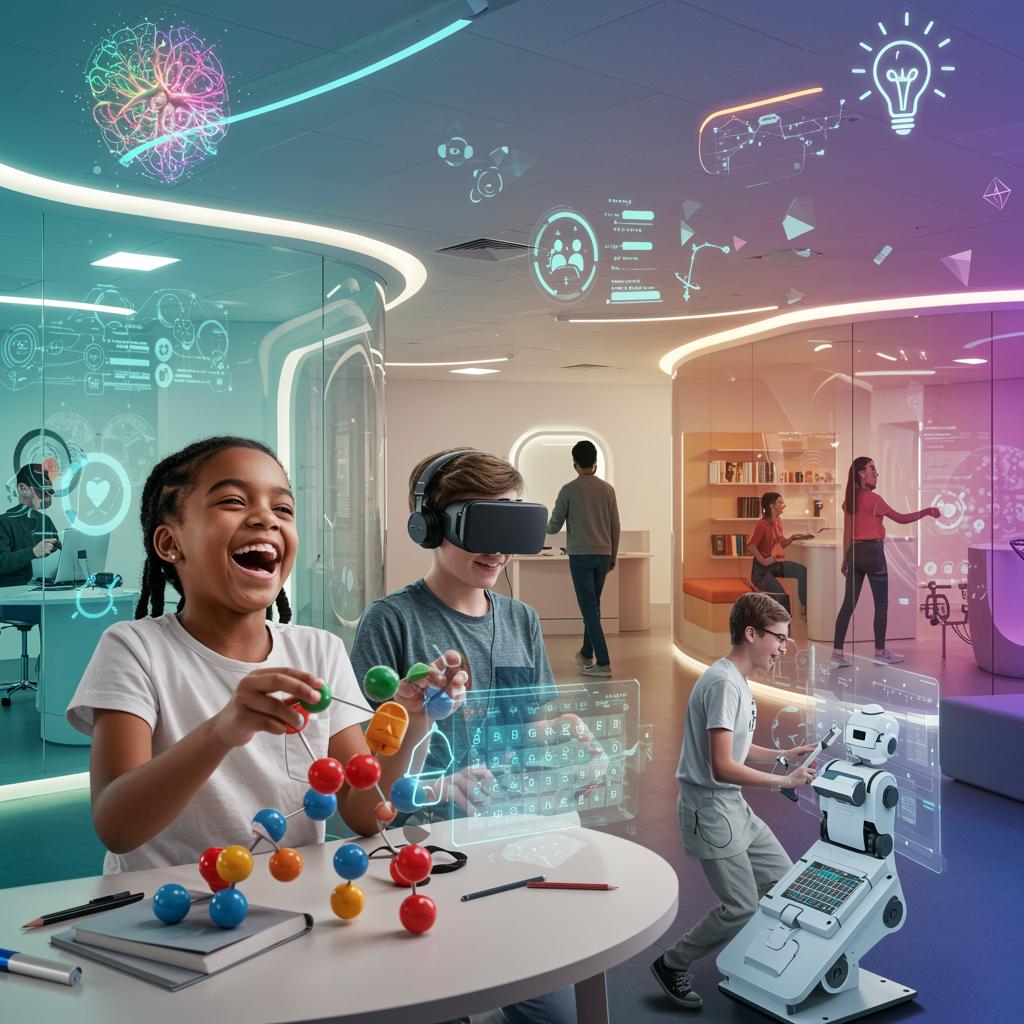
The traditional educational paradigm is experiencing a profound transformation that challenges centuries-old assumptions about how learning should occur. We are witnessing the emergence of a revolutionary approach that shatters the false dichotomy between enjoyment and effectiveness, speed and depth, engagement and rigor. This new vision of education proves that learning can simultaneously be fun, fast, and effective—not despite these qualities conflicting, but because they work synergistically.
This reimagined approach recognizes that the human brain is naturally designed for rapid, enjoyable learning when conditions are optimized. Children learn their native language with remarkable speed and ease, not through forced memorization but through immersive play and social interaction. They master complex skills through exploration, experimentation, and intrinsically motivated practice. The challenge lies not in forcing learning to occur, but in creating conditions that allow natural learning processes to flourish.
The Science Behind Joyful Learning
Recent discoveries in neuroscience have revealed the profound connection between positive emotions and learning effectiveness. When learners experience joy, curiosity, and engagement, their brains produce optimal conditions for memory formation, creative thinking, and skill development.
The neurotransmitter dopamine, often called the reward chemical, plays a crucial role in learning and memory consolidation. However, dopamine is not just released when we receive rewards. It is released in anticipation of rewards and during novel, interesting experiences. Educational approaches that create anticipation, surprise, and discovery naturally trigger dopamine release, which enhances attention, motivation, and memory formation.
When learners are engaged and enjoying themselves, their brains show increased activity in the prefrontal cortex, the region responsible for executive functions like working memory and attention regulation. This enhanced brain state supports higher-order thinking. Conversely, stress, boredom, and anxiety impair prefrontal cortex function, making learning more difficult.
The brain's default mode network, active during rest and introspection, plays a crucial role in consolidating learning and making creative connections. Positive emotional states enhance default mode network function, supporting the kind of insight that transforms isolated facts into integrated knowledge. This explains why "aha moments" often occur during relaxed, enjoyable activities.
Gamification: Beyond Points and Badges
The integration of game elements into education represents one of the most promising approaches to making learning simultaneously engaging and effective. However, true educational gamification goes beyond superficial additions of points and leaderboards to encompass the deeper principles that make games intrinsically motivating.
Well-designed games create what psychologists call flow states—experiences of complete absorption and optimal challenge that produce both high performance and deep satisfaction. These states occur when the difficulty of challenges matches the learner's current skill level while providing clear goals and immediate feedback.
Progressive challenge systems provide learners with carefully calibrated sequences of increasingly complex problems that build competence systematically while maintaining engagement. Unlike traditional education, which often presents information in predetermined sequences, gamified learning adapts to each learner's pace.
Narrative and storytelling elements transform abstract learning content into meaningful contexts that engage emotional as well as cognitive processes. When learners become characters in stories where their knowledge determines outcomes, they develop personal investment in learning that goes far beyond grade motivation.
Social cooperation and competition elements leverage humans' natural tendencies toward both collaboration and friendly rivalry to enhance learning motivation. Team-based challenges and collaborative problem-solving create social contexts that make learning both more enjoyable and more effective.
Technology-Enhanced Learning Environments
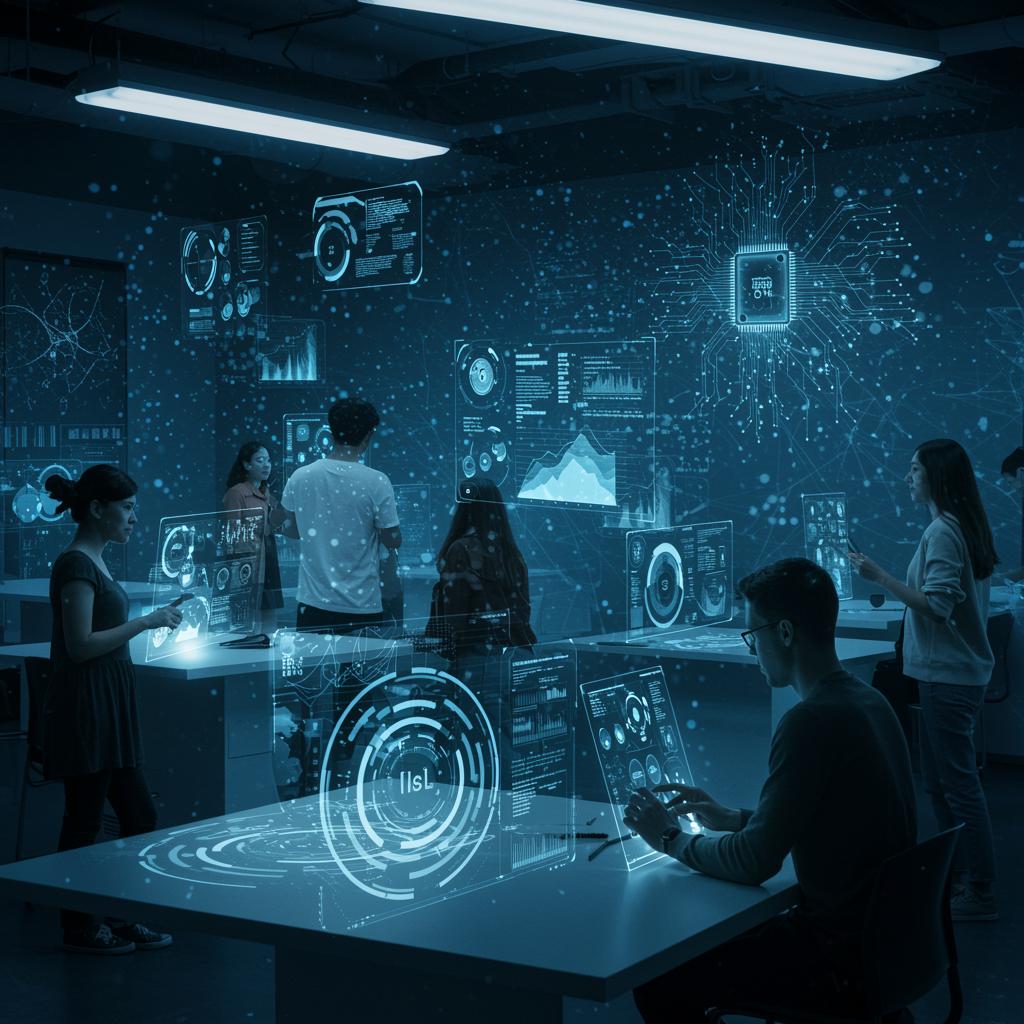
Modern technology offers unprecedented opportunities to create learning experiences that are simultaneously more engaging, more personalized, and more effective than traditional approaches.
Adaptive learning systems use artificial intelligence to customize content, pacing, and presentation based on individual learner needs. These systems provide optimal challenge levels for each student while identifying and addressing knowledge gaps before they become obstacles.
Virtual and augmented reality technologies create immersive learning experiences that allow learners to explore environments and manipulate objects that would be impossible in traditional settings. Students can walk through ancient Rome or practice surgical procedures in risk-free virtual environments.
Interactive simulations provide opportunities for experimentation without the time and safety constraints of physical laboratories. Learners can conduct experiments and test hypotheses while developing scientific thinking skills through hands-on experience.
Collaborative online platforms enable peer learning beyond classroom boundaries. Students can work together on projects and learn from diverse perspectives regardless of geographical limitations.
Project-Based and Experiential Learning
Moving beyond traditional lecture-and-test models, project-based learning engages students in real-world challenges that require applying knowledge and skills in meaningful contexts. This approach naturally integrates fun, speed, and effectiveness by making learning purposeful and immediately applicable.
Authentic problem-solving projects connect learning to genuine challenges that matter to learners and their communities. When students work on projects that address real problems, they develop intrinsic motivation that sustains effort through difficulties while building practical skills.
Interdisciplinary integration reflects the reality that real-world challenges do not fit neatly into academic subject boundaries. Project-based learning naturally combines skills from multiple domains, helping learners see connections between different areas.
Collaborative learning experiences leverage the social nature of human development while building essential twenty-first-century skills like communication, teamwork, and leadership. Working together on meaningful projects, students learn from each other while developing interpersonal skills.
Iteration and improvement cycles teach learners to embrace feedback, learn from failure, and continuously improve their work. This approach builds resilience and growth mindset while producing higher-quality outcomes.
Personalized Learning Pathways
Recognition of individual differences in interests, abilities, and learning styles has led to personalized learning approaches that adapt education to each learner rather than expecting all learners to adapt to standardized approaches.
Competency-based progression allows students to advance based on demonstrated mastery rather than seat time. This approach ensures that all students achieve genuine understanding before moving to advanced topics while allowing rapid progression through material already mastered.
Multiple pathways to the same objectives recognize that different learners may need different approaches to achieve similar outcomes. Some students might learn concepts through visual representations, others through word problems, and still others through hands-on activities.
Interest-driven exploration within structured frameworks allows learners to pursue topics that fascinate them while ensuring they encounter essential knowledge. A student interested in sports might explore mathematics through statistics and physics through biomechanics.
Flexible pacing accommodates the reality that different students need different amounts of time to achieve mastery. Rather than forcing all students to move at the same pace, personalized approaches allow acceleration where appropriate while providing additional support where needed.
Assessment Revolution: Beyond Testing
Traditional assessment approaches often work against the goals of making learning fun, fast, and effective. New assessment paradigms focus on supporting learning rather than just measuring it.
Formative assessment strategies provide ongoing feedback that helps learners adjust their approaches and teachers modify instruction in real time. This might include quick polls or self-reflection activities that give immediate information about understanding without the anxiety of high-stakes testing.
Portfolio-based assessment allows students to demonstrate learning through collections of work that show growth over time. Portfolios can include projects, reflections, and self-assessments that provide more comprehensive evidence of learning than single test scores.
Performance-based assessment requires students to apply knowledge in realistic contexts rather than simply recalling information on tests. This might involve presentations, demonstrations, or real-world projects.
Peer and self-assessment strategies develop learners' ability to evaluate their own progress and provide feedback to others. These approaches build metacognitive skills while providing more immediate feedback.
Competency-based grading focuses on whether students have achieved specific learning objectives rather than averaging performance across time. This approach provides clearer information about what students know while reducing anxiety and competition.
Social and Emotional Learning Integration
Recognition that academic learning occurs within social and emotional contexts has led to integration of social-emotional learning with academic instruction. This integration makes learning more effective while making it more enjoyable through attention to relationships and emotional well-being.
Emotional intelligence development helps learners understand and manage their own emotions while recognizing others' feelings. These skills enhance learning by improving self-regulation, motivation, and interpersonal relationships.
Growth mindset cultivation teaches learners that abilities can be developed through effort and strategy rather than being fixed traits. This mindset makes learning more enjoyable by reducing performance anxiety while making it more effective by encouraging persistence.
Social skill development through collaborative learning helps students build communication and cooperation skills that enhance both academic learning and life success. These skills make learning more enjoyable through positive relationships.
Mindfulness and stress management techniques help learners maintain optimal emotional states for learning while building resilience. Regular mindfulness practice can improve attention, emotional regulation, and academic performance.
Teacher Transformation: From Sage to Guide
The reimagining of education requires corresponding changes in teacher roles, moving from information delivery to learning facilitation.
The facilitator and coach role positions teachers as supporters of student learning rather than deliverers of content. Teachers help students navigate learning resources and overcome obstacles while providing guidance and encouragement.
Learning experience designers create environments, activities, and challenges that engage learners and support achievement of learning objectives. This role requires understanding of learning principles and student interests while maintaining focus on outcomes.
Feedback providers offer specific, actionable information that helps learners improve their understanding and performance. Effective feedback focuses on the learning process while maintaining encouragement and growth orientation.
Relationship builders create classroom communities that support learning through positive interactions and mutual respect. Strong teacher-student relationships provide the social foundation that makes learning both more enjoyable and more effective.
Continuous learners model the lifelong learning attitudes they hope to develop in their students. Teachers who continue learning and experimenting create cultures of learning that inspire students while continuously improving their own effectiveness.
Conclusion
The convergence of neuroscience research, technological innovation, and deeper understanding of human motivation has created unprecedented opportunities to design educational experiences that honor how people actually learn best. The old assumption that learning must be difficult and unpleasant to be valuable is not only wrong but counterproductive.
By creating conditions that trigger positive emotions, optimal challenge, and meaningful engagement, we can develop learning experiences that are simultaneously more enjoyable and more effective. Students who find joy in learning persist longer, go deeper, and retain more than those who endure education as a necessary burden.
The future of education lies not in choosing between enjoyment and rigor but in recognizing that these qualities enhance each other when properly understood and implemented. The most effective learning is engaging. The deepest understanding emerges from passionate exploration. And the most transformative education feels less like work and more like growth.
This vision of education is not utopian fantasy but practical possibility, already demonstrated in thousands of classrooms and learning environments worldwide. By embracing these principles, we can create educational experiences that unlock the natural human capacity for joyful, rapid, and deep learning—preparing students not just for tests, but for lives of continuous growth and meaningful contribution.
The views expressed in this article are those of the author and do not necessarily reflect the views of WriteFlow. WriteFlow does not endorse this content and does not guarantee its accuracy or completeness.
Comments (0)