Smart Learning for a Smarter Future

Introduction
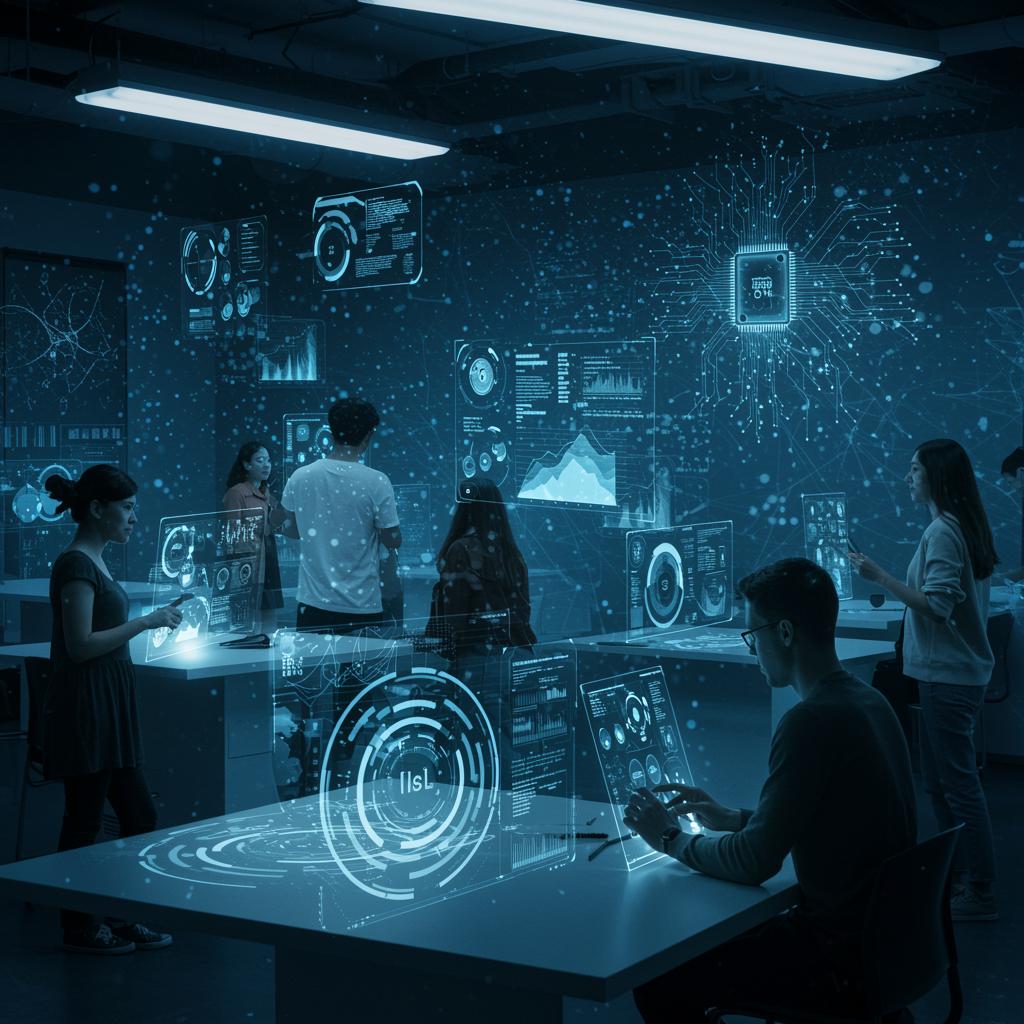
The landscape of learning is undergoing the most dramatic transformation in human history. We stand at the intersection of unprecedented technological capability and evolving understanding of how the human brain acquires, processes, and retains information. This convergence is creating new paradigms for education and skill development that promise to make learning more effective, accessible, and personalized than ever before.
Smart learning represents more than just the digitization of traditional educational methods. It embodies a fundamental reimagining of how we approach knowledge acquisition and skill development. By leveraging artificial intelligence, neuroscience insights, adaptive technologies, and data-driven methodologies, smart learning systems are creating educational experiences that adapt to individual learners, optimize for retention and transfer, and prepare people for a rapidly evolving future where continuous learning is not just beneficial but essential for success.
The Evolution of Learning: From Traditional to Intelligent
The traditional model of education, largely unchanged for centuries, was designed for a different era with different needs and constraints. This model typically involved standardized curricula delivered through one-size-fits-all approaches, passive absorption of information, and assessment methods that emphasized memorization over understanding or application.
However, our understanding of how learning actually occurs has evolved dramatically. Neuroscience research has revealed that learning is an active, constructive process where new information must be integrated with existing knowledge structures. The brain does not simply store information like a computer hard drive. It constantly reorganizes and reconstructs knowledge based on new experiences and contexts.
Smart learning systems leverage these insights to create educational experiences that work with, rather than against, natural learning processes. These systems recognize that every learner has unique cognitive patterns, prior knowledge, preferences, and goals that influence how they best acquire new information and skills.
The shift toward intelligent learning represents a move from education as information delivery to education as guided discovery and construction of understanding. Instead of passive recipients of predetermined content, learners become active participants in personalized learning journeys that adapt in real time based on their progress, struggles, and achievements.
Neuroscience-Informed Learning Strategies
The integration of neuroscience insights into learning design represents one of the most significant advances in educational effectiveness. Understanding how the brain processes, stores, and retrieves information allows us to design learning experiences that work in harmony with natural cognitive processes.
Memory formation involves complex interactions between different brain regions and systems. The hippocampus plays a crucial role in forming new memories and connecting them to existing knowledge networks, while the prefrontal cortex manages working memory and executive functions. The brain's default mode network, active during rest periods, consolidates and integrates new learning with existing knowledge structures.
These insights have led to the development of learning strategies that optimize for brain function. Spaced repetition algorithms, for example, present information at intervals specifically calculated to strengthen memory consolidation just as forgetting begins to occur. This approach can increase retention rates by several hundred percent compared to traditional study methods.
Interleaving, another neuroscience-informed strategy, involves mixing different types of problems or concepts within study sessions rather than focusing on one topic at a time. While this initially feels more difficult and less efficient, research consistently shows that interleaved practice leads to better long-term retention and improved ability to transfer learning to new situations.
The discovery of neuroplasticity, the brain's ability to reorganize and form new neural connections throughout life, has revolutionized our understanding of learning potential. This research demonstrates that cognitive abilities are far more malleable than previously believed, and that appropriate challenge and practice can literally reshape brain structure and function at any age.
Artificial Intelligence in Personalized Education
Artificial intelligence is transforming education by enabling truly personalized learning experiences that adapt to individual needs, preferences, and learning patterns. AI-powered educational systems can process vast amounts of data about learner behavior, performance, and engagement to create customized learning pathways that optimize for each person's unique cognitive profile.
Machine learning algorithms can identify subtle patterns in how individuals learn best, whether they benefit from visual or auditory presentations, prefer step-by-step guidance or exploratory discovery, learn better with frequent feedback or independent practice, and countless other variables. These systems continuously refine their understanding of each learner and adjust their approach accordingly.
Natural language processing allows AI tutoring systems to engage in sophisticated dialogue with learners, answering questions, providing explanations, and offering guidance in conversational formats that feel natural and engaging. These systems can adapt their communication style to match learner preferences and comprehension levels.
Predictive analytics powered by AI can identify learners who are at risk of struggling or dropping out before problems become critical. By analyzing patterns in engagement, performance, and behavior, these systems can trigger interventions or provide additional support precisely when it is most needed.
Automated assessment systems can evaluate not just final answers but the problem-solving processes learners use to arrive at solutions. This provides much richer feedback about understanding and identifies specific areas where additional support is needed. Some AI systems can even generate personalized practice problems that target individual weaknesses while building on existing strengths.
Adaptive Learning Technologies and Platforms
Adaptive learning platforms represent the practical implementation of smart learning principles through technology that responds dynamically to learner behavior and performance. These systems create individualized learning experiences that continuously adjust based on real-time data about how each person is progressing through educational content.
The sophistication of modern adaptive platforms extends far beyond simple branching programs that present different content based on quiz scores. Advanced systems track hundreds of variables including time spent on different types of content, patterns of mistakes, help-seeking behavior, engagement indicators, and performance trends over time.
Micro-adaptive systems make adjustments at the moment-to-moment level, modifying the difficulty of individual questions, the amount of scaffolding provided, or the type of feedback offered based on immediate performance indicators. These real-time adjustments ensure that learners are consistently working within their optimal challenge zone, difficult enough to promote growth but not so difficult as to cause frustration.
Macro-adaptive systems make broader adjustments to learning pathways, content sequences, and instructional strategies based on longer-term performance patterns and learning analytics. These systems might recommend different learning modalities, suggest prerequisite skill development, or modify long-term learning goals based on demonstrated aptitudes and interests.
Immersive Learning Environments
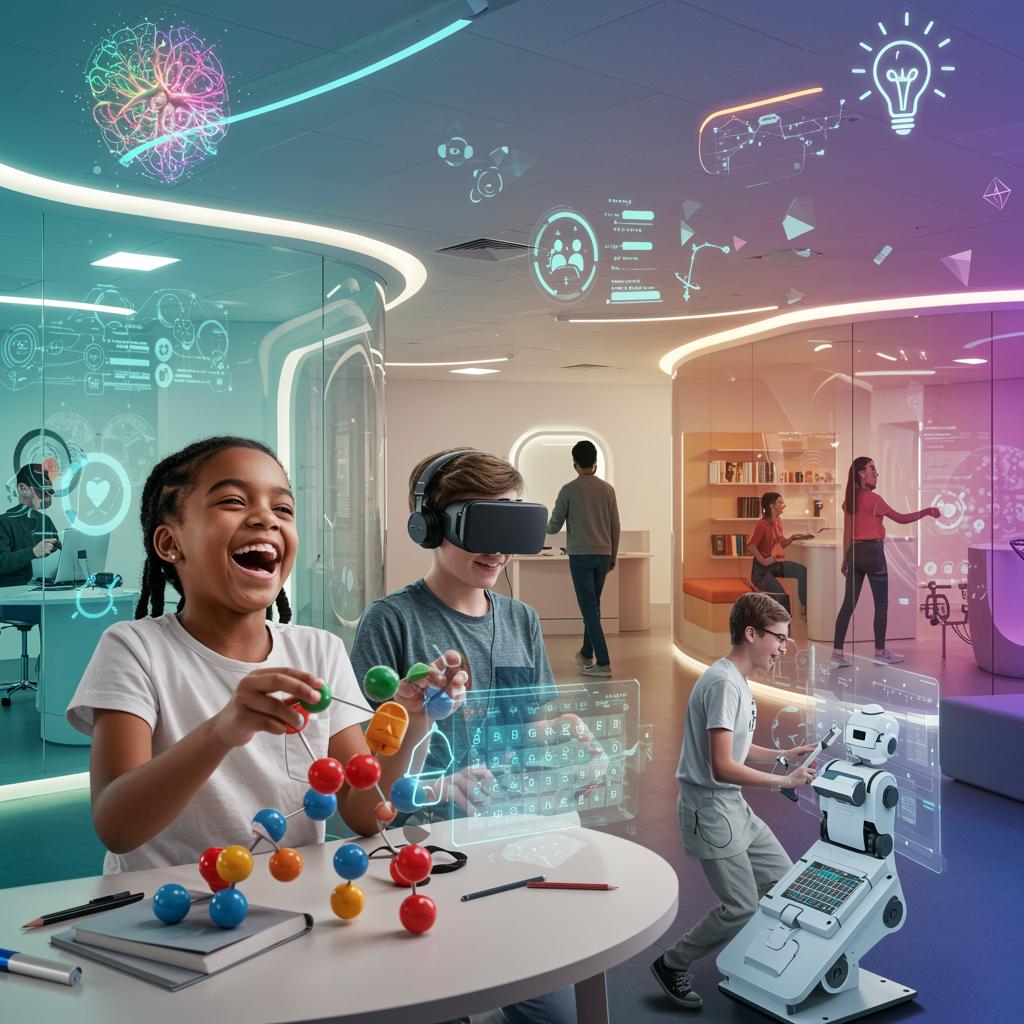
Virtual and augmented reality technologies are creating immersive learning environments that provide experiential education opportunities previously impossible in traditional classroom settings. These technologies enable learners to explore historical sites, manipulate molecular structures, practice dangerous procedures safely, and engage with abstract concepts through concrete, interactive experiences.
Virtual reality learning environments can simulate complex scenarios that would be too expensive, dangerous, or logistically challenging to recreate in real life. Medical students can practice surgical procedures without risk to patients, history students can walk through ancient civilizations, and language learners can engage in conversations with native speakers in realistic cultural contexts.
Augmented reality overlays digital information onto real-world environments, creating hybrid learning experiences that combine the benefits of digital content with hands-on, physical interaction. Students can examine three-dimensional models of complex machinery, see historical events play out in their actual locations, or receive real-time guidance while performing physical tasks.
Immersive environments excel at developing spatial reasoning, procedural knowledge, and experiential understanding that are difficult to achieve through traditional instructional methods. They also provide safe spaces for making mistakes and learning from failure without real-world consequences.
Microlearning and Just-in-Time Education
The traditional model of front-loading education early in life and then applying that knowledge throughout a career is becoming obsolete in our rapidly changing world. Smart learning recognizes that effective education must be ongoing, accessible, and available precisely when knowledge or skills are needed.
Microlearning breaks complex topics into small, focused learning units that can be consumed quickly and efficiently. These bite-sized learning experiences are designed to deliver specific knowledge or skills that can be immediately applied, making learning more relevant and actionable.
Just-in-time learning provides access to relevant information and instruction at the moment of need. Rather than trying to predict what learners might need to know in the future, these systems deliver targeted education when specific challenges or opportunities arise.
Mobile learning platforms enable continuous learning by making educational content accessible anywhere, anytime through smartphones and tablets. These platforms often incorporate microlearning principles and adaptive technologies to provide personalized learning experiences that fit into busy schedules.
Performance support systems integrate learning directly into work environments, providing guidance, resources, and training within the tools and systems people use to perform their jobs. This approach eliminates the artificial separation between learning and doing.
Building Personal Learning Ecosystems
The future of learning involves creating personalized learning ecosystems that integrate multiple platforms, resources, and experiences into coherent, individualized educational journeys. These ecosystems extend beyond formal educational institutions to encompass workplace learning, community resources, and self-directed exploration.
Learning pathway design begins with comprehensive assessment of current knowledge, skills, interests, and goals. Smart systems can analyze this information to recommend optimal learning sequences that build systematically toward desired outcomes while maintaining engagement and motivation.
Cross-platform integration ensures that learning progress and achievements are recognized and transferable across different educational systems and contexts. Blockchain-based credentialing systems may eventually provide secure, verifiable records of competencies that are recognized globally.
Personal learning assistants, powered by artificial intelligence, can serve as always-available guides that help learners navigate their educational ecosystems, suggest relevant resources, schedule learning activities, and provide motivation and support throughout the learning journey.
Emotional Intelligence and Motivation in Smart Learning
Effective learning involves not just cognitive processes but also emotional and motivational factors that significantly influence engagement, persistence, and achievement. Smart learning systems increasingly incorporate emotional intelligence and motivation science to create more supportive and effective educational experiences.
Emotion recognition technologies can detect learner emotional states through facial expressions, voice patterns, physiological measures, or behavioral indicators. This information helps systems adjust their approach to maintain optimal emotional conditions for learning.
Motivational profiling identifies what drives individual learners, whether they are motivated by mastery, autonomy, purpose, social connection, competition, or other factors. Learning systems can then incorporate appropriate motivational elements and avoid approaches that might undermine engagement.
Goal-setting and progress tracking tools help learners establish meaningful objectives and monitor their advancement toward these goals. Effective systems break large goals into smaller, achievable milestones that provide regular opportunities for success and motivation.
Ethical Considerations and Challenges
The implementation of smart learning systems raises important ethical questions about privacy, equity, autonomy, and the nature of education itself. Addressing these concerns proactively is essential for developing learning systems that truly serve human flourishing.
Privacy and data protection concerns arise from the extensive data collection required for personalized learning systems. Learners must have control over their personal learning data and clear understanding of how this information is used, stored, and shared.
Algorithmic bias can perpetuate or amplify existing educational inequalities if smart learning systems are not carefully designed and monitored. Ensuring fairness requires diverse development teams, inclusive design processes, and ongoing bias detection and correction.
The digital divide means that access to smart learning technologies may not be equally available to all learners, potentially creating new forms of educational inequality. Addressing this requires attention to accessibility, affordability, and infrastructure development.
Autonomy and agency concerns arise when intelligent systems make decisions about learning pathways and content without sufficient learner input or understanding. Effective systems balance automation with learner choice and maintain transparency about how decisions are made.
The Future of Smart Learning
As we look toward the future, smart learning systems will likely become even more sophisticated, seamlessly integrated into daily life, and capable of supporting learning across all domains of human experience.
Brain-computer interfaces may eventually provide direct connections between human cognition and digital learning systems, enabling unprecedented forms of knowledge transfer and skill development. While still largely experimental, early research suggests fascinating possibilities for accelerated learning.
Quantum computing could revolutionize the computational capabilities available for learning analytics, personalization algorithms, and simulation-based learning experiences. The massive parallel processing capabilities of quantum systems might enable real-time optimization of learning experiences for millions of learners simultaneously.
Global learning networks will likely emerge that connect learners, educators, and knowledge resources across traditional boundaries, creating truly global communities of practice. These networks could enable anyone to access the world's best educational resources regardless of geographic location.
Lifelong learning credentials may evolve to provide continuous documentation of competency development throughout people's lives and careers. These systems could replace traditional degrees with more granular, verifiable, and up-to-date records of capabilities.
Conclusion: Embracing the Learning Revolution
The transformation of learning through smart technologies represents one of the most significant opportunities of our time. These systems promise to make effective education more accessible, personalized, and powerful than ever before while preparing learners for a future where continuous adaptation and growth are essential for success.
However, realizing this potential requires thoughtful implementation that prioritizes human flourishing over technological capability. The most effective smart learning systems will be those that enhance rather than replace human agency, creativity, and connection while providing powerful tools for knowledge acquisition and skill development.
The future belongs to individuals and organizations that can learn continuously, adapt quickly, and leverage both human and artificial intelligence effectively. Smart learning technologies provide unprecedented opportunities to develop these capabilities, but success will ultimately depend on how thoughtfully and humanely we implement these powerful tools.
The smart learning revolution is not just about technology. It is about creating educational experiences that truly serve human needs and aspirations. By embracing these possibilities while remaining grounded in human values, we can create learning systems that enhance human capability and support flourishing for all learners. The future of learning is bright, personalized, and full of unprecedented possibilities for human growth and achievement.
The views expressed in this article are those of the author and do not necessarily reflect the views of WriteFlow. WriteFlow does not endorse this content and does not guarantee its accuracy or completeness.


Comments (0)