Learn Faster, Achieve More: Education That Works


Introduction
In today's rapidly evolving world, the ability to learn efficiently and effectively has become more crucial than ever before. Whether you are a student navigating academic challenges, a professional seeking career advancement, or a lifelong learner pursuing personal growth, understanding how to optimize your learning process can dramatically transform your educational outcomes. This guide explores evidence-based strategies, cutting-edge methodologies, and practical techniques that can help you learn faster, retain information longer, and achieve more meaningful educational success.
The Science Behind Effective Learning
Understanding how the brain processes and retains information is fundamental to developing effective learning strategies. Modern neuroscience research has revealed fascinating insights about neuroplasticity, the brain's remarkable ability to reorganize and form new neural connections throughout life. When we learn, our brains literally change structure, creating stronger pathways for information we use frequently and allowing weaker connections to fade away.
The concept of active learning stands at the forefront of educational effectiveness. Unlike passive absorption of information through reading or listening alone, active learning engages multiple cognitive processes simultaneously. This approach involves questioning, analyzing, synthesizing, and applying knowledge in various contexts. Research consistently demonstrates that students who engage in active learning strategies show significantly higher retention rates and deeper understanding compared to those relying solely on passive methods.
Memory consolidation, the process by which temporary memories become permanent, occurs primarily during sleep and periods of rest. This biological reality has profound implications for learning strategies. Spacing out study sessions, taking regular breaks, and ensuring adequate sleep are not just recommendations for well-being. They are scientifically proven necessities for optimal learning. The spacing effect, first identified by psychologist Hermann Ebbinghaus, shows that information reviewed at increasing intervals is retained far longer than information crammed in a single session.
Foundational Principles of Accelerated Learning
The most effective learning approaches are built upon several key principles that work synergistically to enhance educational outcomes. Goal-oriented learning provides direction and motivation, transforming abstract knowledge acquisition into purposeful skill development. When learners establish clear, specific, and measurable objectives, they create a framework that guides their efforts and provides benchmarks for progress.
Personalized learning recognizes that each individual has unique strengths, preferences, and challenges. While some learners thrive with visual representations, others excel through auditory processing or kinesthetic experiences. Effective education systems and self-directed learners alike benefit from identifying and leveraging these personal learning styles while also developing competency across different modalities.
The principle of progressive complexity suggests that learning should build systematically from foundational concepts to advanced applications. This scaffolding approach ensures that each new piece of information has a solid foundation upon which to attach, creating robust knowledge structures that support both retention and creative application. Master teachers and effective curricula consistently apply this principle, introducing concepts in logical sequences that respect the natural progression of understanding.
Feedback loops play a crucial role in accelerated learning. Regular assessment, self-reflection, and adjustment of strategies based on results create dynamic learning systems that continuously improve. This might involve formal testing, peer review, self-assessment, or practical application in real-world contexts. The key is establishing mechanisms that provide timely, specific, and actionable information about learning progress.
Proven Techniques for Faster Information Absorption
Several specific techniques have demonstrated remarkable effectiveness in accelerating the learning process. The Feynman Technique, named after Nobel Prize-winning physicist Richard Feynman, involves explaining complex concepts in simple terms as if teaching them to someone else. This method reveals gaps in understanding and forces learners to process information at a deeper level, converting passive knowledge into active comprehension.
Spaced repetition systems leverage the psychological spacing effect to optimize review schedules. Instead of reviewing material at regular intervals, these algorithms adjust the timing based on how well you remember specific information. Items you struggle with appear more frequently, while well-remembered content appears at longer intervals. This approach maximizes learning efficiency by focusing effort where it is most needed.
The Pomodoro Technique addresses the challenge of maintaining focus during extended study sessions. By breaking work into focused twenty-five minute intervals followed by short breaks, this method maintains high concentration levels while preventing mental fatigue. The regular breaks allow for memory consolidation and help prevent the cognitive overload that can impair learning effectiveness.
Mind mapping and visual learning tools transform abstract information into spatial, visual representations that leverage the brain's powerful visual processing capabilities. These techniques are particularly effective for understanding relationships between concepts, organizing complex information, and creating memorable mental frameworks. Visual learners especially benefit from converting text-heavy material into diagrams, flowcharts, and conceptual maps.
Memory Enhancement and Retention Strategies
Long-term retention requires more than initial understanding. It demands strategic approaches to memory consolidation and retrieval. The testing effect demonstrates that actively recalling information from memory, rather than simply reviewing it, dramatically improves long-term retention. This principle underlies the effectiveness of flashcards, practice tests, and self-quizzing as study methods.
Elaborative encoding involves connecting new information to existing knowledge and personal experiences. When learners create meaningful associations, they build multiple pathways to the same information, making it more accessible and memorable. This might involve relating historical events to current situations, connecting scientific principles to everyday phenomena, or linking abstract concepts to personal experiences.
The method of loci, also known as the memory palace technique, uses spatial memory to organize and recall information. By mentally placing information in familiar locations, learners can navigate through their mental space to retrieve specific details. This ancient technique remains one of the most powerful memory enhancement tools available, particularly for sequential information or complex datasets.
Interleaving, the practice of mixing different types of problems or topics within a single study session, initially feels more difficult but produces superior long-term learning outcomes. While blocked practice focusing on one type of problem at a time feels more efficient, interleaved practice forces the brain to continually retrieve and apply different strategies, strengthening discrimination skills and improving transfer to new situations.
Technology and Digital Learning Tools
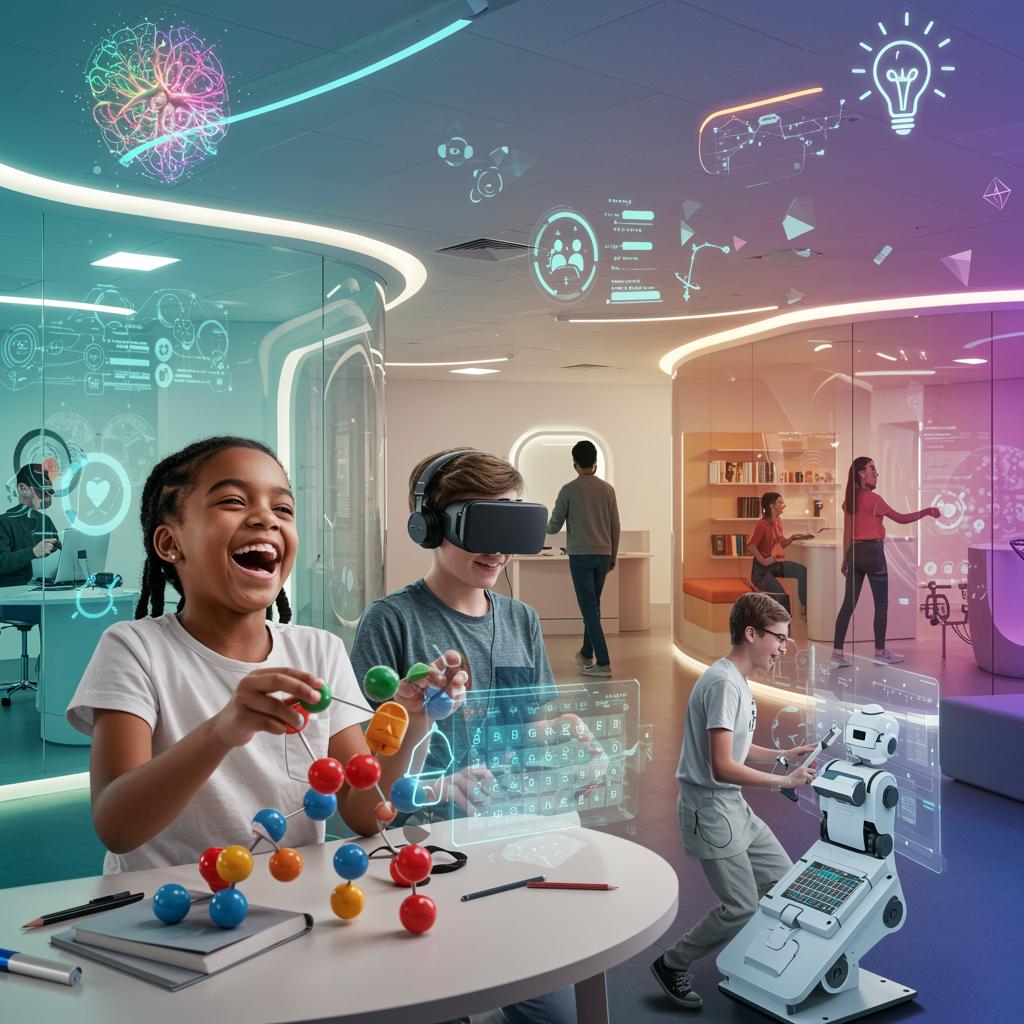
Modern technology offers unprecedented opportunities to enhance learning effectiveness through personalized, interactive, and immediately accessible educational resources. Adaptive learning platforms use artificial intelligence to customize content delivery based on individual progress, strengths, and areas for improvement. These systems can identify knowledge gaps, adjust difficulty levels, and provide targeted practice where it is most needed.
Gamification elements in educational software tap into intrinsic motivation by incorporating game-like features such as points, levels, achievements, and competition. When properly implemented, these elements can increase engagement and persistence without undermining the intrinsic value of learning. The key is ensuring that game mechanics support rather than distract from educational objectives.
Virtual and augmented reality technologies create immersive learning experiences that would be impossible or impractical in traditional settings. Medical students can practice procedures in risk-free virtual environments. History students can virtually visit ancient civilizations. Language learners can engage in simulated conversations with native speakers. These technologies are particularly valuable for experiential learning and skills that require practical application.
Collaborative online platforms enable peer learning and knowledge sharing on a global scale. Students can engage in discussions, work on projects together, and learn from diverse perspectives regardless of geographical limitations. These platforms often incorporate features like peer review, group problem-solving, and collective knowledge building that enhance individual learning through social interaction.
Creating Optimal Learning Environments
The physical and psychological environment significantly impacts learning effectiveness. Research in environmental psychology reveals that factors such as lighting, temperature, noise levels, and spatial organization can either support or hinder cognitive performance. Natural light, comfortable temperatures, and minimal distractions create conditions conducive to sustained focus and information processing.
The psychological environment encompasses factors such as stress levels, motivation, social support, and growth mindset. Chronic stress impairs memory formation and retrieval, while moderate challenge combined with adequate support creates optimal conditions for learning. Social environments that encourage questions, mistakes, and collaborative exploration foster deeper engagement and risk-taking that leads to breakthrough understanding.
Time management and routine establishment create predictable frameworks within which learning can flourish. Consistent study schedules help establish habits that reduce the cognitive load of decision-making while ensuring regular engagement with material. However, flexibility within structure allows for adaptation to individual energy levels, competing priorities, and life circumstances that might otherwise derail learning progress.
Overcoming Common Learning Obstacles
Procrastination represents one of the most significant barriers to effective learning. Understanding procrastination as often stemming from fear of failure, perfectionism, or feeling overwhelmed can help in developing targeted strategies. Breaking large tasks into smaller, manageable components, establishing accountability systems, and focusing on process rather than outcomes can help overcome procrastination tendencies.
Information overload in our digital age can paradoxically impair learning by creating cognitive overwhelm. Effective learners develop skills in information curation, critical evaluation of sources, and strategic ignorance—deliberately choosing what not to learn in order to focus deeply on what matters most. This requires developing clear priorities and the discipline to stick to them despite the constant availability of potentially interesting information.
Imposter syndrome and self-doubt can undermine learning motivation and prevent learners from taking on appropriate challenges. Recognizing these feelings as normal parts of the learning process, rather than indicators of inadequacy, helps maintain persistence through difficult periods. Celebrating small wins, maintaining learning journals, and seeking feedback from trusted sources can help build confidence and maintain motivation.
Measuring Progress and Maintaining Motivation
Effective learning requires systems for tracking progress and maintaining motivation over extended periods. Quantitative measures such as test scores, completion rates, and skill assessments provide objective data about learning progress. However, qualitative measures such as increased confidence, improved problem-solving approaches, and enhanced creativity are equally important indicators of educational success.
Learning analytics, enabled by digital learning platforms, provide detailed insights into learning patterns, time allocation, and areas of strength and challenge. These data can inform decisions about study strategies, identify optimal learning times, and reveal patterns that might not be apparent through subjective assessment alone. The key is using this information to continuously optimize learning approaches rather than becoming overly focused on metrics at the expense of deeper understanding.
Long-term motivation requires connecting learning activities to larger purposes and values. Whether pursuing education for career advancement, personal fulfillment, or contribution to society, maintaining awareness of these deeper motivations helps sustain effort through challenging periods. Regular reflection on progress toward these larger goals helps maintain perspective and enthusiasm even when immediate results are not apparent.
The Future of Education and Lifelong Learning
The rapid pace of technological and social change means that the skills and knowledge valuable today may become obsolete tomorrow. This reality shifts the focus from acquiring specific information to developing meta-learning skills—learning how to learn effectively. Adaptability, critical thinking, creativity, and continuous learning capacity become more valuable than any specific technical knowledge.
Personalized artificial intelligence tutors are beginning to provide individualized instruction that adapts to each learner's pace, style, and interests. These systems can provide immediate feedback, suggest optimal learning pathways, and identify areas where additional support is needed. While they cannot replace human interaction entirely, they offer scalable solutions for personalized education that was previously available only to those who could afford private tutoring.
Microlearning and just-in-time learning respond to the reality that much learning now occurs in the context of immediate application rather than in preparation for future use. Mobile learning platforms, performance support tools, and contextual learning systems enable learning to occur when and where it is needed most. This approach recognizes that in rapidly changing fields, the ability to quickly acquire and apply new knowledge is more valuable than extensive prior preparation.
Conclusion: Building Your Personal Learning System
Creating an effective personal learning system requires integrating scientific insights about how learning works with practical strategies that fit your individual circumstances, goals, and preferences. The most successful learners do not rely on a single approach but develop a toolkit of strategies that they can deploy flexibly based on the situation and type of learning required.
The investment in developing effective learning capabilities pays dividends throughout life, enabling faster adaptation to change, greater professional opportunities, and more fulfilling personal development. In an era where the capacity to learn may be more important than what you currently know, these skills represent some of the most valuable investments you can make in yourself.
Remember that becoming an effective learner is itself a learning process that requires patience, experimentation, and continuous refinement. Start with one or two strategies that resonate with you, implement them consistently, and gradually expand your repertoire as you gain experience and confidence. The goal is not perfection but continuous improvement in your capacity to acquire, retain, and apply knowledge effectively throughout your life.
The views expressed in this article are those of the author and do not necessarily reflect the views of WriteFlow. WriteFlow does not endorse this content and does not guarantee its accuracy or completeness.


Comments (0)