Where Curiosity Meets Clarity: Learn Anything Easily


Introduction
In the intersection between genuine curiosity and methodical clarity lies the secret to effortless learning. This sweet spot represents more than just an educational approach—it is a fundamental reimagining of how human beings naturally acquire, process, and retain knowledge. When curiosity drives the questions and clarity provides the structure, learning transforms from a laborious task into an engaging journey of discovery. This comprehensive exploration reveals how to harness both the emotional power of curiosity and the systematic power of clarity to master any subject, skill, or domain with remarkable ease and efficiency.
The modern world presents us with an unprecedented paradox. We have access to more information than any generation in human history, yet many people struggle to learn effectively. The problem is not a lack of resources or intelligence. It is the absence of a coherent framework that honors both our natural learning instincts and our need for systematic progress. This article provides that framework, showing how to cultivate curiosity deliberately while building clarity systematically, creating a learning approach that feels natural while producing extraordinary results.
Understanding this intersection requires us to examine both elements independently before exploring their powerful synergy. Curiosity represents the emotional and motivational engine of learning—the force that pulls us toward new knowledge and sustains us through challenges. Clarity represents the structural and methodological framework of learning—the systematic approach that ensures our curiosity leads to genuine understanding rather than superficial familiarity. When these forces work together, they create a learning dynamic that is both deeply satisfying and remarkably effective.
The Neuroscience of Curiosity-Driven Learning
Recent advances in neuroscience have revealed fascinating insights about how curiosity functions in the brain and why it creates such powerful learning conditions. When we experience genuine curiosity about a topic, our brains release dopamine, the same neurotransmitter associated with pleasure and reward. This neurochemical response does not just make learning feel good. It actually enhances our ability to encode and retain new information.
The curious brain shows increased activity in the hippocampus, the region primarily responsible for memory formation and consolidation. Brain imaging studies demonstrate that when people are in a curious state, they show enhanced memory not just for the information they are curious about, but for incidental information encountered during the same period. This suggests that curiosity creates a generalized state of enhanced learning readiness that extends beyond the immediate focus of interest.
Curiosity also activates the brain's reward system in a way that creates anticipation and sustained attention. Unlike external rewards, which can sometimes undermine intrinsic motivation, curiosity-driven dopamine release enhances both immediate engagement and long-term motivation. This neurochemical profile explains why learners often describe curiosity-driven learning as energizing rather than depleting, even during extended study sessions.
The prefrontal cortex, responsible for executive functions like planning and working memory, shows increased connectivity with other brain regions during curious states. This enhanced neural integration supports the kind of flexible, creative thinking that characterizes deep learning. When curiosity is engaged, the brain becomes more capable of making novel connections, seeing patterns across different domains, and generating creative solutions to problems.
Research on memory consolidation reveals that information learned in curious states is more likely to be integrated into existing knowledge networks and retained over long periods. This occurs because curiosity creates optimal conditions for elaborative encoding—the process by which new information becomes meaningfully connected to previously learned material. The result is not just better memory, but more flexible and transferable knowledge that can be applied in novel situations.
The Architecture of Clarity in Learning
While curiosity provides the motivational foundation for effective learning, clarity provides the structural framework that transforms motivation into mastery. Clarity in learning encompasses several interconnected elements: clear objectives, clear methods, clear progress indicators, and clear connections between new and existing knowledge. This architectural approach ensures that learning energy is channeled effectively toward meaningful outcomes.
Clear objectives involve more than simply stating what you want to learn. They require articulating why the learning matters, how it connects to broader goals, and what specific capabilities you hope to develop. Well-formed learning objectives answer three critical questions. What specific knowledge or skills do I want to acquire? How will I know when I have achieved competence? How does this learning support my larger purposes and aspirations? This clarity of purpose provides direction for learning efforts while maintaining motivation during challenging periods.
Methodological clarity involves understanding how the subject matter is structured, what learning approaches work best for different types of content, and how to sequence learning activities for optimal progress. This includes recognizing the difference between declarative knowledge and procedural knowledge, understanding how different subjects require different learning strategies, and knowing how to adapt general learning principles to specific domains.
Progress clarity involves establishing concrete milestones and feedback mechanisms that provide accurate information about learning advancement. This includes both formal assessments and informal indicators of growing competence. Effective progress tracking helps learners recognize improvement that might otherwise go unnoticed while identifying areas that need additional attention or different approaches.
Conceptual clarity involves understanding how new information relates to existing knowledge structures and how individual pieces of information fit into larger patterns and frameworks. This includes developing mental models that organize information hierarchically, seeing connections between different concepts, and understanding the underlying principles that govern a particular domain.
Cultivating Authentic Curiosity
Many people believe that curiosity is either present or absent—that you are either naturally curious about something or you are not. Research suggests this view is both inaccurate and limiting. Curiosity can be cultivated, developed, and directed through specific practices and approaches. Understanding how to generate authentic interest in any subject dramatically expands your learning potential.
The foundation of cultivating curiosity lies in recognizing that all knowledge connects to universal human concerns and experiences. Every subject, no matter how abstract or technical, ultimately relates to questions about how the world works, how to solve problems, how to create value, or how to understand human experience. Finding these connections transforms seemingly dry material into personally relevant exploration.
Question-driven exploration represents one of the most powerful methods for generating curiosity. Instead of beginning with answers or content, start with genuine questions that you find intriguing. What would happen if? How does this work? Why does this pattern exist? What are the implications of this? These questions create the cognitive tension that drives curiosity while providing direction for learning activities.
Story-based learning leverages the brain's natural fascination with narratives to generate interest in any subject. Every field of knowledge contains compelling stories about discoveries, failures, innovations, conflicts, and human drama. Mathematics has stories of ancient civilizations developing number systems and brilliant individuals solving centuries-old problems. Science contains tales of revolutionary discoveries and the people who made them. Even technical subjects can be understood through the stories of their development and application.
Connection-making practices involve deliberately linking new subjects to areas of existing interest and expertise. If you are passionate about cooking, you can approach chemistry through the lens of culinary science. If you love sports, you can explore physics through athletic performance, statistics through game analysis, or psychology through team dynamics. These connections create bridges between new learning and established interests.
Personal relevance identification involves understanding how any subject might impact your life, career, or understanding of the world. This might be direct professional application, intellectual enrichment, or simply the satisfaction of understanding something that previously seemed mysterious. Making these connections explicit strengthens motivation and provides context for new learning.
Building Systematic Clarity
While curiosity provides the emotional energy for learning, systematic clarity ensures that this energy produces lasting results. Building clarity requires developing structured approaches to organizing information, tracking progress, and connecting new knowledge to existing understanding.
Hierarchical organization involves understanding the logical structure of any domain and organizing learning accordingly. Most subjects have foundational concepts that must be understood before more advanced topics make sense. Identifying these prerequisite relationships prevents confusion and ensures that learning builds systematically toward greater complexity and sophistication.
Conceptual mapping techniques help visualize relationships between different ideas, concepts, and skills within a domain. These visual representations might take the form of mind maps, flowcharts, hierarchical diagrams, or network structures. The specific format matters less than the process of explicitly identifying and representing relationships between different elements of knowledge.
Progressive complexity management involves carefully sequencing learning activities to build competence gradually while maintaining appropriate challenge levels. This requires understanding the difference between productive difficulty that promotes learning and overwhelming complexity that creates confusion and frustration. Effective learners develop sensitivity to optimal challenge levels and adjust their approach accordingly.
Integration practices involve regularly connecting new learning to previously acquired knowledge and skills. This might involve comparing and contrasting different approaches, identifying common patterns across different domains, or applying concepts from one area to problems in another. These integration activities strengthen understanding while building flexible, transferable knowledge.
Feedback loop establishment involves creating systems for monitoring learning progress and adjusting approaches based on results. This includes both formal assessment methods and informal indicators of growing competence. Regular self-assessment helps identify areas of strength and weakness while maintaining awareness of overall progress toward learning objectives.
The Feynman Technique: Where Curiosity Meets Teaching
The Feynman Technique represents one of the most powerful examples of how curiosity and clarity can work together to accelerate learning. Named after Nobel Prize-winning physicist Richard Feynman, this approach involves explaining complex concepts in simple terms, as if teaching them to someone who knows nothing about the subject. The technique brilliantly combines the curiosity-driven desire to understand with the clarity-focused need to organize and communicate knowledge effectively.
The first step involves choosing a concept you want to understand and writing it at the top of a blank page. This simple act of selection engages curiosity by focusing attention on a specific learning target while creating commitment to the learning process. The act of writing creates a physical record that supports clarity and organization.
The second step requires writing an explanation of the concept using simple language and avoiding jargon or technical terms. This forces you to examine your understanding critically and identify areas of confusion or superficial comprehension. The constraint of simple language ensures that you cannot hide behind complex terminology without genuine understanding.
The third step involves identifying gaps, errors, or areas of confusion in your explanation. This self-assessment process engages the same curious questioning that drives research while building the kind of clarity that supports effective communication. Areas of confusion become specific targets for additional learning rather than vague sources of anxiety.
The fourth step requires returning to source material to fill in gaps and correct misunderstandings identified in the previous step. This creates a natural feedback loop between learning and application while maintaining the curious engagement that makes learning enjoyable rather than laborious.
The final step involves simplifying your explanation further and creating analogies or connections to familiar concepts. This process of simplification and connection-making engages creative thinking while building the kind of flexible understanding that transfers to new situations and applications.
Learning Through Multiple Modalities
Human beings process information through various channels—visual, auditory, kinesthetic, and conceptual. While individual preferences exist, the most effective learning typically involves multiple modalities working together to reinforce understanding and create robust knowledge structures. Understanding how to engage different learning modalities systematically while maintaining curiosity across all channels dramatically enhances learning effectiveness.
Visual learning involves processing information through images, diagrams, charts, and spatial relationships. This modality is particularly powerful for understanding structures, relationships, and patterns. Visual learners benefit from creating mind maps, diagrams, flowcharts, and other visual representations of information. However, all learners can benefit from visual techniques when they are used to clarify relationships and organize complex information. Curiosity can be engaged visually through exploration of interesting images, infographics, and visual representations that raise questions or reveal surprising patterns. Clarity comes through systematic organization of visual information and understanding how visual elements relate to conceptual understanding.
Auditory learning involves processing information through listening, speaking, and sound-based memory techniques. This includes lectures, discussions, podcasts, and verbal repetition. Auditory techniques are particularly valuable for language learning, musical education, and subjects that involve rhythm or sequential information. Curiosity in auditory learning can be sparked through interesting podcasts, engaging lectures, or fascinating conversations about topics of interest. Clarity comes through summarizing information verbally, creating audio notes, or engaging in discussions that require articulating understanding clearly.
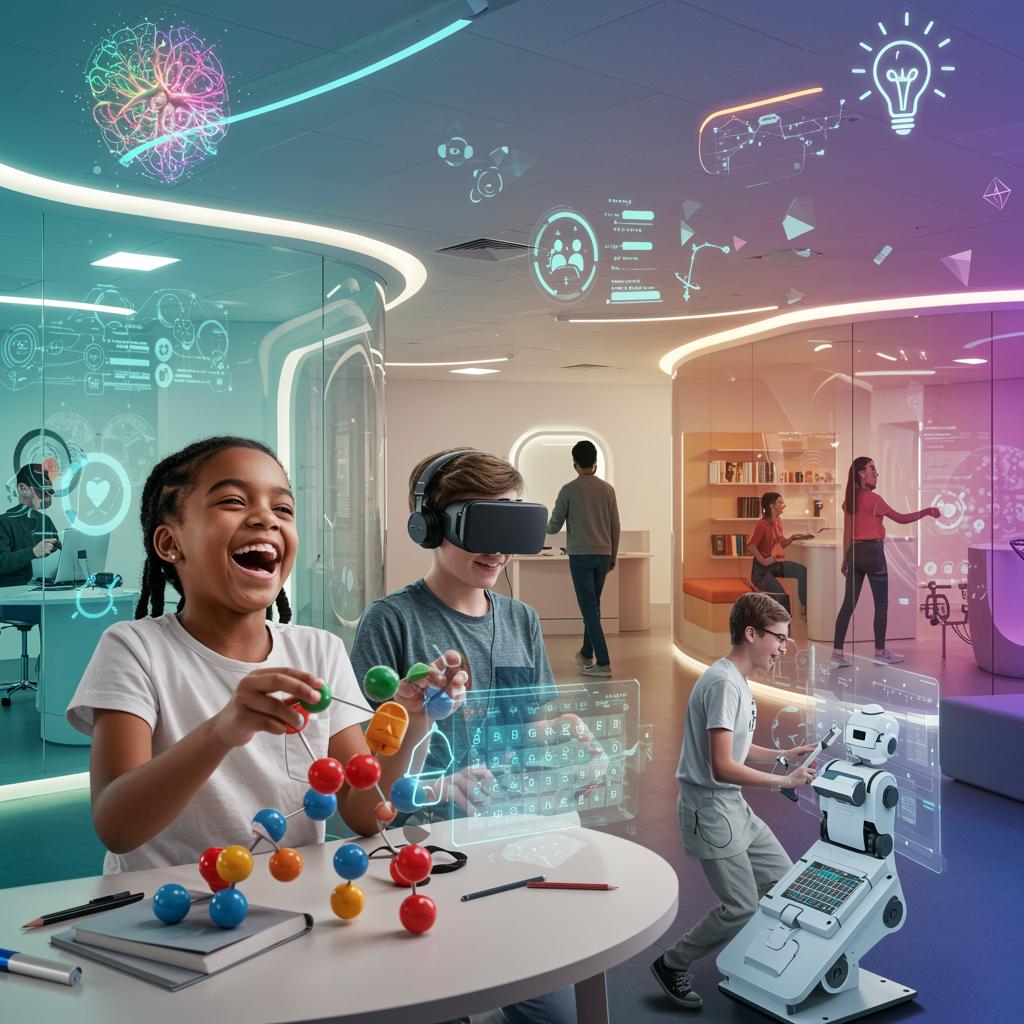
Kinesthetic learning involves physical movement, hands-on activities, and embodied experiences. This modality is often overlooked in academic settings but can be incredibly powerful for understanding abstract concepts through physical metaphors and activities. Kinesthetic learning is particularly valuable for understanding processes, systems, and relationships that can be modeled through physical activity. Curiosity in kinesthetic learning might involve building models, conducting experiments, or engaging in physical activities that illuminate abstract concepts. Clarity comes through systematic practice, careful observation of physical processes, and understanding how physical activities relate to conceptual learning.
Reading and writing represent fundamental modalities that combine visual and conceptual processing. These skills support learning across virtually all domains while providing tools for organizing, storing, and retrieving information effectively. Strong reading and writing skills amplify the effectiveness of all other learning activities.
The Power of Spaced Repetition and Interleaving
Two research-backed techniques—spaced repetition and interleaving—demonstrate how systematic approaches can enhance the natural learning benefits of curiosity-driven exploration. These techniques work by optimizing the timing and sequencing of learning activities to maximize retention and transfer.
Spaced repetition involves reviewing information at increasing intervals rather than cramming it into intensive study sessions. This approach leverages the psychological spacing effect, which shows that information reviewed at gradually increasing intervals is retained much longer than information reviewed at consistent intervals or crammed in single sessions. Curiosity enhances spaced repetition by making review sessions more engaging and personally meaningful. Instead of mechanical repetition, curious learners approach review sessions with questions about applications, connections, and implications of the material being reviewed. This transforms review from boring repetition into continued exploration and discovery. Clarity in spaced repetition involves systematic scheduling of review sessions and careful tracking of which information needs more frequent review versus which information has been mastered. Digital tools can help automate optimal spacing intervals while learners focus on engaging curiously with the material during each review session.
Interleaving involves mixing different types of problems or topics within single study sessions rather than focusing on one type at a time. While this approach initially feels more difficult than blocked practice, it produces superior long-term learning and transfer. Interleaving forces the brain to continuously retrieve and apply different strategies, which strengthens discrimination skills and improves application to novel situations. Curiosity supports interleaving by making the variety and challenge more engaging rather than frustrating. Curious learners see the mixing of different topics as an opportunity to explore connections and relationships rather than simply an obstacle to efficient practice. Clarity in interleaving involves understanding which types of problems or topics benefit from mixed practice and how to structure interleaved sessions for optimal learning. This includes understanding when blocked practice might be necessary for initial skill development and when interleaving becomes beneficial for building flexibility and transfer.
Technology Tools for Curiosity-Driven Learning
Modern technology offers unprecedented opportunities to enhance both curiosity and clarity in learning. However, the key lies in using technology strategically to support learning goals rather than becoming distracted by technological novelty for its own sake.
Adaptive learning platforms use artificial intelligence to customize content delivery based on individual progress, strengths, and areas for improvement. These systems can maintain optimal challenge levels that engage curiosity while providing the systematic progression that builds clarity. The best adaptive platforms feel like personalized tutors that adjust to individual learning needs in real time.
Spaced repetition software automates the scheduling of review sessions, ensuring optimal timing while freeing learners to focus on engaging with content rather than managing schedules. These tools have proven particularly effective for language learning, medical education, and any domain requiring substantial fact retention.
Concept mapping tools help create visual representations of knowledge structures, supporting both the organization of information and the discovery of relationships between concepts. Many digital tools allow dynamic linking between ideas, integration of multimedia resources, and collaborative mapping with other learners.
Question logging applications help capture and organize curious questions as they arise, ensuring that curiosity is systematically directed toward learning rather than forgotten. These tools allow learners to track questions over time, document answers as they are discovered, and identify patterns in their curiosity that might suggest new learning directions.
Creating Sustainable Learning Systems
The most effective learning occurs when curiosity and clarity are embedded in sustainable systems that support ongoing growth. Building such systems requires attention to environment, routine, and mindset.
Environmental design involves creating physical and digital spaces that support focused learning while providing easy access to resources that spark curiosity. This might include organized reference materials, comfortable study spaces, minimized distractions, and visible reminders of learning goals and progress.
Routine development involves establishing regular learning habits that maintain momentum without requiring constant willpower. The most effective routines balance structured study time with flexibility for curiosity-driven exploration. They include scheduled review sessions, regular practice activities, and dedicated time for pursuing interesting questions that emerge from learning.
Mindset cultivation involves developing beliefs about learning that support both curiosity and clarity. This includes embracing challenges as opportunities for growth, viewing confusion as a natural part of learning rather than a sign of inadequacy, maintaining confidence in the ability to learn difficult material with appropriate effort and strategy, and finding satisfaction in the learning process itself rather than just outcomes.
Conclusion
The intersection of genuine curiosity and methodical clarity represents a sweet spot where learning becomes not just efficient but genuinely effortless. When curiosity provides the emotional energy and direction, and clarity provides the structural framework and systematic progression, learners can achieve remarkable results with less struggle and greater satisfaction.
This approach to learning recognizes that human beings are naturally curious creatures with an innate drive to understand and master their environment. By cultivating this natural curiosity deliberately and building systematic clarity around it, we can unlock learning capacities that often remain dormant in traditional educational approaches.
The principles outlined in this exploration—from the neuroscience of curiosity-driven learning to the architecture of clarity, from the Feynman Technique to spaced repetition and interleaving—provide a comprehensive framework for mastering any subject or skill. Whether you are a student facing academic challenges, a professional seeking to stay current in a rapidly changing field, or simply a curious person who loves to learn, these approaches can transform your learning experience.
Remember that learning is not a destination but a journey. The skills of cultivating curiosity and building clarity are themselves learnable and improvable with practice. Each attempt to learn something new provides an opportunity to refine your approach and become a more effective, more curious, and more fulfilled learner.
The sweet spot of effortless learning is not a fixed point that some lucky individuals discover while others never find. It is a dynamic balance that can be cultivated through understanding, practice, and reflection. By embracing both the emotional power of curiosity and the systematic power of clarity, you can unlock your full learning potential and discover the deep satisfaction that comes from genuine understanding and mastery.
The views expressed in this article are those of the author and do not necessarily reflect the views of WriteFlow. WriteFlow does not endorse this content and does not guarantee its accuracy or completeness.


Comments (0)